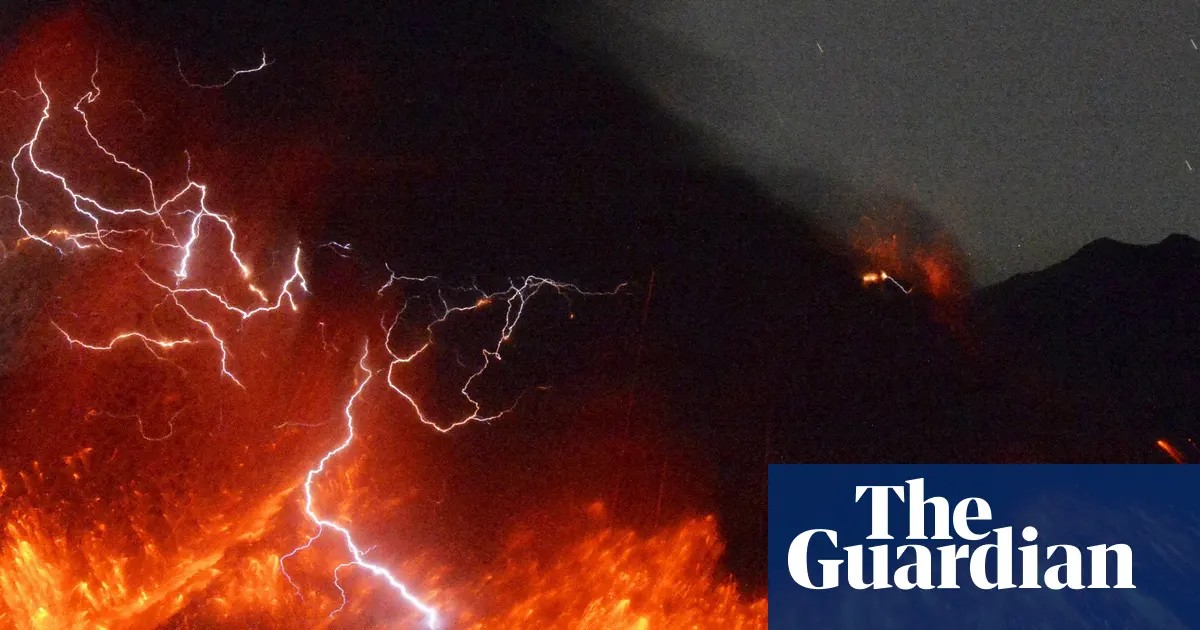
Scientists have long been fascinated by the violent, electric displays that accompany major volcanic eruptions. During the 2022 Hunga Tonga-Hunga Ha‘apai eruption, the sheer scale of this phenomenon was staggering: a single eruption produced more than 2,600 lightning flashes per minute, with electrical activity reaching heights of 31 kilometers (19 miles) above sea level.
While these “volcanic lightning” shows are visually breathtaking, they have historically presented a significant scientific puzzle regarding how electricity is generated in such an environment.
The Mystery of the Charging Plume
To understand why this discovery matters, one must first look at how standard lightning works. In a typical thunderstorm, electrical charges are generated through collisions between different types of particles:
– Ice crystals rise on updrafts and pick up a positive charge.
– Graupel (soft hail) falls and picks up a negative charge.
The separation of these opposite charges creates the electrical tension that eventually discharges as lightning.
However, volcanic plumes are fundamentally different. Instead of ice and hail, they consist of dry ash and rock fragments. Because these particles are often made of the same rocky material, scientists struggled to explain how collisions between them could result in the separation of positive and negative charges. Under normal circumstances, particles of the same composition should not transfer significant electrical charges to one another.
The Breakthrough: The Role of Carbon
New research published in the journal Nature by the Institute of Science and Technology Austria has finally identified the missing link. The secret is not in the volcanic rock itself, but in a microscopic layer of carbon-rich molecules coating the particles.
The researchers’ findings reveal a critical distinction:
– Pure Silica: When scientists tested perfectly clean silica particles, they showed little to no tendency to pick up a charge during collisions.
– Carbon-Coated Silica: When a thin layer of carbon was present, the particles began transferring charges effectively during collisions.
This “contamination” is not a coincidence. The intense heat of a volcanic eruption is sufficient to react with carbon-containing molecules present in the ambient air, effectively “painting” the ash particles with a thin, conductive coating of carbon.
Why This Matters
This discovery bridges the gap between meteorology and volcanology. It explains how the unique thermodynamics of an eruption—specifically the extreme heat and powerful updrafts—create the perfect laboratory for electrical charging.
The heat provides the carbon coating, while the updrafts drive the high-speed collisions necessary to separate those charges. This mechanism transforms a dry plume of debris into a massive, electrically active engine capable of producing the most intense lightning strikes on Earth.
By identifying the chemical “glue” that allows ash to behave like ice crystals, scientists can now better model the electrical behavior of volcanic plumes and the potential risks they pose to aviation and local environments.
Conclusion
The presence of carbon coatings on volcanic ash explains how dry rock fragments can