Science speaks in dry terms. Cold facts. Sharp definitions. But try to really feel what they’re talking about and the words start to wobble.
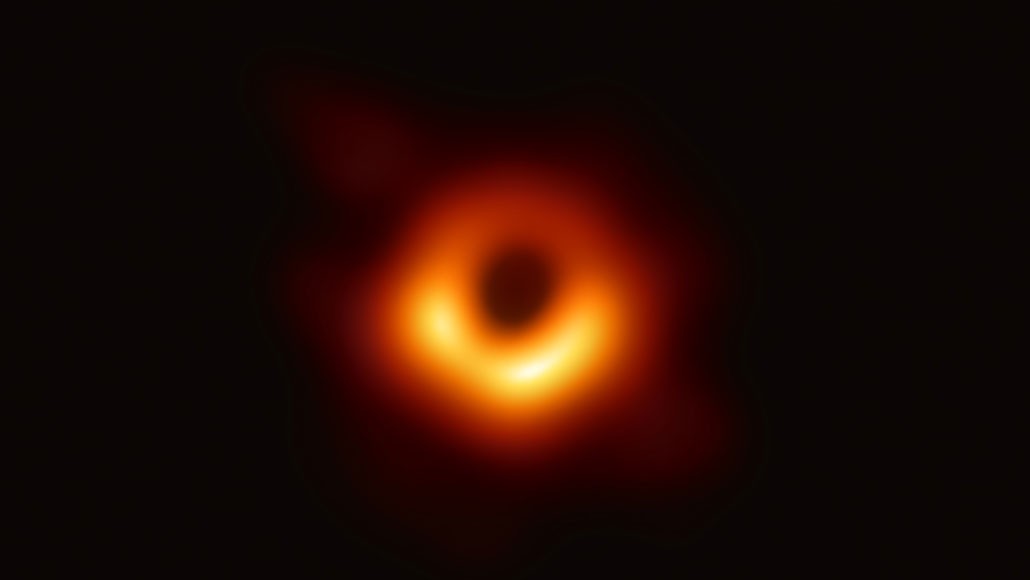
Take a black hole. Not the cool name. The thing itself.
A region of space. Gravity here doesn’t just pull. It enslaves. Nothing gets out. No matter. No light. You jump in and the universe forgets you existed.
Then there’s the disk. Flat. Round. Thin. In space it’s usually a rotating mess of gas and dust. The raw ingredients for planets. Or the spine of a spiral galaxy. It spins. It churns.
Anything that happens inside the event horizon. is invisible.
That phrase trips people up. The event horizon isn’t a wall. It’s not made of steel or plasma. It’s imaginary. A mathematical boundary drawn around the black hole. The heavier the black hole the bigger this invisible sphere. Once you cross it gravity wins so completely that even light—which tries hard to flee—gets dragged back in. Under normal circumstances. Always. Some physics theories suggest small bits of radiation might slip out. Rarely. Like cheating death by a millimeter.
Galaxies? Huge. Chaotic. Groups of stars held together by gravity and something darker. Dark matter. Invisible. Mysterious. Just holding everything in place while it rotates. The Milky Way is packed with over 100 billion stars and it’s barely trying. Dim galaxies? Maybe a few thousand stars. They have gas and dust too. New stars form in the dark. Constantly.
Gravity is simple in theory. Attractive. Pulls mass toward mass. More mass means more pull. It’s the reason you stay on Earth and stars burn hot. It’s also why you never come back from that sphere of invisible lines.
Information. Not data. Data is just numbers on a page. Information is the meaning behind it. The trends. The facts you learn after you study the dust and the light.
Distance breaks the brain. A light-year sounds like time but it’s space. Nine point four six trillion kilometers. Imagine a rope long enough to wrap the Earth once. That’s 40,000 km. Now take 236 million of those ropes and line them up. End to end. That’s one light-year. We throw that term around casually for stars.
Matter takes up room. It has weight on Earth because of gravity. Space has no up or down but it still has matter. It occupies the void.
And everything races against a limit. The speed of light. 1.08 billion km/h. A constant. Physics loves its constants. You can’t go faster. Light sets the speed limit of the universe.
How do we see any of this? Telescopes. Glass and mirrors mostly. Some collect radio waves using antennas instead. They gather the faint echoes of distant light.
We look up. We name things. But does the darkness care what we call it?
Maybe not. But we keep watching anyway.