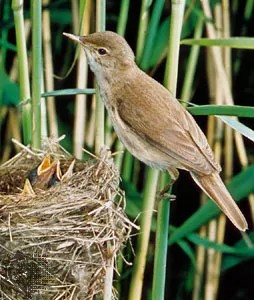
Birds can be seen everywhere. They are the default bird in your backyard, city park and deep in the jungle. The largest bird species, the Passeriformes, completely dominates the birds of the earth today. They are true perching birds and are defined by a certain foot structure. That is, four toes, three of which point forward and one back. This anatomy allows them to grip the branches of a tree.
Passerines are considered the most evolved bird species that suddenly appeared in relatively recent geological time. Rapid adaptation to almost all terrestrial environments has led to large numbers of individuals. There are about 5,700 species of Passeriines. The total number of all other bird species is about 4,069. They live on every continent except Antarctica and on the islands of most oscines. This diversity is no accident. This is the result of evolutionary radiation leaving competitors behind.
Suborders and Taxonomy
Taxonomists usually divide this large order into two distinct suborders: Tyranni and Passeri.
The first category, Tyranni, contains about 1,250 species. These birds are considered more primitive. They are often informally classified as “suboscines”. The second group is the Passeri. This is a very extensive collection containing about 4500 species. These are “oscines” or true songbirds. This division provides a useful framework for comparing their evolutionary paths and biological differences.
Diversity of size and structure
Passerine birds are mainly small and medium-sized land birds. The total length is about 7.5-117 cm.
Some of the smaller species include the New World Flycatcher, New Zealandwrens, titmice, flowerpeckers, tanagers, and waxbills. The heaviest passerines include the Australian lyrebird and the ravens. Next is a ribbon-tailed bird-of-paradise. Technically, it is the longest species. The body is not very big, but the tail feathers are very long.
Most Passeriine birds have narrower range. Body length is about 12.5-20 cm. The weight varies from 15 to 30 grams.
Look at the house sparrow. Length 12-15 cm. The weight is about 26 grams. The cardinal are bigger. The body length is 20-23 centimeters and the weight is about 44 grams. This structural diversity supports their ability to fill almost all ecological niches in terrestrial ecosystems.
Why is this foot design better than others? The answer lies in how the relationship with the tree changes.
How did passerines adapt to eating everything?
Passerines are masters at solving evolutionary problems. Most people think of sparrows and robins, but this group of animals includes a surprising variety of feeding strategies. Entomology is the starting point. Most of these birds eat insects during at least part of their life cycle. But how they find these bugs says everything about their place in the food chain.
Swallows stay in the air and catch prey in flight. New World flycatchers sit quietly before rising from their perches to catch food. Vireos is more organized. Collect small insects from leaves and branches. Vines, nut trees and creepers move along the vertical plane of the trees and detect cracks in the bark. Others cling to the forest floor and scratch fallen leaves.
This adaptation goes beyond just foraging. Some species, such as scoops, specialize in aquatic insects. Others target fish. Some New World flycatchers are fished. Then there are frugivores like the cotinga. Crop cutters eat leaves. Sunbird sips nectar. Hornbills prey on small terrestrial vertebrates. Finch and many other birds break open the seeds.
Every diet causes structural changes. The format of the bill has changed. My legs have improved. The form follows the function and we repeat this over and over.
Why birders and economists are paying attention
This is not just the content of a biology textbook. That is why people have paid attention to these birds.
Songbirds have fascinated people for thousands of years. Attraction is sensory overload. color. pattern. song. Incoming call. The variety is almost limitless. We see it because it is beautiful. I listen because it’s interesting.
This aesthetic value permeated the culture from a very early stage. Passerines are birds of folklore. They are in the poem. Music, sculpture, painting – in all these birds. They are not just animals, they are symbols.
The European gold sparrow (Carduelis Carduelis ) plays an important role in art. During the Renaissance, it represented the suffering of Christ. The crow (Corvus corax ) gets a darker role. It often foreshadows the devil’s messenger. Bad sign.
The financial aspect is silent, but true. Bird watching promotes tourism. Feeding stations support agriculture through pest control. Aesthetic value converted to dollars. But the most important thing is the connection. We find ourselves in their diversity.
The cage bird market is dominated by passerines. This is an ancient custom. The Greeks discovered this in the 5th century BC. They raised finches, nightingales and thrushes. Magpies and starlings are also included in the list. Then there’s the canary. They arrived in Europe from the Canary Islands in the 16th century. Breeders quickly developed many varieties. Domestication changed them. cardueline and estrildine finches are popular these days. Mynahs are also a type of starling and are widely kept. The scope of this hobby is amazing.
At the end of the 20th century, more than 420,000 passerine birds were legally imported into the United States. This figure does not include canaries. This far exceeds the number of imported parrots. The only other group of birds that are commonly kept as pets are parrots. Despite this demand, many countries restrict trade. The United States and Great Britain have banned the capture and sale of almost all native songbirds. The law exists. The demand persists elsewhere.
Financial value in addition to pets
Songbirds are not only found on windowsills. They are economically important in other ways as well. They are seldom eaten in developed countries. they are dietary staples in rural and densely populated countries. China and Japan have advanced techniques for catching small birds. Passerines are commonly seen in food markets in Hong Kong and Tokyo. This is not a peripheral activity. It is a normal part of the local economy.
Migration patterns make implementation difficult. Migratory birds are widely hunted in Italy, France and Belgium. They go into pots or cages. This custom is cultural. This kind of activity is difficult to regulate. It is even more difficult to enforce. Tradition often comes before regulation. This practice is still common in these areas.
Feather trade: a fading trend
Today, killing songbirds for their feathers is less common. This is not always the case. Until the beginning of the 20th century, protective laws were rare. Wearing embalmed birds was common. The women wore the bird’s body parts in their hats. Vanity reached its peak. In 1886, a young ornithologist noticed this trend. He spent two afternoons wandering the fashionable neighborhoods of New York. He counted the feathers of 40 bird species. Twenty-two were passerines. The display is garish. This is also a waste.
Other cultures used feathers as decoration. The main focus is usually on men. The reason for this is not only its beauty. Feathers symbolize speed and aggression. These are all features that people are looking for. The birds of paradise are the most prominent example. The tribes of New Guinea used feathers as headdresses. This tradition continues. An estimated 80,000 adult birds are killed for this purpose every year. This number is still high.
Its ancient use is largely obsolete. Hawaiian feather cloaks require extinct birds. The resources are gone. Melanesian feather money have been exchanged. Modern options are better. The demand for natural feathers has changed. It is no longer a mass market phenomenon. But it’s not gone. This trade continues in a certain cultural environment. Birds remain a resource. Whether for song or for status. The line between pets and natural resources is thin. Usually invisible to the buyer.
Some of the perching birds are more than just lovely. They’re expensive. In areas where monocultures dominate, the population of certain species explodes because the supply of food is almost unlimited. The result? A huge financial loss.
Let’s take Africa as an example. red-billed quelea, or Sudan dioch, swarms so densely that the sky darkens. There can be 20 million birds in a flock. They voraciously eat tiny grains, causing millions of dollars in damage each year. They are not alone. Java sparrow (Padda oryzivora ) destroys rice fields in Asia. In the United States, mixed flocks of New World blackbirds (Icteridae ) and European starlings (Sturnus vulgaris ) tear through grainfields.
Urban Nuisances and the dangers of aviation
The problem also extends to the city. Starlings and house sparrow were brought to the United States from Europe and have become urban pests. They foul buildings with droppings. Nests can clog gutters and vents. But the danger isn’t just mess. This is deadly.
Starlings have been linked to fatal accidents. In 1960, a flock was sucked into a jet engine at Boston Airport. 61 people died in the accident. One bird is a nuisance. A million birds is a disaster.
The invisible pillars of the environment
Despite their bad reputation, passerines are still the backbone of terrestrial ecosystems. They are the dominant bird species in almost all terrestrial habitats. Their ecological role is huge, even if we don’t always see them.
They eat almost everything. grain. fruit. Insects. Invertebrates. Small amphibians. reptiles. Even small mammals. They in turn feed other animals. They host parasites. They occasionally parasitize others. They pollinate flowers. They spread viable seeds to new locations. Their ability to migrate allows them to take advantage of habitats that are only available seasonally.
We know bits and pieces about their impact. But until ecology has progressed, we will not be able to accurately measure their true importance They are essential. We just don’t see the whole picture yet.
Complex breeding strategy
Reproductive behavior is diverse. Most species are solitary nesters. A monogamous pair’s territory is large enough to support courtship, mating, nesting and feeding.
Others are different. The North American redwinged blackbird (Agelaius phoeniceus ) is territorial, but forages outside its defended borders. There are also colonial nesters. They only protect the nest and a small area next to it.
Let’s think about the structure. Some species build individual nests in close groups. Oropendolas, some Swallows and Sparrows do this. Some build massive communal nests. Palms (Dulus ) and several species of weavers (Ploceidae) fit here. Breeding pairs only protect their own cavities in larger structures.
Then there is the show-offs. Some species use polygynous males. These males established a special display area called a “lek”. There is no nesting here. It’s all about mating.
“The most famous arena males are the cocks-of-the-rock (Rupicola ), the manakins (Pipridae), the bird of paradise and the bowerbird (Ptilonorhynchidae).”
Males are often brightly colored and use songs, gestures, dancing, handling objects, and other elaborate displays to attract females. After mating, the female leaves. She builds the nest. She raises the young. The male walks away.
Some species do not build nests at all. They are brood parasites. Examples are the cowbird (family: Icteridae) and the whydahs (Estrildidae). The female lays eggs in the nest of another species (usually a smaller species). The foster parents raise their children completely alone. Cheat code for survival. Nature is ruthless, efficient and strangely creative.
Nesting places are not standardized. they are opportunists. Birds can choose holes in the ground, cracks in trees and crevices in rock faces. Some prefer ledges. Others cling to the surface of the earth. But if you look closely, you’ll notice something strange. Many birds nest inside large nests of other species. Nonpasserines aren’t safe either. Some people place their homes near wasp nests and hope that the stinging insects will protect them. Vegetation offers another canvas. Grasses, shrubs, and tall trees all serve as potential construction zones.
Passerine nests are rarely simple affairs. They are complex structures. A single nest might contain mud, grasses, hair, and feathers. You might find strips of bark, plant fibers, and downs. Small roots and branches add structural integrity. The leaves provide a camouflage effect. String and spiderwebs bind it all together. Even cast snake skins and lichens make the cut. Most species build open cup-shaped nests. But not all.
Some birds build dome-shaped or spherical enclosures. These closed nests have side entrances. Sometimes the holes are at the top or bottom. One of the most famous examples comes from South America. Ovenbirds of the Furnarius genus build thick-walled mud “ovens”. The name says it all. Against their instinct to hide, they often place these ovens on fence posts or other exposed areas.
“The types of nests built by family members can be different or uniform.”
In North America, the ovenbird (seiurus aurocapillus ) takes a different approach. This grapple builds a dome-shaped, oven-like nest in the forest floor. But it uses plant materials, not mud. The Icteridae family offers yet another variation. They build soft, hanging nests. These can stretch to 0.6 meters or more in length.
Then there are the thorn birds (Phacellodomus ). Like other fornarids, they build huge nests out of tree branches. These structures are hung from the ends of tree branches and can be over 2 meters high. Nearly seven feet of tangled sticks. There are many compartments inside. Only a single nesting pair uses them. In some cases, assistants other than those related to breeding can also be included. Usually, these are young from the previous season.
It is not always peaceful. The crucian carp (Icterus icterus ) is famous for occupying these huge nests. They evict the owners. In the process, they destroy the eggs and chicks. This is frighteningly effective. Other species do that too. The flycatcher (Legatus leucophaius ) is a tyrant that invades its homeland. The cowbird (Molothrus badius ) is also a common squatter.
The technology involved in the construction is amazing. Asian tailor bird (Orthotomus ) sews leaves together. Make pockets from materials such as plant fibers. The result is a safe closed space. The weaver is even more impressive. They tied knots with straw or palm leaves. This allows them to build a sturdy and compact nest. Some achieve strength by gluing the materials together.
However, not all birds prioritize strength. Some Cochinidae build delicate nests. This is an adaptation. Poor visibility means fewer predators. Parents rarely attend these nests. The goal is to draw as little attention to your site as possible. Secrecy for security.
Others dig. A soft earth embankment served as the excavation site. The old dart hole was reused. Just move it into a natural crevice in a tree or rock.
Consistency varies from household to household. The Furnariidae family includes many species. But Woodcreepers are consistent. They all build nests in holes. Vireo is also consistent. They wove the cup between the forked branches. The structure follows genealogy.
Hatching and rearing
Clutch sizes of passerine birds varies from 1 to 14 eggs, and this characteristic is largely independent of the size of the bird. You might think that the largest birds would lay the most eggs, but the biggest passerines, the lyrebird (Menura ), only lays one egg. On the other hand, some small tits (Parus ) hold the record for largest clutch size.
The responsibilities of raising children are extensive. In most species, only the female is responsible for incubating the eggs. The situation is different with antbirds (Formicariidae), certain grosbeaks (Pheucticus ) and other groups where males share the brooding load equally. However, in most species it is more common for the male to be responsible for feeding the offspring.
Nesting strategies are equally flexible. Some birds stick to one nest each season. Others build more than one because the first one often fails before the chicks leave the nest.
The timeline of helplessness
The incubation period usually lasts 11-21 days, depending on the species. Lyrebirds are an exception, lasting more than a month. When the babies finally hatch, they are often blind. They are sparsely covered in down and were completely helpless.
Some species hatch naked. A small number of antbirds, including some species of antbirds, genus Formicarius, and certain Campephagidae, hatch with dense, downy feathers.
How long are they in the nest? The time interval is 8-30 or 35 days. Lyrebirds extend this period by about 42 days. However, the most common is 10-15 days. After leaving the nest, it takes several days to several weeks for the chicks to become completely independent from their parents.
Why do some birds sing and others just chirp?
Sound production is an outstanding aspect of passerine behavior. The ability to sing is best developed in oscines. These birds have a highly complex sound-producing organ called the syrinx. Even the more primitive suboscines can produce a variety of sounds even without sophisticated equipment.
Consider woodpeckers (Dendrocolaptidae), woodpeckers (Furnariidae), and antbirds (Formicariidae). The songs they sing are relatively simple. Think a few notes or whistles. Often repeated quickly with trills, rolls, or rattles. Manakins (Pipridae) also stick to simple trills and whistles. However, some species make loud nonvocal snapping sound through specialized wing feathers.
Cotingas offer a wider variety. Their songs range from the quiet sounds to the incredibly loud and distant “gong” of the bellbird (Procnias ). New World flycatchers are known for their unique calls, and many species have melodious calls.
In some groups, such as the ‘Empidonax’ complex, the plumage is so similar that identification in the field relies entirely on calls and songs.
Lyrebirds and scrub-birds (Atrichornithidae) are also known for their loud, complicated songs. They are skilled imitators. Lyrebirds imitate almost all birds within their hearing range, as well as many mechanical sounds.
complicated and beautiful songs are notable in the complex and beautiful songs of the nightingale (Luscinia ) and other thrushes, larks (Alaudidae), mimic thrushes (Mimidae) and wrens (Troglodytidae).
However, a complex syrinx does not guarantee a complex song. Many “songbirds” such as waxwings (Bombycilla ) and Swallows make simpler sounds than many suboscines.
Duet Dynamics
Only males of most passerine birds sing actual songs. Females produce call notes and other sounds, but rarely sing. In species where females sing, they rarely sing during the breeding season unless they it is a duet with their mate.
In some species, the antiphonal singing of pairs of birds are so developed that it is difficult to tell whether the calls are coming from two individuals. In the African black-and-red shrike (Laniarius barbarus erythrogaster ), the reaction time between the male’s start of song and the female’s response is 0.135 seconds.
Interaction with ants
Anting
Antein’s mystery
Passerine birds do strange things. The way they interact with ants has puzzled scientists for decades. This is called an ant. You can do this in two ways. In active ant activity, worker ants are caught and wiped with their wings. Passive ants are different. The bird just lay there. The body is exposed so the ants can burrow into their wings.
However, birds are picky. It’s not just about catching insects. They avoid spiky seeds. Instead, the target is ants, which are sprayed with formic acid or other protective liquids. In particular, it targets the subfamily Formicinae and subfamily Formicinae. Species using an active stance rarely, if ever, transition to a passive stance. This is a tight space.
For a long time, no one knew why birds behaved the way they did. Some people consider this self-stimulation. What’s one way to get buzz? Most ornithologists disagree. They concluded it was feather grooming. The logic is simple. Formic acid kills insects. Lice and ticks hate it. Spreading feathers in an ant solution can act as an insecticide. But it’s not just about getting rid of pests. Body fluids of ants contain essential oils. Birds can use them to replenish tail hair oil in the tail gland.
Notice what happens after they become ants. They bathe often. They are beautifully dressed. Add ground oil again. It’s like the perfect spa day. Recent studies show that timing is also important. Ants sting during shedding. At this time, new feathers break through the skin. skin inflammation. Maybe the acid relieves the itching.
This behavior is innate. Just look at the number of families who do it and you will see how important it is. At least 30 passerine families have this trait, including passerines and passerines. This is uniform. This is not a learned habit. It’s a coping mechanism.
Sometimes birds can be creative. Or despair. I have seen a book about birds using cigarette butts. orange peel. Insect repellent. Even the smoke. They react to the irritating gases in these objects in the same way that ants do. They want chemistry. tingle. smell.
True ants seem to be confined to the order Passeriformes. Some non-passerine species imitate these movements but are unable to complete the entire ritual. This is a special behavior. This leads to another strange interaction between the birds and the ants. This has nothing to do with the feather.
Lowest tracking strategy
Conveyor belt of life in the Neotropics
In the humid heart of the New World tropics, something terrifying and wonderful moves across the forest floor. Nomadic army ants do more than just walk. They come in groups. The columns can stretch up to 10 meters wide, which is equivalent to 30 feet of biomass. It’s a chaotic, swirling river of mandibles and legs.
These ants will devour almost anything in their path, causing panic in the surrounding ecosystem. The little animals ran away. The insects scattered. Spiders, centipedes, isopods, small frogs and lizards run in all directions. This causes a secondary phenomenon. The beauty of survival.
The birds also joined the chaos. Instead of eating the ants, they eat what runs from them. This behavior defines a special ecological niche in the rainforest food web.
Why do birds chase army ants?
This relationship is very special. Some passerine birds are completely dependent on this migration. There’s a reason they’re called “antbirds.” Their survival depends on army ants that harass their prey. Without ants, it would be difficult to find food.
Other birds are opportunists. Woodcreepers. Manakins. New World Flycatcher. Tanager. Wrens. Sometimes oven birds. They stumble upon the column and take advantage of the panic. They don’t care about ants. They are worried about insects escaping.
There are also animals other than passerines. Motmots. Tinamos. Hawks.
This is where it gets weird. Hawks may not hunt insects at all. They can be hunting birds. Following an ant colony attracts predators. The eagle saw the commotion and swooped down. This is a complex chain of cause and effect.
Beyond the forest floor
It’s not just about trees and soil. Species that support ants can also be found in larger animals. Including people.
When people walk on the understory, their footsteps disturb the ground. The insects scattered. The birds follow. They don’t differentiate between boots and beetle legs. The result is the same. A swarm of small animals fled in all directions. A flock of birds is waiting to attack.
Ants are engines. Birds are passengers.
These dynamics shape the way we understand tropical biodiversity. This is not just a individual species competing. It is a random but harmonious dance. The army ants clear the way. The birds clean up the mess.
Why is this important? Because it shows how interconnected life really is. You can’t study antbirds without studying ants. You can’t understand an Eagle’s hunting strategy without observing a flock of birds.
It’s very messy. It’s violent. It is efficient.
This happens every day in the green darkness of the jungle.
Feet and legs
Birds don’t follow flocks just to enjoy the scenery. They followed them to the buffet.
Let’s take the Cow Tyrant (Machetornis rixosa ) as an example. This is a small flycatcher that lives in South America. It doesn’t hunt itself. Catch cows, buffaloes and deer. Why? This is because insects make noise if you move. They also eat parasites. Tick-tock. jump. Mobile beauty service. The bird is fed. The cows receive pest control.
Then there is *Buphagus. These are starlings that come from Africa. They have a reputation for being aggressive. They pick at the wounds of large mammals. However, the core behavior remains the same. They chase large quadrupeds, catch flying insects and eat ticks. Cowbirds do the same. They thrive around large animals. They mess things up.
In Australia, things are different. Yellow Robin (Eopsartoria ) doesn’t care about cows. It follows the lyre bird. Lyrebirds are huge. Firmly grip the ground with your strong legs. It becomes leaves and soil. Under that mess? insect. insect. Caterpillar. Robin is waiting. I’ll keep an eye on it. When the ground gives way, they jump in.
It’s not just food. This is all about physics. A large animal walks in to disturb the tornado. Creating dining opportunities through pure quality.
Form and function
The legs of these birds are not designed for running. They have been created as a habitat. and jump. and quick and accurate punches.
See Niu Ba. My legs are short. strong. You must stand still next to a moving animal. If you slip, you lose lunch. His toes pinched the fur. Wait for the tick to move. Then grab.
Pikapekki is different. The legs have joints. The toes of both feet point forward. Two people behind me. This grip is important in climbing. You have to navigate the rough terrain on the backs of rhinos and hippos. You need stability. The host animal must stay still while it runs and struggles.
Yellow Robin has long legs. Achieving it is essential. Must fly over open ground. Its legs are adapted for foraging on land. It won’t last long. Jump up and down. Detect. It takes advantage of the disturbance caused by lyrebirds.
This leads to a simple question. Why do these birds chase these particular animals?
This is not random. This is evolutionary efficiency. Cow Tyrant evolved to take advantage of the cattle micro-ecosystem. The furs have evolved to take advantage of the macroecosystem of large wild mammals. Yellow robins have evolved to take advantage of disturbance by lyrebirds.
One size does not fit all. Tick Bird needs power. Cowbird needs speed. Robin requires agility.
Lyrebird doesn’t care. I was busy scratching. Don’t invite Robin. It didn’t drive it away. This is a passive resource. A walking insect vacuum cleaner. Robin just knows how to use it.
This relationship has been around for a long time.
It descends on the feet. This is the only characteristic that distinguishes passerines from other similar groups of birds. These are the legs of the “perch”.
All four fingers are fully developed. they are separated from each other. In some families, such as wrens and most wrens, the bases of their front toes may be slightly fused, but what about the tips? They are still free. Fully functional. The back toe or big toe should be at the same level as the front toe. It’s against them. This is how the bird can grab the perch. This is a mechanical lock.
There is one exception to this rule. Paradoxornis paradoxus. Three-toed parrot.
It’s an apt name for a mystical anomaly. The outer toes are shortened, resulting in a short stump without claws. It blends into the middle toe. Other Paradoxornis species have normal legs. That’s all. Matrix disorder.
Not all passer basses
Will they be able to stay overnight? Yes. Have they always done this? No.
Some species never leave the earth. Tapachylus (Rhinocerosidae). Lark. Pipits (polyformes). They are terrestrial. Their legs were moving. Designed for walking and running. The relationship changes. My toes are getting longer. Nails become straight. Especially the big toe. Helps maintain balance during sprints. If you don’t face the ground, you can’t grab the branches.
Then there is Iso Otava. Water fennel (Cinclus ).
They are half in water. they swim in the water. They walked underwater and hunted on the bottom of rivers. They retain the typical passerine leg characteristics. The only adjustment? A thin flap of dead skin may be attached to the inner edge of the nail of the middle toe. Scientists don’t know what it does. This is an unknown function. It’s there.
Swallows take a different approach. They live in the air. their feet are small. weak. You don’t have to hold it tightly. they must fly.
Ivy and walnut stick to vertical surfaces. Their claws are powerful. bend. sharp. They require the grip of the shell. The claws of birds that cling to the ground are heavy, straight and dull. However, most passers fall somewhere in between. It is moderately curved. sharp. Suitable for gripping various round and rough surfaces. Versatility is prioritized over specialization.
Tarsus and its sheath
Look at the calf. Tarsometatarsus. It is often called the tarsal bone.
It is usually covered with a horny diaper. leg capsule.
Swallows are also an exception. Their tulsas have feathers. The legs are hairy.
Taxonomists used to like this. They looked at the size of the scale. scale division. They try to use it to separate families. it doesn’t work. There is too much variation between families. This is no longer a trusted family figure. It can also apply to genera or species. But no more. Don’t rely on it.
In most tarsals, the posterior surface of the bone is two-layered. Two longboards. Or a thin layer.
invoice
Bird taxonomists have long regarded bills as the ultimate form of identification. The logic is simple. If the shape of the beak is unique, the bird is also unique. Size, shape and proportions are considered fixed characteristics that define family relationships. This view is now obsolete. Bills are evolutionarily plastic. they have changed. They respond to selective pressure, especially when dietary habits change.
Now passerine’s beak can tell more about what a bird eats than who its relatives are. It can still help determine relationships, but only when compared to other traits and known variation within families.
Adaptive Radiation of adaptive radiation
Think of Darwin’s finches in the Galapagos Islands. or the Hawaiian honeycreepers (Drepanididae). Each group shows the adaptive radiation in high resolution. Closely related groups of birds have evolved different beak shapes across multiple species and genera to exploit different ecological niches.
The honeycreepers are a classic example. Their beak structures vary from heavy seed-crushing structures like grosbeaks to thin, sharp ones like those of insects. Then there is the long, curved nozzle of a nectar extractor. These birds belong to a single family of nine genera. In the past, however, they were divided into 4 families and 18 genera based on beak shape alone. That classification was wrong. Functional adaptation is considered a mistaken genetic differentiation.
The huia exception
Most passerines show little sexual dimorphism in their beaks. Differences between the sexes are often small size changes that reflect overall body size, or small color changes.
Next is Huia (Heteralocha acutirostris ). This now extinct New Zealand bird is a notable exception. It was so different between sexes were so great that they were originally classified as two separate species.
Males have a strong, chiseling bill. The beak of the female is long, curved and flexible. They fed cooperatively. Males dig holes in rotting wood. The female searches for crevices to remove the larvae. This is the perfect division of labor.
This species is prized by the Maori tribe for its white tail feathers and is used in ceremonial headdresses. Europeans also hunted. the huia disappeared at the end of the 19th century when their habitat was destroyed and they were hunted to near extinction.
The Eight Bill Types
Passerine beaks are morphologically and functionally divided into eight broad categories. This isn’t just academic labeling. It explains how these birds survive.
Insectivorous
This is a common type in many passerine birds. The beak tip can be straight or pointed, as in wood warblers (Family: Warblers) or slightly hooked. Some New World flycatchers have unique hooks. There are also air feeders such as swallows. Their beaks are short, wide open, and surrounded by rictal bristles, or hard, shaggy feathers. Most insectivore beaks are light in build, but this varies depending on the type of insect and the versatility of the feeder.
omnivorous
It is not complex in form or function, but the structure is solid. Consider crows and jays (family Corvidae). You need power, not precision.
toothed
Strongly hooked at the tip. The beak has “teeth” or notches on the tomium (cutting edge) of the upper mandible. Designed to rip large and relatively soft prey. This is a typical bill (Shrike family). You also find it in related birds, such as the Australian bell-magpies (Cracticidae) and some tanagers.
Tearing
It has a strong hook at the end of a light beak. They tear open objects such as flowers to access the insects and nectar inside. Flower piercers (Diglossa, Thraupidae) uses this method.
Probing
It is relatively narrow and usually curves downwards. Slender in species that forage for nectar from small insects and flowers, such as sunbirds and some Hawaiian honeycreepers. More heavily constructed in those that probe wood or under tree bark, such as creepers (Certhia ) and some climbers.
Frugivorous
It varies, but is usually quite broad. Some, such as some cotingas and swallow-tanager (Tersina ), are light and have large mouths that allow them to swallow the fruit whole. Others are sturdier and can tear through harder fruits, such as some tanagers.
Serrated
Conical shape with fine serrated edges. Adapted for feeding on leaves, buds, shoots, and fruit. This type is found only in plantcutters (Phytotoma, Cotingidae).
Conical
Adapted to eat seeds. The selection is very wide. Their beaks are small and sharp, from the hawksbill turtle (Coccothraustes ), which has a very thick and blunt beak, to the siskin (Carduelis ), which can crush very hard objects such as cherry seeds. Some species specialize in picking certain seeds, such as the pine seed-eating crossbill (Loxia ).
Opportunism instead of classification
This classification indicates morphological and functional types. This does not mean that a species with a particular bill “only” eats the most suitable food for that species.
Some birds are very specialized. But most are opportunistic breeders. They get whatever food is readily available and can be “processed” with a bill.
Many edible or frugivorous birds in the wild capture insects, especially when feeding their young. Many carnivorous plants use seasonal plant food. Yellow-bellied warblers (Dendroica Barcelona ) and Swallows (Iridoprocne bicolor ) feed on laurels in autumn and winter. Eastern kingbirds (Tyrannus tyrannus ) and other New World flycatchers eat a variety of fruits and berries throughout the season.
Ranfosca
The mandible of passerine birds, like the mandible of all other birds, consists of bone covered by a cornea called “skin”.
It wears out with normal use. In most birds, the oblique pouch can grow to replace the lost material. This is a self-care system.
The tip of the beak may overgrow in individuals with beak damage or in caged individuals that have not had the opportunity to wear the growing sheath. This is a reminder that cams are not static. It is a living, ever-changing interface between birds and their world.
Feather and alar chondrosis
Taxonomists rely heavily on the visual language of passerines. Colors, patterns and textures are more than just beautiful details. They are part of the design. These are important data points when defining genera, species and subspecies. Feathers can provide a rough representation of evolutionary history. Is that a general rule of thumb? Spots, stripes and dull shades represent the original character. Bright colors and intricate patterns indicate a more sophisticated pedigree.
There are exceptions to this rule. much.
Sexual dimorphism is another layer of identity. Adult males tend to wear brighter colors and bolder patterns than females. This is most noticeable in temperate species such as tanagers, wood warblers, and New World orioles. The gender of these members of the same tropical family is usually less obvious. Seasonal changes also play their role. Many temperate species trade their bright breeding plumage for dull winter coats. Juvenile and adult females typically retain their cryptic and cryptic color throughout the year.
The miracle of special brackets
The feathers of Passerine feathers cannot be described in one word. Practically all colors are in this order. The physical structure of feathers is equally versatile.
Consider waxwings (Bombycillidae ). Flight feathers end in waxy tips. Honeyeaters (Meliphagidae ) have tufts of hard feathers. Manakins, sunbirds and tanagers all display colorful “loops”. Next is the bird of paradise. Their wires, iridescent gorgets, velvety ruffs, racquet tails and silky plumage are incredible.
Body mapping: Pterylosis and Wing Formulas
It can be seen from the appearance that all the birds have uniform plumage. The reality is different. Feathers grow from narrow areas called pterylae. feathers fan out from these areas and cover the rest of the body. A gap in exposed skin (called the “back”) separates these tracts.
Passerines typically have eight distinctive feather tracts. Changes in tract width, length, and feather density can help determine relationships between species. Taxonomists are particularly interested in the apteria appearance within the tract and the special organization of the ventral tract.
The structure of the wing provides another clue. The number of flight feathers is important. Most passerines have 10 primary feathers on their wings (hands) and 9 secondary feathers on their arms. However, the outermost (10th) primary is usually reduced. In many families, only nine are visible are visible. Secondaries are more variable. The Satin Bowerbird (Ptilonorhynchus violaceus ) can have as many as fourteen. Tail feathers (rectrices ) also vary from 6 to 16, but 12 is standard.
In tricky groups such as New World flycatchers and Old World warblers, the relative length of the primaries (“wing type”) is an important distinguishing factor.
The Syrinx: The heart of the song
Passerine birds make noise. Their vocal organs reflect this evolutionary pressure. The syrinx differs fundamentally from the mammalian larynx in its location and structure. Located at the lower end of the trachea (trachea). This includes the membranes, cartilage and muscles associated with the bronchi and trachea.
Since the middle of the 19th century, the basic division of order Passeriformes has been based on the syrinx structure. Modern taxonomic revisions such as Tyrannidae (Tyrannidae ) still use the syrinx morphology.
The Syringeal muscles are divided into two categories.
– Extrinsic muscles : Connect the syrinx to other anatomical parts.
– Intrinsic muscle : extends from one part of the syrinx to another.
The number, shape and attachment points of the intrinsic muscles are still important in classification. Birds with a muscular appendage in the middle of the semicircle of the bronchus are mesomyodian (mainly Tyranni ). Those with terminal appendages are acromyodian (Menuridae, Passeri ). Broadbills (Eurylaimidae ) and some other birds have no intrinsic muscles at all. Passeri is characterized by four pairs of intrinsic muscles.
In the order Passeriformes there are four basic syrinx types.
- Unspecialized : Minor changes in the tracheobronchial area. There is little or no specialization in cartilage. There are no intrinsic muscles. It occurs in long-billed, wren, New Zealand, leaf and leaf-cutter, most parrots, and some manakins and tyrant flycatchers.
- Tracheophone : Specialization is limited to the area of the trachea. 0-2 pairs of intrinsic muscles. No sac (bone rod at the bronchial junction). Found in the superfamily Furnarioidea (robots, forest vines, antbirds, tapacoloids).
- Intermediate tracheobronchius : various cartilaginous and membranous changes. One or two pairs of intrinsic muscles. Pulsation may or may not be present. Found in the long-beaked flycatcher (Oxyruncus ), most manakins flycatchers, and the tyrant flycatcher.
- Oscine : Complex musculature with 4 pairs of intrinsic muscles (3 pairs in lyrebirds and bushbirds). Several specialties in the field of cartilage. There are birds, except larks.
The structure of the syrinxic pipe is not only related to the voice. This is a fossil record of the development of sound embedded in soft tissue.
Why is this important? Because singing often interferes with reproduction. If the syrinx changes, so does the song. When the song changes, the birds stop mating. The differentiation takes place first in the throat and then in the feathers. A complex dance of cartilage and muscle determines who hears whose voice.
The difference between the central sarcomere and the acromion is not just academic. It goes back to ancient line divisions. They can observe preserved specimens, measure the muscle attachment of C-shaped bronchi, and place birds in trees with remarkable accuracy. This is anatomy as history.
But the syringe is only half the story. The outer feathers tell the story. Your inner muscles will tell the other. Together they create a map showing where these birds have been and where they are likely to be going.
The diversity of feather types, from waxy tips to coarse feathers, suggests that the feather lineage never stopped experimenting. Why do we care about colors? Why not add structure? Texture? length?
We are left with the mystery of tracts and muscles, gaps in exposed skin and rainbow-colored sequins. The classification is accurate. Details blur. However, a picture of increasing diversity emerges. Each species has its own way of solving migratory bird problems.
Is the final answer in the song or in the silence between the notes?
The skeletal structure of passerine birds is a complex variation. Most are not important for classification. But are there any special features? They are critical.
Take the skull. The bony palate is a complex combination of small bones. In the order Passeriformes it is called aegithognathous. The same palate shape is also found in swifts (Apodidae). It is defined by the shape and fusion of these small bones.
There are slight variations on this basic type.
they are important. The specific shapes, sizes, and locations of these component bones help distinguish closely related groups. This is especially true for suboscines.
The specific shapes, sizes, and positions of these constituent bones help distinguish closely related groups. This is especially true for suboscines.
Other parts of the head also have stories. The hyoid is a complex of small bones that support the tongue. Variations have also been used in the classification of passerine birds for decades.
Next comes the sternum. There are two places in the sternum.
The first is the anterior spine (spina sternalis ). Most passerines have a short, forked spine. But not everywhere. The Eurylaimidae has long, simple spine. The same goes for the Philippine skies. There are also Cotingidae.
The other is the posterior border. Or rather, an notches.
Most oscines and suboscines have a single pair at the back. There are exceptions. There are two pairs of Tapaculos birds and some terrestrial antbirds (Conopophaga, Pittasoma, Hylopezus, Myrmazara ).
Lyrebirds completely breaks this mold.
Their sternum is very thick. Long. Narrow. It’s different from everything else in the order. Sometimes there is no posterior notches at all. Or just a shallow pair.
Muscular system and structure of the toes
It’s not just bones. The muscular system plays a role in classification.
In addition to the syrinx, many muscle complexes are important. The jaws. The jaws. The wings and pectoral girdle. The legs and pelvic girdle.
Characters that have been used since the 19th century. Deep plantar tendon condition.
These are narrow bands. These extend from the belly of the two deep flexor muscles of the leg. They extend along the back surface of the tarsometatarsus. It is attached to the toes.
Their job is simple. Close your toes. Grasp a perch.
However, their structure is different.
In the Eurylaimidae these tendons are connected by short bands called vinculum. In all other passerines, they are completely independent.
This distinction is important.
Some researchers use this to divide passerines into two broad categories.
- Desmodactyli : Vinculum is present.
- Eleutherodactyli : Vinculum absent.
This is a binary division. One group connects the tendons. The rest are not. Simple. Effective. Until you find an exception. Or the realization that anatomy is not as clear as taxonomy would like.
How Passerine Classification Reveals Evolutionary History
Passerine birds rule the sky. They are home to 5,700 existing species, which represent 60 percent of all bird species on Earth. You see them everywhere. Sparrows. Crows. Warblers. It felt like they were always in control. But history is messy.
Ornithologists are still debating the details. However, one thing has been resolved. They are monophyletic. This means that all passerine birds can be traced back to a single ancestor. There are no multiple origins. There is only one lineage that divides and spreads.
The real proof is in their anatomy. Certain unique derived characters distinguish them. If you know what to look for, you won’t miss anything. But what happens when we classify them? This is where the discussion gets heated.
The Tyranni: Suboscines and ancient splits
Not all passerines sing the same way. Some are “suboscines”. Their brains and syrinxes are simpler. They split off early.
Take Eurylaimi for example. The broadbill belongs here. This is a mysterious bird that lives in Southeast Asia. Wetmorere, Peters, and Storer all agree with this group. This is a solid foundation.
Next is Tyranni. This suborder is complex.
In 1960, Wetmorere classified ovenbirds and woodcreepers into a superfamily called Furnarioidea. He separated them. In 1971, Storer agreed. But what about Peters? He integrated them. Dendrocolaptidae and Furnariidae were combined in Peters’ list. This is a small change, but important for understanding their DNA.
Wetmore classified the antbirds in the same group. Formicariidae. There is also an antpipits. Conopophagidae. The Storer separates the antpipits. Peters integrated them into the family antbird family. Why? Maybe it’s because the difference is subtle. Evolution does not always draw strict boundaries.
Tapaculos. Rhinocryptidae. All three systems agree on their location. It is a terrestrial bird native to South America. Hard to find. At least it’s easy to categorize.
Tyrannoidea and the flycatcher problem
Tyrannoidea is a mess.
Cotingas. Manakins. Tyrant’s Flycatcher. Sharpbills. plant cutter. Wetmorere classified them in the Tyrannoidea family.
Peters changed the game. He changed the Tyrannoidea subgenus. Tyrant.
This change has changed the way we think about Pittidae. Pitta. Wetmorere and Storer set them up for the Passeres. Peters? He left them orphans. “Suborder?” he wrote. Not compatible with anything else. Maybe they are ancient. Maybe it was an mistake in the tree.
The same is true of the New Zealand wren. Xenicidae. Storer named them Acanthisittidae. Peters kept Xenicidae. It’s small. It doesn’t fly well. They are the remains of a lost world.
Asities. From Madagascar. Another piece of the puzzle that doesn’t quite click into place in the Passeres main series.
Passeres: The songbirds
The rest are passers-by. A true songbird. complex syringe. A complex song.
Lark. Stork family. swallow. A family of swallows. Everyone agrees. These are key passages.
Longos. sinkbug family. Wetmorere and Peters placed them with swallows. Depositary? He placed them in an old world fly swatter. Bug family. Who is right? Probably not. Or both. Convergent evolution makes similar birds look related, but they really aren’t.
Orioles. Crow. crows and magpies. These are the heavyweights. Intelligence. Adaptability. cope.
But look at the list.
Wetmorere has Cyprinidae (Acacia Birds) and Aceridae. bell magpie.
Peters ate it with Ranid. Shrike.
Depositary? He separated them.
A person who builds mud nests. Poaceae. Only Wetmorere has them. Storer and Peters divided them into other groups. they disappeared. Why? Maybe they are too unique. Or maybe it just doesn’t fit the mold.
Bowerbird. Sandpiperidae. Bird of paradise. Birds of paradise. These are all visual displays. It’s not just songs. Bright colors. an elaborate ritual.
Tit. The Partridge Family. Stream. Neanderthal. Robin. Mr. Miko. Thrush. The turtle family. It’s the sound of birds in the backyard. Those familiar people.
However, classification trees are constantly changing.
Wetmorere split the old world fly. Bug family. He listed the subfamilies. Subfamily Sandpiinae. Orthogioninae. Timariaco. Trevalinae. Green jellyfish subgroup. Picosadininae. Polio subfamily. Sylvia Co. Acaciaceae. The Plover Family. Subfamily Platybelinae. Monarchinaceae. Pachycephalinaceae.
Depositary? He did not mention the subfamily. He just listed his family. The turtle family. Bug family. stabbed. The Xuanyuan Family. Polio Department. Pachycephalidae. Marco. Easter. Methiidae. Prunella vulgaris. sinkbug family. Acanthidae. Conopophagidae. Nectarinae.
Peters? He rearranged the entire chessboard.
Palaeoarachnidae. Only fossils. Wetmorere and Storer are gone.
The Iris family. Leaf bird. fairy blue bird. Wetmorere has it. There are some in the story. Peters? He moved them to Laniko. Shrike.
Dolphinidae. Vanga exclaimed. Wetmorere has it. There are some in the story. Peters has them. However, Storer included the species Hypodidae. Did Peter tell them to separate? No, wait. Storer has Hyposittidae. Peters has Vangidae, which includes Hyposittidae.
It’s a jungle of names.
Why chaos is important
You might wonder why we need so many systems.
Because birds can move. Genes change. The new information will appear.
Wetmorere was active in the mid-20th century. Shop owner in the early 1970s. Peters’ list is still in use, but it is quite old.
The differences are not just academic. They show how little we know about the past.
Take the family Zeledoniidae as an example. Lance hurry. Only Wetmorere lists it. Lost to Storer and Peters. Is this a wren? Warbler? Thrush? It’s kind of a hybrid. A genetic oddity.
Drapanidiko. Honeyeater from Hawaii. Let’s get into dozens of sports. The nose is different. different market niches. Large Darwin’s finch.
Why have they disappeared from some lists? Maybe they are too professional. Maybe it’s a dead end. Or maybe the classification isn’t granular enough.
The self-evident truth of classification
No map is perfect.
The tree of life is not a ladder. This is a bush. Sometimes the branches break.
we mark them. Oily Lami. Tyranni. from the menu. Passer-by.
from the menu. Lilabird. Wetmorere, Storer and Peters all agree. But wait. Peters belongs to the family Atricornithidae (bushbirds). Storer classified them in the family Atricornithidae. Does Wetmorere also have a family of snakes? No, look closely.
Wetmorere:
Menu subsections
snake
silkworms
Recorder:
Menu subsections
snake
silkworms
Peters:
Menu subsections
silkworms
Nudibranchidae
They exchanged orders. Combined family. Bushbirds and lyrebirds are closely related species. We are close enough to be in the same group. But are they siblings? Or just a neighbor?
I don’t know yet.
New DNA research changes things again.
Now we have these three snapshots. Wetmorere. supporter. Peters.
They are not contradictory. They are moments of evolution frozen in time.
Look again at the thrush family. Pitta.
They sat in place of Wetmorere and Storer for the Passeres. They sit in the “lower order?” for Peters.
Why?
Because they’re weird.
They don’t sing like others. They don’t fly like others. they are realistic. noisy. bright.
They remind us that nature doesn’t care about our boxes.
It just keeps evolving.
We can only name these jobs.
The taxonomist’s dilemma.
How much of a difference? One gene? Feather shape? song?
Changing the definition of family changes history.
Reuniting the two families removes the difference.
If you break one, a ghost will spawn.
The birds on the windowsill don’t care.
But scientists do.
Because naming has influence.
The controls are nice.
I want to believe that trees are strong.
it is not.
It changes.
It always changes.
Thraupidae (tanagers)
Fringillidae
Grallinidae
Parulidae
Catamblyrhynchidae (Downey’s cap Fringillidae)
Artamidae
Emberizidae
Fringillidae (New World seedeaters)
Cracticidae
Icteridae
Carduelidae (goldFringillidaees and their friends)
Parulidae
Carduelidae (goldfinches and allies)
Ptilonorhynchidae
Ploceidae (weaverfinches)
Corvidae
Listen to the sounds of the forests of the Northern Hemisphere and you will hear a victory lap. Chirping, chirping and aggressive crow calls are the sounds of passerines. They didn’t just show up. They took over. The fossil record tells the story of a species that appeared slowly and insidiously, then suddenly exploded into dominance and forever changed bird life around the world.
Oligocene silence
Before the Oligocene (about 34–23 million years ago), coraciiform and piciform birds dominated the skies and forests of Europe. Woodpeckers and rollers dominated. Passerines? Absent.
The abundant landbird fossils of the Eocene do not include passerines. Some of the earlier candidates found in rocks slightly older than the Oligocene have since been reclassified out of the group. This suggests that prior to 34 million years ago, early passerine birds were extremely rare and left little trace. They are phantoms of the evolutionary machinery that exist on the fringes.
German Explosion
By the early Miocene (11.6–5.3 million years ago), this scenario was reversed.
The Wintershof-West deposit in southern Germany provides indisputable information. Not only passerines appeared; There are more of them than all other birds combined. The deposits of the lower Miocene layer are suffocated by their remains. This is no small change. This is a takeover.
By then, the basic family tree we know today had been established. Here lived the ancestors of modern crows (Corvidae), thrushes (Turdidae), wagtails (Motacillidae), Old World warblers (Sylviidae), shrikes (Laniidae) and wood warblers (Parulidae). The body’s basic plan and ecological niche have been determined. This framework prepares us for the subsequent explosion of diversity.
From the Pliocene to the Pleistocene: the driving force of speciation
The Pliocene (5.3–2.6 million years ago) experienced the warm and dry conditions of the Miocene. But instead of stopping, divergence. All living passerine families have diversified through speciation. They fill every corner of the ecological map.
Most ornithologists agree that most modern birds date back to the early Pleistocene (2,600,000 to 11,700 years ago). So why? Because the world has changed. Temperatures cooled. Habitats shifted. Glaciers advance and retreat. These pressures forced rapid adaptation.
Most passerines from this era or the later Holocene fossil record represent the species we see today or their close relatives. Evolution since the retreat of the last ice sheet (about 11,700 years ago) has been subtle, occurring mainly at the subspecies level rather than creating entirely new forms. Great movements took place during the Ice Age.
Why do passerines win?
So why are these little birds so overwhelmingly successful?
Scientists have long sought a “magic bullet,” a special property that could explain their superiority. This theory is basically dead. The reality is messier. It’s a combination of factors.
Summarized by American ornithologist John Fitzpatrick, the answer lies in three advantages:
1. Large brain size relative to body mass.
2. Behavioral plasticity (ability to learn and adapt behavior).
3. Rapid Population Replacement (Rapid reproductive cycle).
This combination promotes faster morphological evolution and speciation compared to non-passerines. They have excellent neurological abilities and flexible body plans. They can explore new environments and adapt quickly. They are not locked into strict evolutionary models.
Next comes the nest.
As the American ornithologist Nikolai Kolias pointed out:
The difficult task of classifying songbirds
Passerines are easy to spot. Hard to know for sure.
They have a certain set of derived characteristics that distinguish them from other birds. You can see the palate. Passerines have a aegithognathous structure, which means that the vomer bones at the front of the skull are fused together. This is a specific anatomical detail that sounds boring until you realize that it helps define groups. Then there’s the syrinx. The structure of their vocal cords is unique. Their feet are anisodactyl, with large, pointed hind toes called hallux. It works independently and allows you to perch with grip strength that defies gravity. Add forearm muscles tensor propatagialis brevis and spermatozoa with coiled heads. Five distinct markers.
It’s like a checklist. A clean way to organize nature.
It isn’t.
By the mid-20th century, taxonomists realized that the 19th-century family classification was flawed. They rely on the shape of the beak and tarsal scutellation (foot scales). These traits often turn out to be the result of convergent evolution. Different birds developed similar beaks, not because they were related, but because they ate similar foods. Or the functionality may be too different to be useful.
Therefore, the morphological basis collapsed.
Ornithologists are left with little physical information. They can’t tell a bird’s parentage just by looking at it. They need to dig deeper. This started a concerted effort to consolidate old anatomical studies and explore new avenues. Activities. reproductive patterns. biochemistry. Zoogeography.
These studies help to define and connect many families of perching birds. However, the work is still in progress. New information may not be immediately included in the classification system. There is a time lag between discovery and textbook updates.
In addition to physical characteristics
The traditional study on categorical features is exhaustive.
Researchers observed rictal bristles externally. It has special feathers around its mouth. The color and pattern of the flesh of the mouth. The shape of the beak and nostrils. Also color patterns of adult and young birds.
Inside, things get complicated. Number of cervical vertebrae. Deep plantar tendon condition. Anteroposterior spines of sternum. syringeal muscles. Palatine bone. Feather tracts. jaw and tongue musculature. hyoid apparatus. Arch system of the aorta. pneumatic fossa in the humerus. There’s that twisted sperm again.
Next comes biochemistry. Egg white. A Egg white of the lens of the eye. Plasma Egg whites. Hemoglobins.
And behavior. how they build their nests. How they scratch to find food. Reproductive rituals.
However, physical properties and biochemistry have limitations. Convergent evolution continues to confuse matters.
DNA sequencing is a changed the game.
DNA sequence analysis has brought the most significant advances in understanding passerine relationships. Specifically, the cytochrome b gene in mitochondrial DNA. This is a molecular marker that removes the noise of physical similarity.
The Sibley-Ahlquist Revolution
Two American ornithologists, Charles Sibley and Jon Edward Ahlquist, pioneered this molecular approach.
Their research revealed a unique radiation in Australian songbirds. They focused on the South American contingas. But perhaps most importantly, a major division have been revealed between Corvidae and other passerine families.
Crows and ravens. They are not just large songbirds. they are distinct.
Later ornithologists used new genetic tools to confirm this division. As taxonomic understanding advances, improved phylogenetic trees are published regularly. The picture is becoming clearer.
But is it complete?
We are constantly looking for new branches. Old families break up or merge. The Tree of Life is not a static image. This is a living hypothesis that is constantly pruned and grafted as new DNA data comes in. The hallux grips is firm, but the lineage remains slippery.
Taxonomy is more than naming things. It’s about tracing your lineage. The passerine bird (“suboscines”) classification system tries to balance classical observations (what the bird looks like) with hard data (what its DNA means). It’s not a perfect science. This is a practical model that combines morphology and modern biochemistry. This is where the main genera break down.
Ancient ruins in New Zealand
Start with the Xenicidae or New Zealand Wren. It is small, 7.5-10 cm high. At first glance it resembles a wren (Family: Wren Family ). They act as they are. But the details tell a different story.
Their legs are long and slender. The third and fourth toes are fused at the base. The claws are very long, especially the backward-facing hallux. DNA-DNA hybridization suggests that these are evolutionary relicts. They may be the oldest surviving line of passerines.
There are 4 species of them. Three of them live in forests and thickets. They are poor fliers and have short wings and short tails. A fourth species, the Stephens Island Rock Wren (Xenicus lyalli ), has disappeared. This is terrestrial. It might not fly. If true, it would be the only bird in the passerine family that has completely lost the ability to fly. It is a unique loss in bird history.
Colorful Ground-Dwellers
Looking further east towards the Pittidae. Pitta is stout. long legs. Most are on the ground. The size is about 15-28 cm. Their feathers are loosely banded and colorful in red, green, blue, brown, black and white.
It has short, rounded wings. Very short tail. The organ that produces the sound, the syrinx, is simple. It lacks internal muscle and cartilage changes. Most species lack pessulus (the cartilaginous structures of the syrinx).
Why is this important? The egg white protein pattern of pittas is different from that of all other suboscines. This is a distinct marker. About 30 species occur in the tropics of the Old World. It is found in Africa, Malaysia, Australia and the Solomon Islands. They prefer woods and forests.
Broadbills and their strange anatomy
Broadbill is a chunky. Bright colors. Large heads. The neck is short. Sizes vary from 12.5 cm to 28 cm. The bill is wide and flat. In some species it is covered with a crown. The mouth opens wide.
Their anatomy is strange. The primaries is 10-11. There are usually 15 cervical vertebrae. All other passerines have 14. The type of plantar tendon of the foot differs from other passerines.
Their syrinx is a tracheobronchial tube. Simple. There are no intrinsic muscles. There is nothing special about cartilage. However, the pessulus is present. There are about 8 genera and 14 species. It lives in the forests and cloud forests of India, Malaysia, Africa and the Philippines.
Madagascar exception
Next is the Philepittidae. Asities and False Sunbird. 4 species. 2 genera. All from Madagascar.
Asities (Philepitta ) is black or yellow-green in color. Similar to pitta. The body is strong. Long legs are long. The false sunbird (Neodrepanis ) looks nothing like them. They imitate true sunbirds (Nectariniidae ). small. blue, yellow, green. The tail is short. The beak is long, thin and curved.
All philepittids have bare skin or wattles. Their syrinxs are simple. The spina sternalis (protrusion of the sternum) is not branched. This suggests a partnership with broadbills.
Dominant New World Group
Now we are moving to America. Tyrannidae or Tyrant Flycatcher. This is a big family. About 400 species. 100 genera. Its range extends from northern Canada to Tierra del Fuego. It also lives in the Falkland Islands and the Galapagos Islands.
They are usually arboreal. The plumage is grey, brown or olive green. Also available in black, white and yellow. Use bright colors occasionally. Many people have erectile crests that are often more colorful than other parts of the body. The size varies greatly from 7.5 to 40.5 cm.
Bills vary widely. It is usually wide, slightly flattened and has a hooked tip. The nostrils are round and do not have a narrow, membranous nostril. Most have well-developed rictal bristles. There are hard, hairy feathers around the mouth.
The legs are weak, except in terrestrial species. The toes of the foot are of different degrees, but not tightly closed. The syrinx has a pair of internal muscles. Some species have either none or both. Other features are variable.
Note the name: “Tyrant flycatchers”. This distinguishes it from the Old World flycatchers (Muscicapidae). A large oscine family. These are suboscines.
Wood Crawler
Finally, there is the Dendrocolaptidae. arboreal crawler. slim. A arboreal house. Olive brown to reddish brown. Striped or striped. 14.5-37 cm.
They have strong investigative legislation. Lateral compression. Short and straight, long and curved down. Nostrils are holes in the nose. Certain anatomical features.
My legs are short. My legs are strong. The toes of the front feet are partially connected at the base. The tail is stiff and has spikes at the tip. They bind trees like darts. Convergent behavior development.
The back end of the sternum has a couple of notches. Narcissus have cartilaginous specialization and two pairs of intrinsic muscles. Pterygium (feather tuft pattern) has a unique pattern on the ventral bundle.
Fifty-four species. Thirteen genera. Made in Mexico and throughout South America. They are born in forests and bushes.
The boundaries between these genera are blurred in the fossil record. DNA reveals something. It keeps others in the dark. we know what they are like. we know where they live. “Why” is an eternal mystery.
The Ovenbird Paradox: South America’s Master of Disguise
The family Furnariidae are masters of evolutionary imitation. You might not know it by looking, but ovenbirds have spent thousands of years turning the forests of South America into their own costume party. These birds live in a range that stretches from southern Brazil and Argentina to Chile, and have evolved to occupy almost every available ecological niche.
They look and act like wrens. They mimic thrushes. Some behave like dippers, others like larks or wood warblers. nuthatches, titmice, and nonpasserine woodpeckers also exist. You might wonder how this diversity can be brought together under one label. The answer lies in what they don’t do. Most ovenbirds are small. They are dull brown. The upper part is dark and the lower part is light.
In terms of size, they range from 12 to 28 centimeters (5 to 11 in). But if you want to spot a furnariid in the wild, look at its nose. Their external nares (nostrils) are schizorhinal—meaning the posterior border is slitlike. Compare that to the rounded, holorhinal nostrils of most other passerine birds. This subtle anatomical quirk is a dead giveaway.
Other features include front toes that are partially connected at the base, a pair of notched sternums (with rare exceptions), and a syrinx with two pairs of intrinsic muscles. There are about 60 genera and 246 species. They live everywhere from Mexico to the tip of South America.
Ground Antbirds and the great divide
Next we have the Formicariidae group. Commonly known as antbirds, the creatures have loose-webbed plumage and stick to a safe color palette of brown, grey, black and white. Body length ranges from 9.5 to 37 centimeters (less than 4 inches to almost 15 inches).
The classification here is confusing. Experts are currently debating whether this group should be split into two separate families, Thamnophilidae (typical antbirds) and Formicariidae (ground antbirds). The relationship between gnateaters (Conopophaga ) and ground antbirds is still unclear.
To the casual viewer, this difference may not be important. On land, species often have long legs and very short tails, creating a deceptive impression of a shorter body length. Their beaks are powerful and have varying degrees of hook. Like furnariids, the toes of the front legs are slightly connected at the base.
Anatomically, the sternum usually has two pairs of notches, although long-legged terrestrial species usually have only one pair. The syrinx are very different. Arboreal species have a pair of intrinsic muscles that start ventrally. Terrestrial ones usually don’t. The Pterylosis (the arrangement of feather tracts) also vary.
The wings are usually short and round. Flight ability is weak. 244 species in 52 genera live in dense forests and bushes from Mexico to northern Argentina.
Small, mysterious and strange structures
Conopophagidae The family is an study in simplicity. 1 family. 8 species. that’s it.
But take a closer look at the Rhinocryptidae family known as tapaculos. These are small, little known and highly secretive. They are usually terrestrial and have dull coats that can be gray, brown or black.
Their bill is obvious because they have movable flap, or operculum that cover their nostrils. Legs, feet and claws are strong. Their wings are short and round, which making flight feeble. There are two pairs of notches on the sternum. There are a pair of intrinsic muscles that originate in the back of the naracali canal.
There are 55 species in 12 genera, and they live in grasslands, scrublands and dense forests. Central and South America are their home, centered around Chile and Patagonia.
Luxurious canopy
Turn your gaze upwards and you will see the family Cotingidae. This group is very diverse. It may not be a single evolutionary line, but a combination of several evolutionary lineages. They range from plain colored flycatchers to ornately decorated birds.
Take Rockcock for example. Or the umbrella bird (Cephalopterus ), a crow-sized bird with extraordinary plumage and wings. Some species are known for their loud calls, fluttering and white plumage, which is rare for painted birds.
Traditional anatomy no longer defines families. There are two types of syringes. Tarsal capsules vary. The toe attachment is unstable. The femoral artery alternates between the sciatic artery and the femoral artery. The sternum is bifurcated, except in some bellbirds (Procnias ).
Some species have powdery feathers, which is a special type of feather found only in the Swallow tribe (Swallow family). There are about 100 species in 35 genera, which can be found in forests from the US-Mexico border to Bolivia, Peru and Argentina.
Pygmy Bird: uniform body, wild tactics
Pipridae or pygmy birds are more uniform. Most are small (8.5-16 cm). Stocky. The wings and tail are short, but some species break the long tail pattern.
Males are usually black with bright red, yellow or blue markings. Females are dull olive green in color. The long-billed pygmy bird (Sapayoa aenigma ) is an anomaly. They differ in appearance and anatomy from their relatives and may not belong to this family.
The beak is short, wide at the base, jagged and slightly bent at the tip. Some species have specialized wing feathers. The base of the third toe is partially fused to the second or fourth toe.
The syrinx are very different. This reflects the current state of household classification. There are about 16 genera and 57 species. They live in tropical and subtropical forests from southern Mexico to Paraguay and northern Argentina.
Songbird Standard
Take a step back and look at the sparrows. These are songbirds or songbirds. They set the standard for bird complexity.
The narcissistic tube contains four pairs of internal muscles. The sternum has short, bifurcated sternal spines and a pair of posterior notches. The cell division is well developed.
All fish have the same injection muscle complex, but there are slight differences. The strength of the big toe (sole) varies. This is designed for singing.
An Australian mystery
Finally, there are the Climacteridae, or Australian woodbots. A small reptilian climbing bird, 12.5–17.5 cm (5–7 in) long.
Their parentage is unknown. Their genetic relationship is unknown. It is a solitary perching bird that lives in the forests of Australia and New Guinea.
My legs are short. My toes are very long. The nails are long and curved, especially the big toe. The tail is round and soft. The notes are long and slightly curved downwards.
The upper surface is grey-brown to black and the underside is striped. It has bright eye stripes and wing bars. The sexes are similar, but only subtle differences are noticeable. They squat on tree trunks and prey on insects. Some eat the ground.
Their voice consists of high-pitched whistles. 2 families. 7 types. They remain a mysterious anomaly in the bird world, far removed from the tropical diversity of their relatives.
Lyrebird’s unique anatomy and sound range
Lyre birds are large for passerines, and their length varies from 75 cm to more than 100 cm. Some weigh more than 1100 grams. It resembles a pheasant. The plumage is brown. terrestrial habitat. Almost every feature is abnormal. The tail tells the real story. There are sixteen feathers. The outer pair of Menura superba is curves like a lyre. The next six pairs are filaments. The inner pair is a thin wire. M. alberti is short and simple. Females of both species have long tails, but they are less modified. The wings are short and round. The alula has six feathers. It’s not the usual three or four. Rictal bristles are present. Legs are heavy. The sternum is long, narrow and thick. Unique within passerines. The back edge is either intact or notched. The syrinx is of the oscin-type. There are only three pairs of intrinsic muscles. Loud ringing sounds may occur. Famous for voice imitation. Two species. Dense forest. Tasmania and Eastern Australia.
Scrub-bird: Flightless Relic
Scrub-birds do not resemble lyrebirds at all. They resemble large wrens. long tail. brown. Terrestrial. Sizes vary from 16.5 cm to 23 cm. They can barely fly. The wings are small. The clavicles is small and placed separately. It is not connected to the wishbone. This condition is unique for passerines. The sternum differs from Menura. One pair of deep posterior notches on the back. The legs and feet are very strong. No rictal bristles. The sound is powerful. Their nest building habits are also similar. The basic structure of the syringe is the same. The syrinx only has two pairs of intrinsic muscles. Two species. Atrichornis clamosus is considered extinct. Recently rediscovered. Bushland in Western and Eastern Australia.
Bowerbirds: Courtship Building
Bowerbirds are medium-sized birds. Ten primaries. Sizes vary from 23 cm to 37 cm. Some species have the same sexes. Males are usually brighter. The nuchal crests becomes visible. There is no plumage or facial wattles. Bill is strong. straight to slightly curved. The wings are round. The legs and feet are very strong. The toes of the hind feet are shorter than the middle toes. solitary bird Most are on the ground. Their diet consists of berries, seeds, fruits, insects and small animals. Males build elaborate stages. Bowers for display and courtship. Loud ringing calls. Good mimics. Eight genera. Twenty species. Forests of New Guinea and Northern Australia.
Fairy Wrens and Wren-Warblers
Wrens are small. 7.5-25 cm. The long tail is cocked over the back. Bill was small and weak. The wings are short and round. The legs and feet are of medium size. The emuwren has six loose-barbed shafts for rectrices. Bright pattern in brown, red, blue, black and white. Sexes are alike or not? Food is insects and invertebrates. Many are good singers. i imitated too. Probably about 5 families. Twenty-nine species. Australia/Papua region. Including New Zealand. Forest, bush, wasteland.
Mitseater’s special language and selection
Honeyeaters range from small to medium sized. About ten to forty centimeters. The tongue is long and retractable with a brush-like tip. The sides are twisted into a cylindrical shape. The building was tall and pointed. Please take a bow. The upper cutting edge is serrated. There are no feathers in the nostrils. A leathery gill cover covers them. The wings are long and sharp. The length of the 10th preschool is about half of the length of the 9th preschool. The tail is of medium length. Legs from short to medium. There are scales on the front of the tarsals. Colors range from dull brown, yellow and gray to bold black, red and white patterns. Sexes are alike or not? Food is mainly nectar, insects and some fruits. The sounds are loud and varied. There are many pieces of music. About 43 families. There are about 180 of them. Distributed throughout Australia and New Zealand. Passes through the Papua region. As far north as the Mariana Islands. east to Hawaii. Two species living in South Africa. The habitat includes forests, bushes and farmland.
Parrots and haridids: DNA surprises
Parrots and harriers are small to medium-sized songbirds. About 9 cm to 27 cm. The Lizard was once allied with the Flower Buck. DNA research has changed this perception. These are remnants of an ancient radiation of Australian songbirds. The color of the feathers varies from colorful to dark brown. Padarote notes are boring. Medium, sharp brush. There are obvious wrinkles at the base of the beak. The name comes from this brush. a bird of the earth. A fun song. 2 families. 7 types. Australia.
Australian Warbler: Small and hard to find
Australian wigs are small in size. About 8-12 cm. Some people have beautiful songs. The swift is Australia’s smallest bird. Most are earthy browns and grays. Difficult to locate. Including spiny birds. Oriole fairy too. About 15 families. Sixty-two species. The product range includes Australia, New Guinea, New Zealand, Indonesia, the Philippines and Southeast Asia.
Robin: Not related to Eurasian species
Australian robins are small. Like chatting with a thrush. About 11-22 cm. It also has Venus flytrap-like habits. Wing and tail flapping occurs. The plumage is earthy brown to colorful. Yellow and red are visible. DNA shows that they are not related to similar Eurasian species. A partial radiation of Australian songbirds. Related to other crows. About 14 families. There are about 46 types. Its distribution area includes Australia, New Zealand, New Guinea, Southeast Asia, China and the Philippines.
Brilliant wings and hidden whispers
Irenidae define themselves by color and song. These leafbirds and ioras are small to medium-sized birds with a body length of 13 to 25 centimeters. Their beak is long and slightly curved downwards or hooked. Legs are short. The wings are round. The tail changes from square to round.
It has the same properties as bulbul. Like these birds, some species of birds have hairlike feathers on the neck and long, fluffy feathers on the rump. But where the bulbul is less visible, this bird is bright. Brown or black bodies are distinguished by shades of bright yellow, green and blue. Usually the sexes are different. They eat fruits, berries, flower buds and some insects. they are good singers. Think of a musical whistle. Fluty notes.
There are 14 species in three genera. It is found in forests and farmlands from India to the Philippines. As far south as Borneo, Java and Sumatra.
Realistic and brave
Orthonychidae are logrunners and chowchillas. A medium-sized terrestrial birds. 17-28 cm. It was once associated with Asian babblers. It is considered part of the Eupetidae. It is now known to belong to a endemic Australasian avifauna.
The female builds a dome-shaped stick-shaped nest with an entrance on the side. Feathers are bold. brown. Red-brown. black and white. There are three species. They live in the rainforests of Australia and New Guinea.
Australian social structure
Pomatostomatidae is a family of thrushes found in Australia and Papua. A medium-sized terrestrial songbird. 18-25 cm. long bill. long tail. They are like the mockingbirds of the new world.
Apparently sociable. They live in family groups. Bold white throats. Caps. Eyelines. Wing bar. the tip of the tail. These highlights contrast with the dark brown and reddish brown plumage. Two genera. Five species. Australia and New Guinea.
Sky Butcher
Laniidae are shrikes. From small to medium. 15-36 cm. Their heads are quite large. 10-primaried wings. Strong and powerful bills. Sometimes toothed. Sharply hooked. Strong legs and sharp claws. The tarsal bones are sac-shaped from the front and laminar from the sides. The wings are medium in size. The tail is usually long and slender.
The feathers are soft. black. gray. Or brown on top. true shrikes usually have a lighter undertone. African bush shrikes adds yellow, red and green. The gender can be the same or different.
Crickets store their prey by hitting it on their back and tearing it apart.
The diet consists of large insects and small vertebrates. Voices vary. Some songs develop very well. Several species sing antiphonally. 1Two genera. 81 species. Essentially Old World. It passes through the temperate zone of Eurasia. Africa. East to the Philippines. South all the way to New Guinea and Timor. Only two species arrive in southern Mexico from North America. They are usually lonely. Found in open forests, open clearings, thickets and cultivated areas.
Bush-shrikes of Africa are increasingly recognized as a separate family (Malaconotidae).
Compulsive singer
Vireonidae are vireos. It’s a Rather plainly colored. Small arboreal birds. 10-17.5 cm. The upper surface is mostly brownish gray to olive green. yellow. Grayish. Or white below. The plumage has no stripes or spots. Some have thin eye rings. Eye stripes. Wing bar. Gender is also similar.
Bill is quite heavy. Slightly hooked and notched. The nostrils are oval and covered, partly bare. Rictal bristles are inconspicuous. The legs are short and powerful. The wings are long and pointed and short and round. 10th primary is very short or vestigial.
Currently, the Shrike family includes the Sickle (Cyclarhis ) and the Sickle (Vireolanius ). When they were separated from their families. They often live alone at the edge of the forest. Look for insects on leaves and twigs. Eat berries and fruits.
A must-have singer. A song consists of repeating melodic musical phrases. A harsh reprimand. 4 families. 58 species. All types of forests from central Canada to Uruguay and Argentina.
Shy and mysterious
Cinclosomatidae are quail thrushes and whipbirds. A medium-sized terrestrial birds. 17-30 cm. shy. Confidence. Ground quail have bold reddish-brown, black and white markings on their dreadlocks. They rush so fast. Its wings beat like a quail. Hide.
About 6 families. About 16 types. Southeast Asia. Indonesia. Australia. New Guinea.
Whistlers and Allies
Pachycephalidae are members of the whistling family. It’s a diverse group. From small to medium. A sturdy bird. 13-28 cm. round head. The bill is quite heavy. The tip can get stuck. The wings are quite long and sharp. A very short-lived 10th elementary school. The tail is of medium length. Usually round.
Some species have bristles. Or take the bellies. Or a bare patch at the bottom of the bill. Most are greenish gray to brown in color. Below is the author. Many have yellow or dark red spots. Gender is also similar. Some are different. I found a lot of bird feathers. Or look feminine.
This group includes a variety of colorful whistles. Falcunculus (Falcunculus ). Poisonous crucian carp from New Guinea. Their diet consists mainly of insects. some fruits. Melodic flute tone. They often do duets.
13 families. About 60 species. Australia/Papua region. Malaysia. Philippine Islands. Oceania. forest. Bush. mangrove. Savanna.
Heavy series
The Corvid family includes crows, jays, crows, ravens, ravens, nutcrackers, and magpies. Medium and large winged bird. Including the heaviest fish. Crow (crow ). 17.5-70 cm. The primary is 10. The 10th (outer) is always much shorter than the 9th, but longer than the main guard.
Bill is strong. strong. It is longer than or close to the length of the rest of the head. The nostrils are usually covered with hair. Crows and their friends are huge. black. Or black and gray. Or white. The wings are very long. The tail is shorter than the wings.
Jays are usually small. Typical colors are blue, green and yellow. The wings are round. The tail can form two thirds of the total length. The sound was loud. noisy.
About 24 families. About 124 species. It’s almost universal. It is not found in the southernmost tip of South America. Antarctica. some islands in the ocean. Introduced to New Zealand. Habitat diversity. Prefers forests. Open the bush.
Bird taxonomy often feels like a list of Latin names and sizes. But if you look closely at these families, you will find unique survival strategies in the Southern Hemisphere and Eurasia. The difference is not just in the feathers. How they built homes, hunted and sang.
Artists of the South Pacific
Family Paradisaeidae. Bird of paradise. They ruled New Guinea, Northern Australia and the Moluccas. Many sizes are available. The body length of the small species is 14 cm. Giant males have flowing tail feathers and can be up to 117 centimeters long. That is nearly half a meter of pure vanity.
Men are for showing off. Head plumes. There are feathers on the sides. The wingspan violates aerodynamic principles. Some sport wattles and some have bare skin. This is evolutionary theater. Females? Solid brown or gray. Camouflage is their only job.
They are solitary inhabitants of the forest. Their wings are rounded. their legs are short. They are not strong fliers. Weak wings require strong displays instead. Males perform elaborate courtship rituals to obtain a mate. Their diet varies. fruit. seed. insect. small animals. Their call is a long whistle and a loud, sharp call.
There are 18 genera and about 46 species. These represent a unique region in the evolution of Pacific fishes.
Social Builder and Magpie
The Corcoraceae family is very small. There are only two types. White-winged choughs and apostle birds. Two genera. Two species. That is it.
The Grallinidae family tells a different story. Mudnest builders. They are medium-sized oscines. Length 19-50 cm. What makes them different from regular crows is that they don’t have nose hairs. Their legs are long and strong. The shape of the wings varies from pointed to round. The color is usually black to gray.
They feed on the ground. insect. snails. seed. soft fruit. But their distinguishing feature is their architecture. A bowl-shaped mud nest. Stiffened with hair, feathers, and grass. This is a joint effort. They live in complex social units.
They are weak fliers. Their way of walking is unique. Jump instead of walking. They live in forests, wetlands and cultivated areas near water bodies. Restricted to Australia and western New Guinea. Their songs are melodious whistles mixed with harsh and sad sounds.
Next is the family Cracticidae. Bell magpie. Medium to large oscines. 25-58 cm. Most are black, white and grey. Some have a brownish color. The sexes are often very similar. Their beak is large and heavy, slightly or strongly hooked. The nostrils are exposed.
They eat insects, small animals and some fruits. But they are all great singers. Ringing. Gong-like calls. About 5 genera and 13 species. they are very sociable. It inhabits scrub plains, open forests, mangrove coasts and clearings in Australia, New Guinea and nearby islands.
An old world bug catcher
Family Artamidae. Woodswallows or swallow-shrikes. They have a thick body. Medium. 15-21 cm. It is characterized by its powdery fluffiness even among the Oscine. This is an unusual feature.
Their bill is thick. It has a wide base. Medium length. It is curved and sharp. Legs are short. Feet are strong. The wings are long and sharp. The tail is short and almost square. The feathers are compact and soft. The upper part is brown, gray or black. Lighter below. Gender is also similar.
They can even spend the night together. Their diet consists of insects caught in flight. Their voice is a harsh nasal twittering. Two genera. About 16 species. It is distributed from Australia in the east to Fiji and in the north to the Philippines, Indochina and India. Open lands and forest clearings are their habitat.
Family Oriolidae. Old World orioles and figbirds. Medium. 18-30.5 cm. Bright colors. yellow. Greens. black. Gender is different. Females are duller. Young are streaked below.
The beak is strong and sharp. Slightly hooked. The wings are long and pointed with 10 primaries. The tail has 12 feathers. They are purely arboreal. They eat insects and fruits. Their flight is powerful and undulating.
Voices vary. Loud and harsh calls. However, this song has a beautiful melody. Two genera. 29 species. Found in the forests and open forests of Eurasia, Africa, the East Indies, Australia and the Philippines. The New World Orioles are a completely different family.
The Crathorn Family. Cuckoo and mini bird. From small to medium. 12.5-35.5 cm. The bill is fixed. Bend it down a little. The tip is jagged. The nostrils are partially covered with short hairs.
The wings are medium in size and sharp. The tail is long and rounded or graduated. Legs are short. There are weak and strong legs. The back and hip feathers have heavy shafts. They are tightly intertwined and loosely intertwined.
The Cuckoo Shrike is unpretentious. gray. black. It is white. The lower body often has horizontal stripes. The mini is bright. red. yellow. Often the sexes are completely different. They eat insects, berries and small fruits.
they are very noisy. Whistling and sharp screams. About 80 species in 7 genera. Forests are found all over Africa, India, Japan, the East Indies and Australia.
Acrobats and mimics
Lipidulidae. Fantail. A small and active songbird. 15-21 cm. They have similar proportions and behavior. That is why there is only one family.
The tail is the key. length. round. fan. Wave your hands with unique patterns. Left and right as you draw an upward arc. Lower the wings. It’s a hypnotic dance.
The most common species is the wagtail. Found throughout Australia. There are 4 types in total. There are 47 species in this genus. Its range includes India, Southeast Asia, Australia, New Zealand and the Pacific Islands.
Diculuridae. Longos. From small to medium. 18-63.5 cm. The longest species have a very long tail. Usually black. Purple or green sheen. Some are crowned. The feathers on its neck and head shine brightly. The iris is usually red.
Gender is also similar. Bill is strong. Curved. There is a little sticking and jaggedness. The brush is long and strong. Legs are short. The legs are sturdy. It has long wings. Tails vary. There are 10 or 12 feathers. It usually branches. Some also have club tails.
They are wooden. It flies well, but rarely very far. Their food is mainly insects on their wings. They are effective imitators. The sounds are versatile and melodic.
Two genera. 24 types. As far as Africa, South Asia, Malaysia, Northern Australia and the Solomon Islands. Woodland. Savanna. Cultivation area.
Diversity here is not accidental. It is an answer to a specific niche market. From the mud nests of the Glarinidae to the aerial acrobatics of the Lipiduriidae. Each family creates its own space in the ecosystem. The line between them is very thin. However, the behavior is completely different.
You can watch fans wagging their tails for hours. Brown bears imitate predators. Birds of paradise perform rituals that are older than human language. The science is in the details. Beauty is in action.
The Vangas and their island cousins
Madagascar is an evolved pressure cooker, and the fruits of this effort are on full display in the vanga shrikes. These are no ordinary flycatchers. It is a small to medium-sized arboreal oscines with a body length of 12.5–32.5 cm. The real story here is the bill. It’s thick, heavy, and hooked. However, this is not uniform. One part has a larger ridge and the other part tapers and curves downwards. This morphological diversity allows them to exploit ecological niches that other birds cannot access. They feed on insects, small reptiles and amphibians. The feathers are soft and loose, usually black or blue above and white below. Some species have brown or gray spots. Sometimes the sexes look the same, sometimes they look completely different. They are limited to forests, scrublands and mangrove swamps. There are only 13 genera and 15 species. It’s a tiny family, but highly specialized.
“Beaks come in different shapes, from small thin beaks to giant beaks with yellow breasts.”
This peculiarity has also spread to wattlebirds, despite its cool environment. The Callaeatidae family consists of medium-sized birds ranging in length from 25.5 to 53.5 cm. Their mouths have fleshy blue or orange wattles. They are weak fliers. They don’t soar; they hop. Strongly. The sternum is weak. The wings are short and round. The tail is very long. Beak shapes vary from stout and short to long and curved. They eat fruit, nectar and insects. These calls are musical and different from the harsh calls of their relatives. There are 2 types left. The huia became extinct. Saddleback and wattlebird are both rare. They are limited to the native forests of New Zealand.
Niche adaptation to the new world
Look at the temperate regions of the northern hemisphere. Waxwings (Bombycillidae) have a different strategy. They are small tree-dwelling birds with soft feathers. 15.5-19 cm. Crowned head. Its distinguishing feature is the waxy red “drop” at the tip of the wing feathers. Not everyone has it, but most people do. The beak is short, swollen and slightly hooked. The nostrils are mostly hidden by the feathers. Rictal bristles are absent. They eat berries, fruits, buds and flowers. There are also insects. The singing was weak and the talking was continuous. A soft cry that cannot be expressed in words. All three species live in northern temperate evergreen or birch forests.
Then there are silky flycatchers (Ptilogonatidae). Small, 18-24.5 cm. Crested. The beak is short and wide with deeply cleft. The nostrils are exposed and surrounded by a membrane. Unlike waxwings, they have rictal bristles. The wings and legs are short. The 10th primary is well developed. The tail is very long. The feathers are soft and smooth. It is heavily spotted with grey, black, brown and white spots. Some have yellow markings. they are very shy. Active. They feed on berries and insects that they catch in flight. A weak trill song. 4 types. Distributed from southwestern United States to Panama. Brush country. desert scrub. open forest.
Specialized Foragers
In the West Indies, the palm-chat (Dulidae) has a unique position. Medium size, about 19 cm. The beak is deep and laterally compressed. The culmen is strongly bent. Round nostrils are fully visible. The wings are round. The 10th primary is less than half the length of the 9th. The tail is a bit long. Sturdy feet and toes. The feathers are hard and rough. Olive brown above. It has yellow and white stripes with a brown stripe underneath. Gender is also similar. They live on fruits and flowers. noisy. Gregarious. Harsh chattering notes. A single species. It is restricted to cultivated land and open forests on the islands of Hispaniola and Gonave Island.
“Some predators sit and wait, while others actively explore.”
Finally got to the water. dippers (Cinclidae). They are the only largely aquatic oscines. Small bird 14-19 cm. Plump bodies. Short concave wings. The tail is short and square or round. Tarsi and toes are long and thick. Bill is slender, straight, pointed. The nostrils have wide opercula. Rictal bristles are absent. The plumage is dense and compact. Monochrome: grey, brown or black. Some people have white spots on the throat, chest and head. Gender is also similar. They search for food in fast-flowing, rocky rivers. Their diet includes insects, aquatic larvae and other organisms collected from riverbeds. The scream is a sharp, piercing whistle. Talking song. 5 types. It is found along rivers in Eurasia, North Africa, America and even Argentina.
The variety here goes beyond looks. It’s about survival in certain, often harsh, environments. Far from the damp feathers to the waxy tips of the wax wing. Each adaptation tells about the limitations and possibilities of the story. Madagascar’s hikers show what can happen when isolation allows for extreme specialization. These buckets show how families of land birds can return to the water and thrive. But not all stories have a happy ending. Hu Ya is gone. The saddleback hangs there. The rest either stayed still, moved or changed their position. It’s not just about where they are, but how long they stay.
Thrushidae: songbirds with a diverse palette
The Turdidae family is a massive, almost global group of small to medium-sized birds, ranging in size from 11.5 cm to 33 cm, with an almost worldwide distribution. They have slender bills and stout legs. Their feet are usually covered by a smooth sheath instead of visible scales. The wings usually have 10 primary feathers with tips ranging from rounded to pointed. Tails vary but are often truncated or graduated, and in some species it is forked.
Colors range from brown, blue and gray to bold black, white, yellow and red patterns. Sometimes the sexes look the same, sometimes they look different. Young birds are frequently spotted on their undersides. Diet is diverse. They eat fruits, insects, seeds, leaves, worms and molluscs. Most of them are known for their singing skills.
There are about 21 genera and 184 species. They are found almost everywhere except New Zealand (where they were introduced), some oceanic islands, Antarctica and parts of the Arctic. They live in forests, deserts, bushes and fields. Most live in trees, but many eat on the ground.
Old World Flycatcher: Insect Hunter
Muscicapidae is a large family of small insectivores ranging in length from 7.5 to 22.5 cm. This group includes flycatchers, chats, and wheatears. Flycatchers have flat, broad bills, with well-developed hairs at the base. Their legs are short and weak. Family members that resemble the thrush include the daurian redstart, the robin, and the large thrush.
The wings vary from short and rounded to long and pointed. The tail is usually very short. Colors vary greatly. Most are brown or gray, but some have bright blue, red, black and white markings. Some species have crests or facial wattles. Young birds are usually spotted.
The sound is usually weak and monotonous, but some have developed songs. This family includes about 48 genera and 250 species. They live in Eurasia from the southern tree lines to Africa, Australia and the Pacific islands of Hawaii. Nature types include forests, bushes, farmland and river areas.
Wattle-eyes: A Small, Focused Group
The Platysteiridae family is even smaller. It contains about 6 genera and 31 species. Although small in number, these birds occupy a unique ecological niche.
Starlings and Mynahs: The Mimics and Opportunists
Sturnidae comprises stocky, medium-sized birds ranging from 16.5 to 42 cm in length. The key identifier is a very short but visible 10th primary feather. The beak is sharp and either straight or slightly curved. In oxpeckers (Buphagus ), the bill swells near the tip. The tongue is flat rather than cylindrical.
The legs and feet are strong and the tarsal plates are intact. The color is usually dark and metallic, but it can also be brown or gray with white, yellow or red spots. Facial wattles and crests appear in some species. The genders can be different or the same.
Diet is almost omnivorous. They eat a variety of plant and animal foods. These birds are very talkative and producing varied notes, calls, and whistles. There are also great imitators. There are about 26 genera and 148 species. They live in the forests and farmlands of temperate Eurasia, Africa, northern Australia and the East Indies, extending east to the Tuamotu Islands. Some species, such as the European starling, have been widely introduced to places like North America.
New World Mimics: Masters of Sound
The family Ornithomimidae includes elongated, medium-sized birds with a body length of 20–30 cm. The beak is medium to long and nearly straight to strongly downcurved. The nostrils are always exposed with a hanging membrane. Rictal bristles are present, but few and weak.
Legs are rather long with strong feet. The middle toe is connected to the outer toe at the base, but not to the inner toe. The wings are short and round. The tail is very long. The colors are brown, grey, black and blue. The underparts are usually pale, white, spotted or striped. Some are solid color or have white wings and tails. The sexes are the same.
They eat fruits, seeds and insects. These birds are known for their good singing and mimicry. This family is endemic to the New World, ranging from southern Canada and the West Indies to the Galapagos Islands and southern Argentina and Chile. It includes 11 genera and about 35 species.
Nuthatch: upside down climber
Sittidae features small, stocky climbing birds with a body length of 9.5-19 cm. Their bill is slender, sharp and usually straight. The nostrils are round, without gill cover and partially hidden by feathers. It has short hair. Tulsi is short.
The nails of the big toes are long and compressed laterally. The big toe is the same as the outside of the foot. The inner toe only reaches the second joint of the middle toe. The wings are quite long and sharp. The tail is short, square and soft.
The color is usually gray to blue above and white or brown below. Same or similar sex. They look for insects in tree trunks and large branches. They also eat seeds and small fruits. The song is a simple call and melody.
There are 25 species in two genera. The typical nut (Sitta ) is distributed from North America and Eurasia to Malaysia and the Philippines. Unusual forms are found in the Philippines and in Australia and Papua. They live in forests and some species live in rocky areas.
Crawler: Spiral Forager
Certhiidae are small, graceful climbing birds with a body length of 9.5–19 cm. The beak is curved and as long or longer than the rest of the head. The nostrils are covered and have no hairs or feathers. No brush.
The legs are short and slender. The outer finger is always shorter than the middle finger, but much longer than the inner finger. Claws are long, back claws as long or longer than hind toes. The wings are rounded or pointed. The tail feathers are long and stiff with a sharp tip.
The color is brown above with black or light brown stripes and white below. Gender is also similar. These solitary birds swoop down from the base of tree trunks and search the bark for insects. The call was smooth. The song is sweet but weak.
There are 2 genera and 7 species. This chapter includes the controversial African Spotted Creeper (Salpornis ). They live in the temperate forests of Eurasia, Africa and North America and extend as far south as Nicaragua. Both species live on rocks.
The classification of birds is complicated. Things are changing, and DNA testing is overturning centuries of visual categorization. We grouped the birds based on their appearance and where they live. Next, let’s look at their genes, their syrinxes and nesting habits. result? Some families you thought you knew have been completely rewritten.
Let’s see how these new understandings change the way we think about birds in general.
Wrens and their complex songs
Let’s start with Troglodytidae. It is a small, stocky bird with a body length of about 9.5 to 22 cm. It can be identified by its brown, streaked, striped plumage and white belly. The sexes look the same. Their beaks are slender and often curved downwards, and their nostrils are protected by an operculum.
Why is this important? Because their songs are too complex for their size.
Wren’s vocals are well developed. They emit a bubbling, flute-like sound, which can sometimes turn into a sharp rasp. Some species perform duets. This complexity indicates a high level of social signaling and territorial defense. They look for food near the ground in bushes and forests, jumping through the bushes with their thick legs.
There are about 75 of them. They dominate North and South America. One species, Troglodytes troglodytes, also occurs in Eurasia and North Africa. they are everywhere.
The Tiny Gnatcatchers
Then there are the Polioptilidae, also known as gnatcatchers and gnatwrens. These birds are small and slender, with a body length of only 10-14 centimeters. It has a long, thin, pointed beak and white outer tail feathers.
Their wings are short and round, but the 10th primary feather is much shorter than the 9th head feather. This is an important physical difference compared to other families. Their tails are constantly in motion, which is associated with their feeding.
they eat small insects. Their singing is weak and contains simple trills and vibrato. This simplicity contrasts with Wren’s complexity.
There are only 15 species in three genera. It has spread from southern Canada to Argentina and lives in open forests and semi-arid deserts. They are arboreal animals that live in trees.
The Smart Tits and Chickadees
Paridae includes titmice and chickadees. These are 10-primaried oscines and a thick, sharp bill. Their nostrils are covered with thick feathers, unlike the covered nostrils of wrens or gnatcatchers.
These birds are small, only 7.5 to 20 centimeters long and have thick plumage. There are no streaks or streaks. Instead, strong patterns of grey, yellow, brown and black are used.
Their outstanding feature is intelligence. Many species use advanced spatial memory to reorganize stored food. They remember where they hid the seeds. This requires a lot of cognitive processing.
They are active and sociable. They eat insects and seeds. There are about 5 genera and 55 species. They live in the forests and bushes of the Philippines, Malaysia, Eurasia, Africa and North America as far as Guatemala.
Penduline Tits and its nest
The Remizidae, i.e. the penduline tits, are closely related to the true tits. It has a small body length of 7.5–11 cm and a short conical bill.
they are acrobats. They search for food by hanging upside down and grabbing prey with their feet. Their nests are delicate hanging structures made of soft material. This nesting behavior is unique among these small birds.
Most are grey, but some are yellow. There are about 5 genera and 12 species. They live in Eurasia, South Asia, Africa and North America. One such example is the verdin found in the deserts of the American Southwest.
The Long-Tailed Tits and Social Bonds
Aegithalidae, i.e. long-tailed titmice, was once believed to be closely related to true titmice. DNA evidence proves them wrong. They are not closely related.
These birds are very small, only 10-12 centimeters long, with short wings and a long tail. It has a stiff beak and long legs. Their plumage is fluffy, mostly gray or brown, and some species have bold black and white markings on their faces.
they are very sociable. They defend group territories and nest together. This social structure distinguishes it from the more solitary hunting habits of many other small birds.
There are only 3 genera and 8 species. They live in Eurasia and western North America. North American bushtit belong here.
Swallows and their Primitive Traits
The Hirundinidae (or swallows) is unique. Thanks to its primitive syringeal characters, it ranks at the lowest level in the oscine family tree. In particular, it has double bronchial rings, which is unique to a passerine.
They are small, between 9.5 and 23 centimeters in length, and their plumage is compact and often has a metallic sheen. Their wings are long and pointed, with only nine primaries. The tail is medium to long and usually forked.
They catch flying insects. Their legs are short and weak, which makes it difficult for them to walk. The beak is short and flat, and the hairs make the mouth appear wide.
Their sounds are usually chirps or cries and can sometimes be melodious. There are about 90 species in 15 genera. They are found all over the world, except for polar regions and certain oceanic islands. Many are migratory birds.
river martins of Africa and Thailand are very different. They have large, brightly colored beaks, strong legs, and a variety of syringeal characters.
The Kinglets and Their Crests
Regulidae or kinglets are small but active songbirds. It has a short, thin beak and dull olive colored feathers. The exception is the crest feathers. Although colorful, these are not very noticeable unless displayed.
In coniferous forests, they often form mixed flocks. This behavior helps them survive in harsh climates by sharing information about food sources.
DNA studies have shown that they are not as closely related to the leaf warblers (Phylloscopus ) as previously thought. They may be an ancient oscine lineage that retains more primitive traits than many of its neighbors.
There is only 1 genus and 6 species. They live in Eurasia and North America.
Bulbul and its soft feathers
Finally, the Pycnonotidae (or bulbuls) are medium-sized birds ranging from 14 to 28 cm in length. Their plumage is soft and fluffy, especially on the lower back and rump. Many species have hairlike, vaneless feathers on the nape.
The beak is slender and slightly curved downwards. Their rictal bristles are very well developed. They eat berries, fruits and some insects.
they are very noisy. Some are great singers and imitators. There are about 21 genera and 142 species. They live in Africa, South Asia, Japan, the Philippines, the Moluccas and Borneo. They live in forests, bushes and cultivated areas.
The Shift in Understanding
These families show that we have learned a lot. We used to group birds based on their appearance. Kinglets are grouped with warblers because they look similar. long-tailed tits with true tits are grouped together because their behavior is similar.
DNA and anatomical studies have corrected these errors. The double bronchial rings of swallows places them in different evolutionary clades. The chickadee’s spatial memory underscores the complexity of their cognition. Long-tailed titmice nesting together is an indication of their social development.
Birds are more than just pretty things in trees. They are complex organisms with a deep evolutionary history. Their physical characteristics tell the story. Their songs tell stories. Their genes tell the most accurate story.
we are still learning. New research may change these groups again. This is the nature of science. It is not static. This is a healing process.
Wren sings. The swallow flew away. I remember Kogara. Imitation of Bulbul.
Every family has its own rhythm. To understand this rhythm, we need to look beyond feathers. You need to look at structure, behavior and code.
The list goes on. There are many more families. Additional corrections. More surprises.
The Gray Hypocoly and the White-Eye Network
Start with the hypocoly. It is a medium-sized bird with a body height of about 17.5 cm. It cannot be confused with many other things. The beak is short and wide, curved at the top. No nose hairs. No rictal bristles either. Just smooth skin around the face. The legs are short and the scales are thick.
Looks like a ghost. The upper part is blue-grey. Lighter below. It has black spots on its face, wings and tail. It is characterized by the white tips of its wings. A slight crest. Both sexes look the same.
eat fruit The song was weak. The screams are low.
The hypocoly is a solitary wanderer in semiarid scrublands.
It lives in Iraq in the Tigris-Euphrates valley. palm grove garden. Sometimes they wander to Afghanistan. Western India. Arabia. Red Sea coast. One species. family. Hypocoliidae. that’s it.
Then there are the white-eyes. Zosteropidae. united group. bird. 10-15 cm. Pale yellow. Red-brown. Upper olive green. Lighter below.
The name says it all. A prominent white circle. It is the same for both sexes.
The bills are short and thin. Pointed. Bend it down a little. Brush-tipped tongues. There are no bristles. The wings are short and round. 10th primary feather usually missing. The tail is medium in size and square. Legs strong. Claws are sharp.
They travel in groups. Feed on nectar. Insects. fruit. The sound is weak. Happy chirping. Warbling songs.
13 genera. 110 species. forest. brush. mangrove. Sub-Saharan Africa. Across southern Asia, to Korea and Japan. As far south as Australia and New Zealand. East to the Caroline Islands and Samoa.
Old World Warblers and the DNA Shuffle
Sylviidae. Old World warblers and wrentits. small. 9-26 cm. thin bills. Longitudinal nostrils with an operculum.
Medium rounded wings. Ten primaries. Short or Medium legs.
The plumage is usually brown. gray. Olive. small pattern. Some have striped patterns. Barred. Some are bright. Boldly marked. Same or similar sex. Young birds are never found below.
DNA research changes everything here. The scope of the definition has been expanded. Now it also includes the family Timaliidae. Wrentits (Chamaea fasciata ). Parrot bird (Panuridae).
How about a rock fowl (Picathartes )? African jumpers (Chaetops )? Uncertain affinity.
African warblers? Some place them in the family Cisticolidae.
119 genera. About 300 species. all over the world. Except polar regions. south america. some islands in the ocean. Mostly forest areas. some bushes. Wetlands.
Their food is basically insects. The sound is pleasant. Different. Some songs develop very well.
The Babbler Gap and the Lark’s Unique Song
Timaliidae. Babblers.
50 families. 265 species.
That’s it for this article. opening. Silence reigned between the moose and the lark.
Now Skylark. Stork family. Please do something different. Well defined.
Here’s the weird part. They are the only fish with round tarsals and scales on their backs. Not sharp. Not segmented.
The sound pipe is also unique. It lacks the bony capsule common to other passerines.
A small bird on the ground. 12-23 cm. The color is mysterious. Brown ones. gray victory. Plain or striped. Lighter below. Some varieties have a black underside. Gender is also similar.
Bill always pointed. Bend it down a little. It has long wings. Pointed. The legs are relatively long. The back toes have long, straight nails.
Food: seeds. insect. Other invertebrates.
they sing beautifully. Flight song.
About 18 families. 93 species. Expand the field. Usual. Old World Beach.
Only one species is found in North America. Horned Lark (Eremophila alpestris ). To the south is Colombia.
Many are migratory birds.
Mesi, serrated beak, floats
sinkbug family. flower basket.
small. Thick. 7.5-18 cm. The neck is short. foot. Him.
Bill has always been short. stout. directly. Some are thin and curved. The margin of the distal third is serrated.
Your language is strange. slim. bend. The distal half has a deep fissure. The ends curl into two elongated semi-tubular tips.
The wings are relatively long. In some cases of tenth birth there is decay or disappearance.
Men are bright. Dark color with glossy finish. Very few are made of metal. Lighter below. There are red or yellow spots on the head, rump and chest.
Women are slower. Depending on the species, both sexes can be boring.
Active tree bird. Eat around flowers. Honey. small insects. Berry. Mistletoe.
A sharp metallic sound. There are some exciting songs.
2 families. 44 types. forest. Bush. From India to South China. Philippine Islands. Heading east over the Solomon Islands. South to Australia.
Nectarinae. sun bird and spider hunter.
small. 9-22 cm.
length. slim. Please take a bow. Sharp bills. There are fine serrations near the tip.
The tongue is not ridged. Partly tubular. projectile. Crack in tip. The nostrils are round. open. act. No nostrils or nose hairs.
The wings are round. short. The tenth big variable, but always present. Square tail. Medium to long. Pointed. Sometimes the middle feathers are elongated.
My legs are short. stout. The front of the tarsus has horizontal scales. The big toe and nails are short.
Many sunbirds are brightly colored. Metallic luster. Males have bright spots. Women are more boring. Other sunbirds and spider hunters are slow regardless of gender.
Active tree bird. Sunbirds are the old world equivalent of hummingbirds. But it’s not like an experienced pilot.
Feed on nectar. Insects. some small fruits.
Poor call recording. Faint singing voice.
Two South African Blackbirds (Promerops )? Are they related to Meliphagidae or starlings (Sterlingidae)? Do you know?
About 13 genera. 131 species. forest. Wipe the ground away. mangrove. Sub-Saharan Asia and Africa. East to Central China. Philippine Islands. Solomon. Heading south through Malaya to northern Australia.
Uncertain Berry Pecker
Blackbird family. Berry goblin.
A small and medium-sized songbird. 9-21 cm. Uncertain affinity.
Colors vary. Rustic brown olive color. A dramatic combination of blue, gray and yellow. Or yellow and black.
Sexual dimorphism.
The general behavior is similar to that of a small bee.
Take the mouse to collect small fruits and invertebrates.
Some have small bills and others thick.
They build cup-shaped nests in the forks of tree branches.
About 5 families. 12 types.
New Guinea.
Ground-dwelling foragers: Pipits, wagtails, and accentors
These families share a love for the ground. They are often small and dull, designed to run on grass or dirt. But these differences define their niches.
Family Motacillidae covers pipits and wagtails. They are slender ground birds with a body length of 12.5–23 cm. Pipits resemble larks, but can be distinguished by their bilaminate tarsus and nine primaries of pointed wings. Wagtails are different. The tail is long and brightly colored. Their beak is thin and sharp. The legs are long and slender, with elongated hind toe and claws on the hind legs. The tip of the tail is usually white or yellow.
Pipits are brown and streaked. The sexes look the same. Wagtails are bolder. There are black, white and yellow markings on the body. The sexes can look different. They eat insects, spiders and molluscs. Sometimes vegetable matter too. This song is a simple, repetitive song that is often sung in flight. There are about 64 species across 5 genera. They live all over the world except the polar regions. It is found in open grasslands, deserts and cultivated areas.
Prunella vulgaris includes accent sparrows and bush sparrows. They are smaller. 12.5-17.5 cm. Drab. The beak is slender and wide at the base. The upper ridge of the beak is slightly rounded. The tarsus is short. The legs are very strong. The wings vary from round to pointed. The 10th primary is very short. The tail is shorter than the wings and square or emarginate.
The color is brown or gray. Streaked or spotted. Sexes are similar. They eat on or near the ground. Insects, fruits and seeds. A song is thin talk. Twittering. metallic call. Often in flight. One genus, Prunella. 13 species. They cover Eurasia and North Africa. Parks. Gardens. Brushlands. Barren mountain slopes below the snow line.
Builders and Seed Eaters: Weavers and waxbills
Some birds form societies. Others build nests. The following two families provide extreme examples of social structure and bill design.
The Ploceidae family includes weaverfinches, queleas, bishops, and allies. small. stout. Seed-eaters. Most are about 10-25 cm. Some long-tailed species can reach 50 cm, but only in males. The beak is short, strong, conical and sharp. The length of the lower bill is less than half the length of the upper bill. No rictal bristles. The tarsal bones are relatively short. The wings vary from short to long. Rounded to pointed. The 10th preliminary committee still exists, but its number has decreased significantly. The tail can vary from short to very long.
Colors and patterns vary greatly. The sexes can be the same or different. Depending on the classification, Old World Sparrow (Passer ) and Rock Sparrow (Petronia ) belong here. Usually gregarious. Food is mainly seeds. Some vegetable matter. Also insects. The voice was harsh. Drab. Song is poorly developed. There are 19 genera and about 148 species. They live in all terrestrial habitats. Mainly Africa. and in Eurasia, Madagascar and Malaysia. Some, like sparrows, have been taken to other places.
The Family includes Grosbeaks, Bidabadis and their allies. small. 7.5-15 cm. Bill was stocky, short and spiky. Gonis paid less than half of the bill. The wings are round. From short to sharp. Medium length. Primary school no. 10 exists, but it is mostly in poor condition. The tarsus is short.
Colors vary. light and dark patterns. Same sex or different sex. Very sociable. positive. ground feeder. Food: seeds. Berry. insect. The singing was weak. Stagnation of development. Twitter. Small talk. Buzz. 29 families. About 162 species. They live at the edge of the forest. Vacancy. Turfland. Wetlands. Africa. South Asia. East India. Australia. Some South Pacific Islands.
Singers and Specialists: Finches and Hawaiian Honeycomb
The finch and the honey eaters take the story from general to expert. Noka’s evolution becomes an important plot point.
Farrownidae includes finches and finches. From small to medium. 10-25 cm. Their beaks vary from short and thick to thin and sharp. In some genera, the lower jaws are crossed. The length of the upper bill is less than half the length of the upper bill. The wings are slightly rounded. Medium length. The 10th is almost present, but less than half the length of the ninth. The tarsus is short.
Colors vary. The predominant colors are brown, red and yellow. Some have striped patterns. Pretty boring. Same sex or different sex. Association. Powerful, undulating flight. Eat the seeds. Bud. Berry. some insects. The songs are very sophisticated. About 22 genera and 144 species. Found in forests and bushes around the world. Excludes Pacific Islands. Introduced to Australia.
Drepanididae are Hawaiian honeyeaters. A unique case of adaptive radiation. bird of the forest. 11.5-22 cm. Hawaiian Islands only. It evolved from the swallow’s ancestor. There are many types of invoices. From short to long. From thin to thick. Straight to the extreme. refers to bait. There should be no jagged edges or chips.
The wings are sharp. 10. main part is in poor condition or missing. The tail is of medium size. It is truncated or slightly bifurcated. Legs from short to medium. My legs are very strong. The feathers are smooth. brown. Olive. yellow. red. gray. black. It’s not metal at all. Different or similar sexes. Females are smaller. Found alone or in small groups. eat honey insect. seed. fruit. Tremendous song. The invitation is clear. There are 18 genera and about 23 species. Most are rare and local. Remnants of more diverse combinations. Currently, it is known only from subfossil remains.
Versatile Embellizidae
The last house listed here is huge. All types. Internationalization.
The family Emberizidae includes budgies, New World sparrows and related species. small. There are nine primaries. 10-27 cm. The beak is short, strong, conical and sharp. The commissures are clearly angulated or curved at the base. The base of the lower jaw is raised and usually tooth-shaped. The length of the front bill is more than half the length of the upper bill. The crest is usually noticeable.
The wings are short. From round to elongated and sharp. The tail varies from short to long. The tarsals are relatively long. Available in several different colors and patterns. Same sex or different sex. Do you live in a group or alone? Terrestrial or wooden. Food is mainly seeds. Some vegetable matter. insect. A cry is a simple cry. The songs usually develop better. Flight songs are rare.
This family includes silk. Jucos. long thorns. Darwin’s finch. Yellowhammer (Emberiza citrinella ). Most sparrows. About 300 species in 73 genera. It’s almost universal. Southern Indonesia does not exist. Madagascar. Antarctica. Introduced to Australia. new zealand. In all terrestrial habitats.
The quiet complexity of Wood Warblers
Parulidae are known for their sophisticated mechanical structure. These are small birds, 10-18.5 cm in size, with 9 feathers on the pointed wings and 12 feathers on the medium tail. Their beak is thin and sharp. The upper ridge is slightly curved downwards. The flat sides meet the rictal bristles at the base. The tongue is moderately elongated. The tip can be split or fringed. There are no notches or hooks. Medium length legs. hind claw are kept short.
Color defines its existence. There is no metallic sheen. Instead, gray and olive brown appear as basic colors. Bright yellow, red, blue, black and white patterns break up the monotony. Males and females can be the same. Or it could be something else entirely. they are very active. Mostly arboreal. Some fell to the gRounded. they eat Insectss. Occasionally fruits. Also seeds.
Their voice is usually weak. thin. High-pitched. Some species break this pattern by singing loud, well-developed songs. Then there is the wrenthrush. Zeledonia lives in the humid rainforests of Costa Rica and Panama. It is shy. It used to be a family of its own. Now it sits here. About 25 genera. 120 species. They range from the treeline of North America to the southern part of South America. Forests. Brushlands.
Tanagers and the Nectar Specialists
Thraupidae is compact. From small to medium. 8-30 cm. Most stay below 20 cm. The structure of the bill is special. The intersection points of the edges are not at sharp angles. There is no distinct angle near the base of the lower jaw. It is never toothed. The beak is usually conical. From short to medium. Notched. teeth. Or hooked at the tip. Rictal bristles are present.
Nectar-feeders have their own tools. Brush-tipped tongues. Pointed wings. Tails vary. From short to medium. Truncate. Emarginate. Rounded. Bright colors. Contrast. black. white. yellow. red. Blue. green. brown. Same sex or different sex.
The group includes euphonias. Nectarcreepers. Conebills. Flower piercers. Plushcaps. Some classifications place the “Piranga” woodpecker in the cardinal family. DNA phylogeny suggests this connection. They are arboreal. Strong flight ability. Not sustained in nonmigratory species. The diet includes berries. fruit. Insects. Nectar. Voices vary. short call. Warblings. There are few songs that develop well. 104 genera. 416 species. From temperate North America to Argentina.
Cardinalidae: Seed cracking and loud songs
Cardinals are medium sized. colorful. 11-28 cm. Cardinals and grosbeaks have a large beak. Specially designed for cracking seeds. Buntings are small, but they have a strong beak. Eating habits vary. seed. fruit. Insects. flower. Most of them practice monogamy. They build open cup nests.
Their songs are loud. wonderful. They live in bushes and open forests. Taxonomic questions remain. There are about 13 genera. About 46 species.
Icteridae: brave and sociable
Icteridae is a heterogeneous group is a heterogeneous group. Medium to large. 16-54 cm. The bill is straight forward. Pointed. There is no notch. cone. The tail reaches to the forehead. The nostrils have gill covers. Never hide it. Rikutar is missing a brush. The wings are long and sharp. The tail varies from short to quite long. My legs and feet are strong.
The plumage is usually black. Metallic luster. Or colorful. Bold black and red pattern. orange. yellow. brown. Usually the sexes are different. Females are smaller. Many species live in groups. Some nest in colonies. Semi-colonial period. This includes the traditional blackbird. Open dress. Chiefs.
A wide selection of dishes. animals and vegetables. It’s noisy. Cruel. whistle. bubble. Some songs develop very well. 29 families. 112 species. Distributed throughout the Western Hemisphere. Does not include pole areas. The habitats are versatile.
The classification of birds has been controversial since the late 19th century. For more than a century, three main systems dominated ornithology. Each claimed to show the true path of bird evolution.
The first system came from R.B. Sharpe from the British Museum in 1877. He placed the crow at the top of the bird family tree. His rationale? He believed they were the most intelligent birds. The idea caught on quickly. It was introduced by Ernst Hartert in his extensive study of Palearctic birds in 1903. Most European experts have followed suit.
But there are other theories as well.
Another system places thrushes at the summit. This idea was widespread in North America until the late 1920s. The third major episode did not appear until 1926. Alexander Wetmore and Waldron DeWitt Miller suggested this passage. They favor placing crows near the roots of the oscin tree. Instead, they placed nine-primaried oscines on top. These are mainly seed-eating birds like finches.
The third series became the standard. Today it is the default for North American and international listings. Little has changed since then. The structural change was minor.
Next are anomalies.
In 1882, scientists separated gnateaters and antpipits from antbirds. They created the family Conopophagidae. This arrangement lasted almost 90 years. It looks solid. Careful research in 1968 proved otherwise. This family is artificial. Conopophaga The genus is preserved. Corythopis has moved to the family Tyrannidae.
DNA changed everything in the 1990s.
Prior to genetic sequencing, the suboscine relationships was unclear. DNA research clears the fog. Most experts now agree that antbirds are not one group. They are two.
Some ornithologists classify them into two different families.
* Thamnophilidae : “Typical” antbirds such as the antwrens and antshrikes.
* Formicariidae : Ground antbirds such as ant-thrushes and antpittas.
Biochemical data and internal anatomy also revealed new connections. The asities of Madagascar (Philepittidae) is a member of the broadbill family (Eurylaimidae). DNA confirms that sharpbills and plantcutters belong to the family Cotingidae.
Oscines is even more confusing.
Determining groups from superficially similar birds is a nightmare. Most taxonomists agree that there are three large clusters.
- Crows, orioles, birds of paradise, Australian insectivorous birds.
- Blackbirds, thrushes, flycatchers, warblers, and kinglets.
- Finches, finches, finches and their friends.
But the lines are blurred. Some taxonomists consider the babblers to be indistinguishable from the Old World warblers. They integrated them into the larger Sylviidae family. Other kinship groups also turned out to be distant relatives. African warblers are classified in the Warbler family of the genus.
The flycatchers has also changed.
Some Old World flies such as ‘Terpsiphone’ and ‘Monarcha’ belong to the corvoid assemblage. This group includes crows, vireos, kinglets and small birds. They are not flycatchers. The muscicapine group form a natural combination. These include, for example, thrushlike chats and wheatears. Together they form a new Muscicapidae. This family has experienced more changes than other families.
The Finch-billed oscines are similarly fragmented.
The seed eaters of the world are divided into at least four possibly unrelated groups.
* Fringillidae
*Emberizidae
* Cardinalidae
* Estrildidae
Native to South America, the finchlike oscines adds another layer. It looks like a terrestrial tanagers that eats seeds. This adds to the already high adaptive radiation.
This is the hard part.
DNA shows that the familiar North American tanagers is not a tanagers at all. Species such as the scarlet and the Western Tanager (Piranga ) are misplaced. They are close to the finches of the cardinal family. It is not related to the tropical chaffinch.
So what happens to us?
Trees are not static. Every time a new genome is sequenced, it grows, breaks down and reinvents itself. We thought we knew the order. We think of crows as kings. We think finches are unique.
Now I know it was mostly a guess.
The relationship is closer than we think. Or loosen it up. Or something completely different.
This begs the real question. Why do we care about the exact branch on which the birds crowd?
This is important. This is because classification reveals evolutionary history. It shows adaptation. It shows how species survive. If “thrushes” were actually flycatchers, our understanding of their calls, diet, and behavior would change.
Science is messed up. The list is incomplete.
But that’s the point.