Star Catcher Industries has secured $65 million in a Series A funding round, bringing its total capitalization to $88 million. The Florida-based space company intends to use this investment to build and operate the world’s first in-space power grid. By beaming energy via lasers to satellites and lunar assets, Star Catcher aims to transform space operations from a resource-constrained environment into one of power abundance.
This development marks a critical shift in the commercial space economy. Historically, satellites have been limited by their own battery and solar array capacities, often forcing them to reduce activity during eclipses or as their components degrade. Star Catcher’s technology promises to decouple mission capability from onboard power generation, potentially extending satellite lifespans and enabling new, energy-intensive applications in orbit.
Solving the “Power Bottleneck” in Orbit
The core problem Star Catcher addresses is simple: spacecraft are power-limited.
CEO Andrew Rush describes current space missions as akin to “camping trips” where every watt must be carefully budgeted. While transport and communication infrastructure in space are relatively mature, reliable power distribution remains a bottleneck. Most satellites rely on solar panels that stop working when the Earth blocks the sun (eclipse) and batteries that degrade over time.
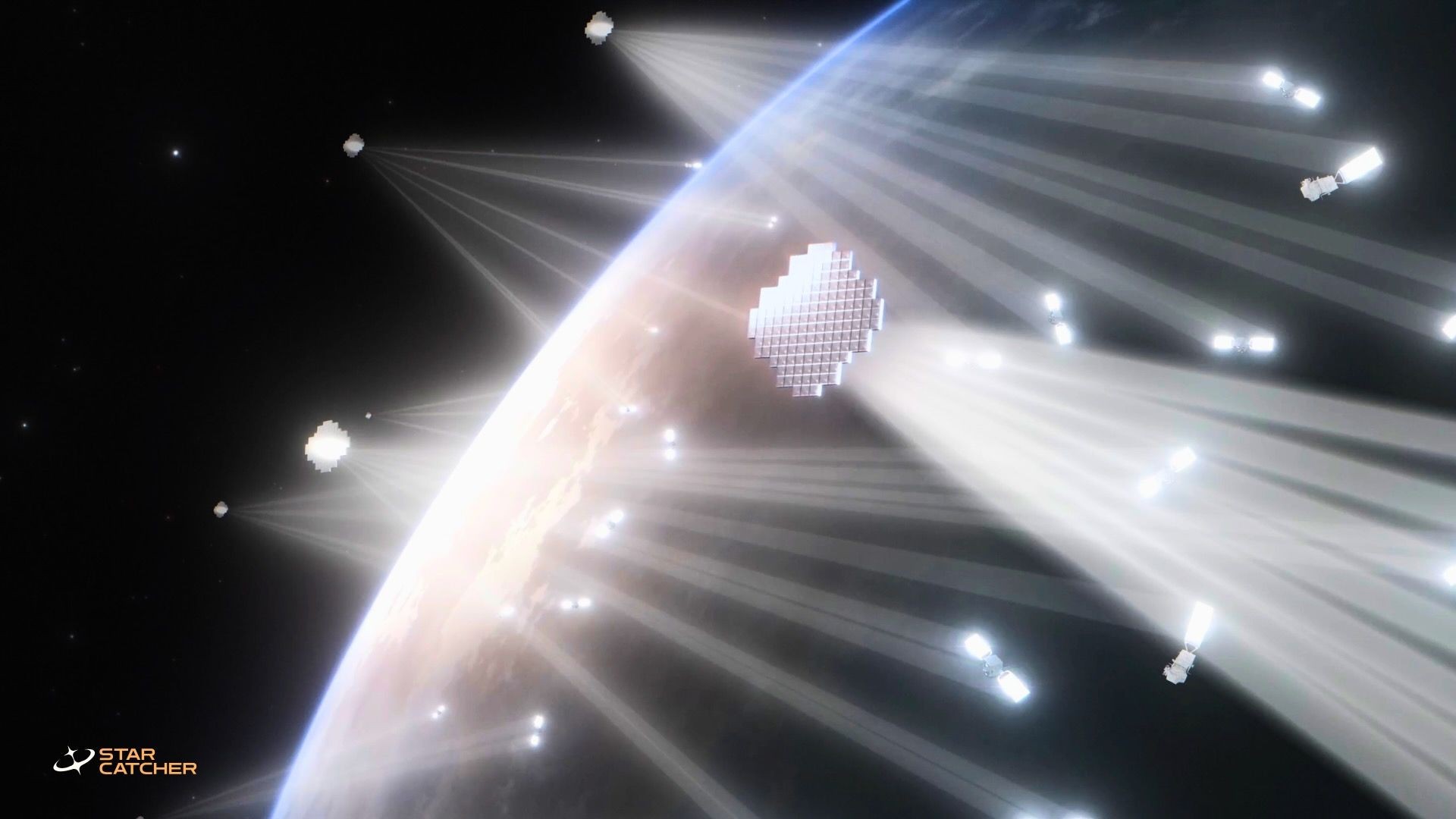
Star Catcher’s solution involves a network of “power node” spacecraft in Earth orbit. These nodes harvest solar energy and transmit it via laser beams to client satellites. The recipient spacecraft require no complex modifications; they simply need standard solar panels to capture the incoming laser energy.
This approach offers several immediate benefits:
* Extended Uptime: Clients can operate at full capacity even during eclipses.
* Enhanced Maneuverability: National security and commercial satellites can perform more aggressive maneuvers or sensing tasks without draining their primary batteries.
* Life Extension: Older satellites with degraded solar arrays can be “trickle-charged,” allowing them to remain operational far beyond their original design life.
“We’re moving from a world of power budgets into a world of power abundance,” said Rush. “This eliminates the bottleneck that has constrained satellite capabilities for decades.”
Commercial and National Security Implications
The demand for orbital power is driven by two emerging sectors: direct-to-cell telecommunications and on-orbit AI data centers. Both applications require significantly more energy than traditional satellites, making them ideal candidates for Star Catcher’s grid.
While on-orbit data centers are currently theoretical, major players like Google and SpaceX are exploring constellations that would require robust power infrastructure. Simultaneously, national security agencies face similar constraints. Retired Space Force General Jay Raymond, who is joining Star Catcher’s board, noted that persistent surveillance and resilient communications are currently hindered by power limitations. An on-demand grid could expand critical capabilities for government missions.
Looking Beyond Earth: The Lunar Horizon
While the initial focus is on Earth orbit, Star Catcher’s long-term vision extends to the Moon. In approximately a decade, the company aims to provide power-beaming services to equipment on the lunar surface, particularly near the lunar south pole.
This region is a primary target for NASA’s Artemis program due to the presence of water ice in permanently shadowed craters. However, these areas receive little to no sunlight, making solar-powered lunar terrain vehicles (LTVs) ineffective for deep exploration. Star Catcher proposes orbiting power nodes that can beam energy down to LTVs, allowing them to venture into craters like Shackleton with the reliability of a “power line.”
Crucially, this technology is designed to complement, not replace, nuclear power. Star Catcher envisions its grid distributing energy generated by lunar nuclear reactors or providing power during the early stages of base construction before nuclear assets are fully deployed.
Proven Technology and Near-Term Milestones
Despite being founded only two years ago, Star Catcher has already demonstrated significant technical progress on Earth:
- March 2025: Successfully transmitted energy over 300 feet (90 meters) at EverBank Stadium in Jacksonville, Florida.
- November 2025: Broke the previous DARPA record by beaming 1.1 kilowatts of power to commercial solar panels at NASA’s Kennedy Space Center (surpassing the prior 800-watt record).
The company is now preparing for its first off-Earth test, scheduled for later this year. This mission will involve beaming power to a free-flying satellite in orbit. Following this initial test, Star Catcher plans a series of missions to scale up power output and distance, with the goal of launching commercial services by the end of the decade.
Market Validation
Interest in the technology is already tangible. Star Catcher has signed seven power purchase agreements with companies including Starcloud, Loft Orbital, and Astro Digital, and has secured multiple government customers. The latest funding round was led by B Capital, with participation from Shield Capital and Cerberus Ventures, reinforcing the company’s strategic position at the intersection of energy infrastructure and space exploration.
Conclusion
Star Catcher’s $65 million raise signals a maturing phase for space infrastructure, moving beyond mere access to orbit toward sustainable, high-energy operations. By solving the fundamental constraint of power availability, the company is laying the groundwork for both the commercialization of low-Earth orbit and the eventual human expansion to the Moon.