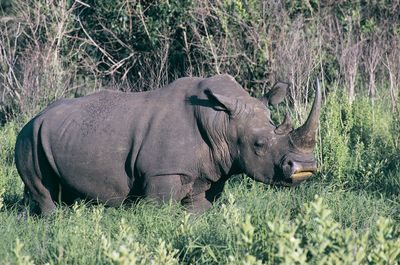
Rhinos aren’t just big. They are the definition of heavy.
As members of the Rhinocerotidae family, these giant horned herbivores hold their ground as some of the largest land mammals currently walking the planet. Only African and Asian elephants surpass them in shoulder height. But scale alone is only half the story. The real story is how close they are to vanishing.
We are looking at a total population was less than 30,000. This is not a stable number. It’s fragile.
The size hierarchy within the groups is strict. The two largest species are the white rhinoceros (Ceratotherium simum ) and the Indian rhinoceros (Rhinoceros unicornis ). The white rhinoceros, also known as the square-lipped rhino, is so large that some taxonomists have split it into two distinct species: the northern white rhinoceros (C.cottoni ) and the southern white rhinoceros (C.simum ).
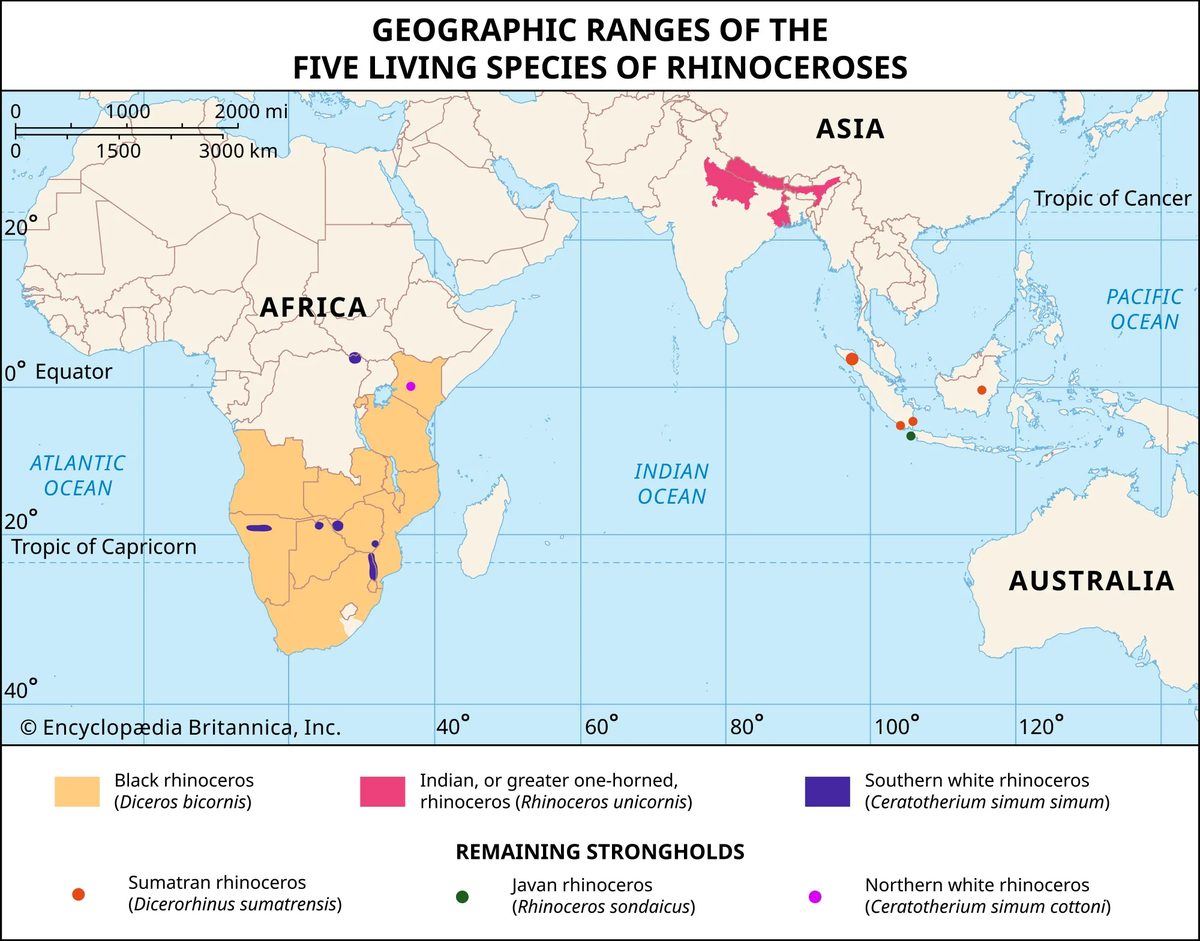
Geography draws the boundaries between them. White and black rhinoceroses (Diceros bicornis ) live in Africa. Asia holds the rest. The Indian rhinoceros, the Javan rhinoceros (R.sondaicus ) and the Sumatran rhinoceros (Dicerorhinus sumatrensis ) are all Asian species.
This distribution is important. These animals are now restricted to certain areas in eastern and southern Africa and subtropical and tropical Asia.
Think about the contrast. Early in their history, rhinoceroses were one of the most successful lineages of ungulates. They thrived. They dominated. Today, the situation is unstable. All but one of the surviving species are on the verge of extinction. The group has gone from ubiquitous to barely holding on.
Why did such a successful bloodline fall so far? The answer lies in habitat loss and poaching, but the immediate reality is that their numbers are few. Very few. And what remains is scattered.
Anatomy of a Giant
Rhinos don’t have horns. It’s not what you think. There is no bone in their nose. This is keratin. Hair and nails contain the same protein. One or two horns, the material is the same. This is not a mineral deposit. This is a change in the structure of the skin.
The five extant species vary greatly in size. Let’s take the Sumatran rhinoceros as an example. This is the smallest. The length is about 2.5 meters. The height of the shoulder is 1.5 meters. It’s about the size of a large SUV. But look at the white rhinoceros. Grows to 4 meters. The height of the shoulders is almost 2 meters. Adults of these large giants can weigh up to 3-5 tons. It’s heavy. It’s substantial mass.
Their skin is their armor. thick. Forms a plate-like folds. You can clearly see the shoulders and thighs. color? It is always gray or brown. Even the “white” rhinoceros. The name is a mistranslation. It refers to wide lips, not skin color. Of course, they tend to be paler than their cousins. But it was never white.
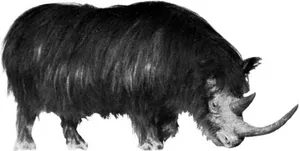
Hair is rare. With the exception of the Sumatran rhinoceros, most species are almost hairless. You might find it at the tail end. Or by the ear. But look at the fossils. Some ancient rhinos were covered with thick fur. I don’t know why they lost it. Maybe it’s the heat. Maybe it’s friction.
Their feet tell a different story. Three short toes. The nails are wide and dull. Designed with stability in mind. It’s not about speed. It’s not grace. A truly pure and unwavering presence.

The sight of a rhino roaming the savannah is iconic, but it only tells half the story. Most rhinos are solitary animals by nature. They actively avoid each other, preferring isolation to companionship. It’s a solitary existence defined by wide, empty spaces and minimal social interaction.
There is one major exception to this rule. The White Rhino breaks this mold. These giants live in groups. They can gather in groups of up to 10 animals. This social structure distinguishes them from their solitary cousins.
How area tagging works
For solitary species, space is everything. Everyone has their own home. They patrol this border every day. The result is a well-worn trail network that runs through its area.
Communication here is more chemical and visual than vocal. Marking territory is the main function of this movement. Rhinos use urine to mark boundaries. They also leave heaps of dung in these borders.
Rhinos communicate by smell and movement, not by sound.
These signs act as an invisible fence. They warn other rhinos to stay away. This is a clear sign of ownership and presence. The path itself is a reflection of their everyday life. They are the fabric of the rhino’s world.
This behavior is not unique to any particular species. This is a common tactic among lone rhinos. The fact that white rhinos now live in groups highlights the evolution of their social structure. But for others, loneliness is normal.
Why a rhino’s senses are more important than sight
You might think that a 2 ton animal like a two-ton animal. This is not true. Rhinos have terrible eyesight. Their eyesight is very poor. But what about their hearing? sharp. What is their sense of smell? acute. They explore the world through smell and sound rather than sight.
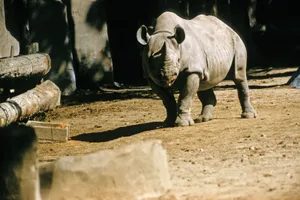
Most prefer to avoid humans. You are not interesting to them. But don’t get comfortable. Males. Females with calves. Both can attack without provocation. The black rhinoceros (Diceros bicornis ) is different. It is ill-tempered. Unpredictable. It may charge any unfamiliar sound or smell.
Despite their size, they are very agile. Black rhinos can reach speeds of about 45 kilometers (30 miles) per hour. Even in thick brush. Even if you forget to charge it, you can quickly get back on track. It’s not just fast. It’s dangerous.
Hidden low-frequency language
Like elephants, rhinos use infrasound to communicate. These are below the human hearing threshold. You cannot hear them. But they hear each other.
Why are they using such a low frequency? This may be an adaptation of rhinos to stay in contact with each other in dense vegetation. Sound travels differently in dense undergrowth. Low frequencies cut through.
It may be that females advertise males when they are interested in breeding. This invisible conversation keeps species connected. It avoids physical confrontation. Save energy. I just can’t hear it.
Slow math for survival
Rhinoceroses, along with horses and zebras, dominate the order Perissodactyla simply because of their enormous mass. However, maintenance tax must be paid on this amount. Large mammals reproduce slowly, and the rhinoceros is an excellent example of this limitation.
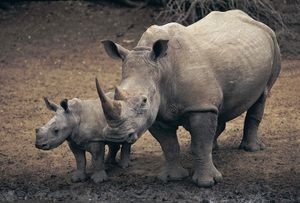
Females do not become pregnant until they are about 6 years old. Then comes the wait.
Gestation in most species lasts up to 16 months. They birth a single calf. The recovery time before giving birth is two to four and a half years. This is not an error. This is a feature of the size. As a result, females of reproductive age are lost to poachers, creating a population bottleneck that will take generations to repair. There is one exception to this rule. If a female Indian rhinoceros loses her calf, she will quickly become pregnant again. Tigers kill 10-20% of these calves. However, tigers rarely target rhinos over a year old. After a calf’s first birthday, it is virtually immune to damage from non-human predators.
Teeth and horns: a comparative study
Asian rhinos do not use their horns to fight. They fight with the external incisors of the lower jaw. These sharp teeth can be 13 cm (5 in) in males. They fight for breeding females and cause fatal injuries. It’s a cruel, tooth-driven hierarchy.
African species do not have such long ivory incisors. Instead, they rely on their horns to fight. The distinction is anatomical and behavioral. The Asian rhino uses its teeth. The African rhino uses its horn.
Rhino horn is the biggest cause of extinction. The demand comes from traditional Chinese medicine. Contrary to popular reports, this powder is not an aphrodisiac. It is an antipyretic.
Substitute agents exist. Pig bones and buffalo horn can also be used as functional alternatives. Still, the market doesn’t care. Rhino horns are sold in Asian markets for tens of thousands of dollars per kilogram. Price tags encourage poaching. Poaching remains a serious problem for all rhino species. Biology moves slowly. The economics are fast. The result is a steady decline.
Giant in front of the Horn
Although the word “rhinoceros” now conjures up images of animals with horns, it technically refers to a larger, older family called Rhinocerotidae. This group includes dozens of extinct fossils. One of the most famous is the woolly rhinoceros (Coelodonta antiquitatis ). During the last ice age, they roamed the icy land.
But the story of the rhino doesn’t start with armor and horns. Early members of the family were strikingly similar to ponies. They have no horns at all.
Horns are a relatively new development in this lineage.
Evolution took time here. For millions of years, these animals with no facial protrusions have graced the earth.
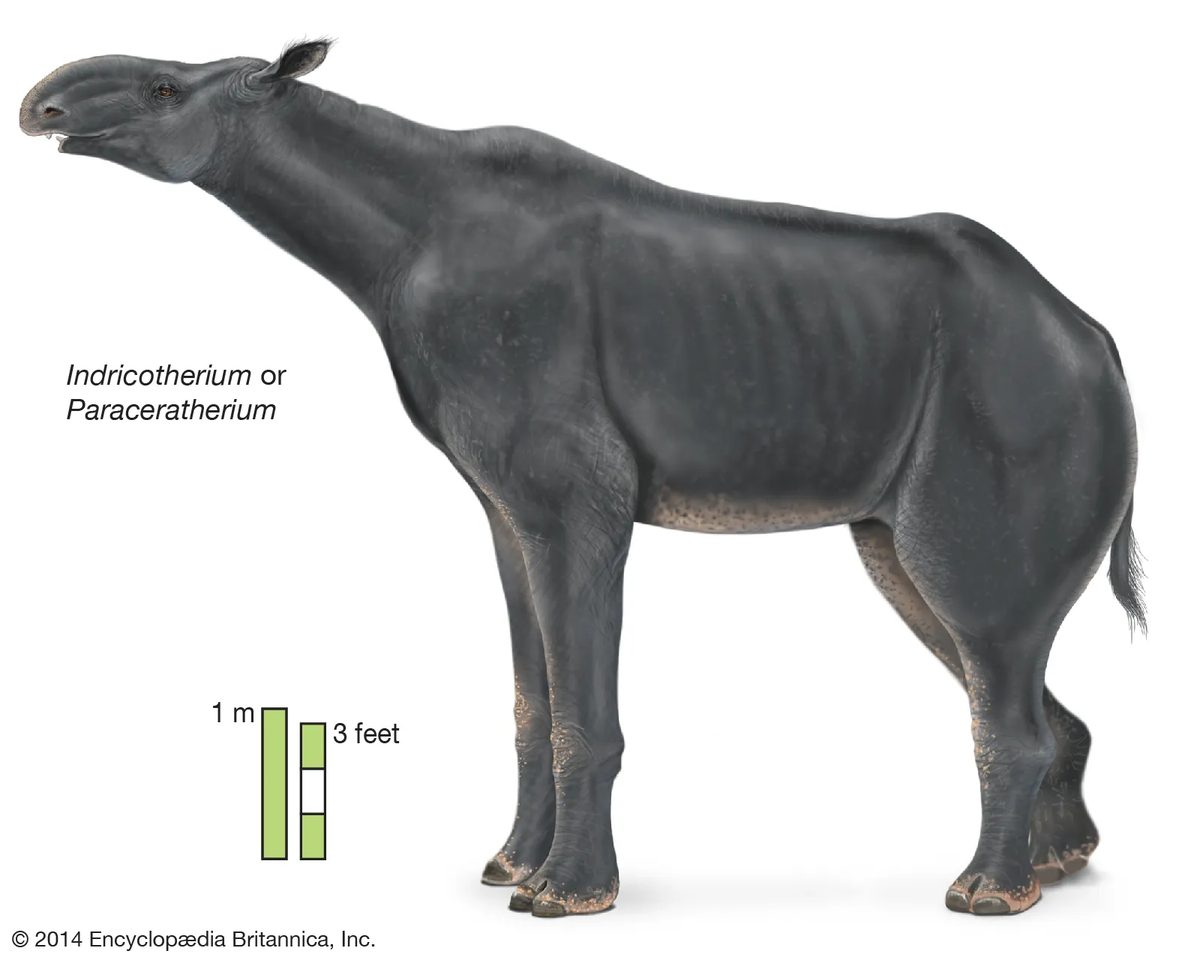
Then there is Indricotherium. This strange dactyl creature is more than just a relative of the rhinoceros. It is the largest land mammal that ever lived. Elephants do not have this title.
Indricotherium 6 meters (20 feet) long. Overrides everything else.
How did it survive? It browsed treetops like a giraffe. Their large size allows them to reach high vegetation where other herbivores cannot. This is not a dull creature. This is a towering browser that shaped the prehistoric landscape.
We tend to think of rhinos as slow, thick-skinned tanks. However, their Ancestors were agile and large. The woolly rhinoceros reminds us of adapting to the cold. Indricotherium shows its size potential.
Today only five species remain. They are very different from the giants of the past. However, their ancestry can be traced back to these different forms. From our horse-like ancestors to our towering browsers. Rhino’s Evolution is a story of change. Not just in horns. But in terms of scale and survival.