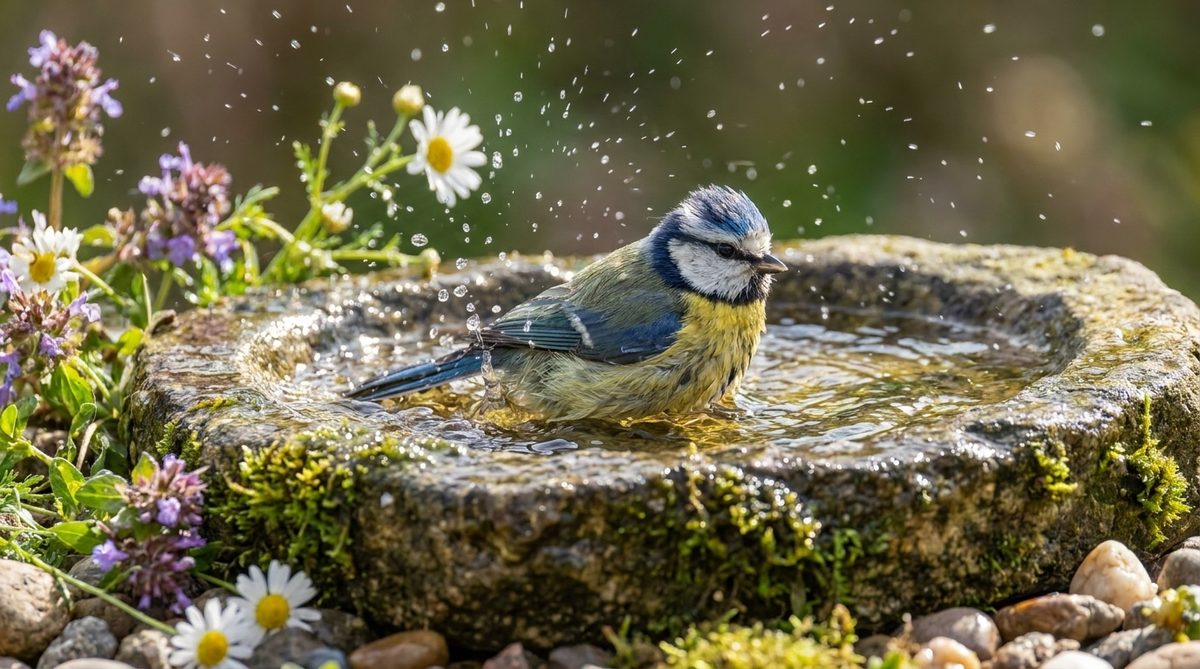
In July, you can see them everywhere. In the garden was a ceramic pot filled with water surrounded by half-submerged stones. This seems like a deliberate aesthetic choice. Slightly rustic decoration. But this is not the case. This arrangement is a survival mechanism for the small worker bees that fly around the flowers.
As the temperature rises, the importance of water increases. They are also deadly.
Bird baths are a luxury for songbirds. This can be a trap for bees and other pollinators. The smooth sides of plastic or glazed ceramic do not provide grip. The thirsty insect lands, extends its proboscis and slips. Its wings were heavy with water. It cannot climb out. It drowns.
This is a hidden danger lurking in any shallow water. That’s why beekeepers have been using this simple technique for decades.
Invisible threats to pollinators
We consider water a natural resource. We fill our bowls and forget about them. But to a creature the size of a bee, a smooth pool is an abyss.
Sparrows and tits can easily drink from these water baths. they have claws. They have leverage. This is not the case with bees. They are light. They are built for flight rather than climb flat vertical surfaces. When they hover over the water while drinking, even a small slip can mean a fall.
After immersion in water, recovery is almost impossible. The tension of the water holds them in place. The lack of texture prevents them from finding purchase on the walls because they lack structure. They drown in plain sight. It is an invisible killer that kills countless insects every summer.
Rocks as a life raft
The solution is hidden in plain sight. The beekeeper’s “secret” is simple. This means adding rocks.
Placing small stones, gravel or clean marbles on the bottom of the pool forms a network of islands. The stones should be placed so that some of them remain dry or at least partially exposed.
This creates a landing pad.
Bees can land on warm rocks. It can rest its legs securely. It can extend its mouthparts, they can drink water without the risk of falling. The rock provides grip. It provides safety. It turns a death trap into a watering hole.
Key Insight: Slippery surfaces are deadly for pollinators. Rough, uneven surfaces like rocks provide the grip insects need to drink water safely.
Why beehives need water in addition to nectar
Many people think that flowers alone are enough. Nectar gives energy. Pollen provides protein. However, a healthy bee colony requires a lot of water, especially in summer.
Bees don’t just drink water for themselves. They carry it back to the nest through their specialized stomachs. Once inside, they spread the droplets across the honeycomb frames.
Then they flap their wings.
This evaporation cools the nest. This is a natural air conditioning system. Without this, the internal temperature rises, which can melt the wax comb and kill the developing larvae. Water is as important to the nest’s survival as food.
If you see bees congregating near a water source, they are active. They cool the queen’s house. Supporting this process means giving them access to this water without dying.
How to build a safe water station
No expensive equipment required. A degree in entomology is not required. You will need a container and some stones.
Here’s how you can set up a pollinator-friendly water station in minutes.
- Choose a shallow dish. Terracotta dishes are also suitable. So do wide, shallow pots.
- Fill the plate with stones, gravel or smooth river stones.
- Add water until about three quarters of the stones are covered.
- Make sure some stones remain above the water line. They must be available.
- Place the disc in a quiet place. Away from heavy foot traffic. Ideally, you should be close to the flowers.
The water level should be low. Even Deep water is dangerous because insects can drown in rock crevices if the water level is too high. Keep it shallow. Stay safe.
Avoid common mistakes
It’s not enough to set up the water and walk away. Hygiene is important.
Stagnant water breeds mosquitoes. Algae grow quickly in warm conditions. If you leave the same water for a week, you create a breeding ground for pests instead of a pollinator’s paradise.
Change the water every 2-3 days. Gently rub the stone to remove the algae.
Do not add sugar or honey to the water. It might seem like a treat, but it attracts predators. Feral bees, wasps and hornets find it. It also facilitates the spread of the disease among pollinators. All they need is clean water.
Even a small addition of stones can change the ecosystem of your garden. It shifts a space from neutral to supportive. It is a small gesture with a big ripple effect.
But there is more to consider. What happens when the stones are gone? Or when the water has completely evaporated? It’s a delicate balance. And it requires constant attention.
Hidden dangers in garden watering areas
Most people consider birdbaths and pet water bowls to be safe. it is not. A smooth, deep ceramic bowl is a death trap.
Bees are drowning in it every day. The butterfly sank. The little frog is stuck.
This is not a myth. This is a common ecological leak in urban environments. The solution is very simple. There is no pump. There is no electricity. Just a rock.
Why low water kills pollinators
Energy is needed to reach the deep ocean. For small insects, the energy costs outweigh the benefits. They immerse themselves in it and struggle with it. Surface tension holds them down. They drowned.
This isn’t just bad luck. This is habitat fragmentation. Urban heat islands consume natural resources. Flowers provide nectar but not water. Insects go further. They arrived parched. They found your garden. They fall into a trap.
“Limiting the risk of drowning these specific pollinators protects the entire fruit and flower harvesting network.”
If the bees die in the bowl, the tomatoes are no longer able to pollinate. The zucchini is still small. Your lavender has finished blooming. Its effects range from microscopic to culinary.
How to make a bee-safe water dispenser
You don’t need professional landscaping. Requires gravel. Or a stone. Or pieces of broken clay.
- Prepare a shallow dish.
- Fill with stones.
- Add water until just covered.
The stone should stand out. They act as a ladder. Breaks surface tension. Insects land on dry stones. It’s progressing. He reached the water’s edge without slipping under the water.
Where is the mineral patch placed?
Sunlight is important. Bees are cold-blooded animals. They need heat to fly. Place the container in a sunny place. It is not hot to the touch. It’s just warm.
Shadows are detrimental to this feature. Keeps the water cool and slows the penetration of insects. Cool bees are vulnerable to foreign enemies. Warm bees are active pollinators.
Also consider the wind. When the wind blows the board away, the rocks disintegrate. Fix it if necessary. Or use a wider base.
Which materials are the most effective?
Natural stone is ideal. Provides texture. Insects are easy to catch. Plastic becomes slippery when wet. Concrete is porous, but new concrete is often too smooth.
Coarse pumice is excellent. Water collects in these openings. It recreates a natural river bed. It looks very rustic. Suitable for any garden aesthetic.
Why this small intervention matters
We tend to think that storage requires a lot of space. national park. A renewal project. These are mandatory. But most people living in cities are far away.
The gardens are in the foreground. This is where people and wildlife meet. Each dish is a node in the network. Each added dry rock is a vote to survive.
This is not about saving the world in one day. It’s about stopping the bleeding with a teaspoon.
Dry stone chain reaction
Imagine the number of insects visiting your garden. Hundreds of cases a day. If 10 people drown, you lose. If 50 people drown, that’s a trend.
Twist it. More stones. 50 people survived. It flies to the next flower. They carry pollen. they fertilize