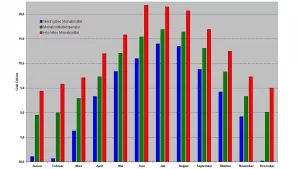
You might expect the summer solstice to be the peak of the heat. On June 21, the sun reaches its highest point in the yearly cycle. It shines for the longest duration and hits the ground with maximum intensity. Yet, the real scorching heat usually arrives in July and August. Why does the temperature lag behind the solar maximum?
The heat storage effect
The answer lies in how the Earth handles energy. The sun delivers the most power at the solstice, but the land and oceans need time to absorb it. Think of a wet sponge. You can pour water on it instantly, but it takes time to saturate. Similarly, the Earth acts as a thermal battery.
During the first half of summer, the ground is still recovering from the spring chill. It soaks up sunlight faster than it releases heat. By July and August, the reservoir is full. The surface has finally caught up to the solar input. That is why the peak heat often lags the solstice by several weeks.
Distance is not the driver
There is a common misconception about why summer is hot. Many assume the Earth is closer to the sun in June. That is actually false. The Earth reaches its closest point to the sun, called perihelion, in early January. In June, we are at aphelion, the farthest point in our orbit.
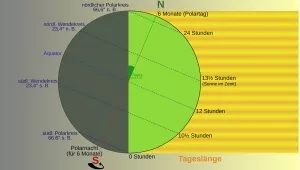
So, why is it hot in the Northern Hemisphere in June? Tilt, not distance. The Earth’s axis is tilted. In June, the Northern Hemisphere leans toward the sun. This tilt causes two critical effects:
1. Longer daylight hours.
2. Steeper sun angles.
The sun hits the surface more directly, concentrating energy over a smaller area. This geometry outweighs the slight increase in distance. The tilt is the primary engine of the seasons.
The seasons are driven by axial tilt, not orbital distance.
What this means for daily life
Understanding this lag helps explain local weather patterns. If you track temperature data, you will see a consistent delay between the solstice and the annual temperature peak. This isn’t a glitch; it’s physics in action. The thermal inertia of the land and ocean creates a buffer that smooths out the solar input.
Next time you check the calendar, remember that the longest day is just the start of the heat buildup. The real peak is still coming.
Why July and August feel hotter than the actual peak of sunlight
You might expect the hottest days to arrive the moment the sun hits its highest point in the sky. You’d be wrong.
The lag is called seasonal lag. It’s the reason your house stays warm long after you turned off the heating. The ground and the oceans act like giant thermal batteries. They soak up solar energy in June, but they don’t release that heat into the atmosphere immediately. It takes weeks for the accumulated warmth to saturate the air.
Think of it like preheating an oven. You don’t pull the cake out the second you hit the button. You wait.
Europe makes this dynamic even more complex. We are a continent constantly battered by westerly winds coming off the Atlantic. Ocean water has a much higher heat capacity than land. It heats up slowly. In early summer, the Atlantic is still relatively cool. It acts as a buffer, dampening the extreme temperatures that inland regions experience. By the time the ocean has stored enough energy to push warm air over the land, we are already deep into July.
This same principle explains why the hottest part of the day isn’t at noon. It’s usually between 2 and 4 PM.
At solar noon, the sun is highest. But the ground is still catching up. The air keeps warming as long as the ground is radiating more heat than the atmosphere is losing. Only when the sun drops enough in the afternoon does the balance tip, and the air begins to cool.
Why summer is hot even though Earth is farthest from the Sun
Here is a fact that tends to trip people up.
Summer isn’t hot because we are close to the Sun. In fact, we are the farthest away from it during our summer.
Every year in early July, Earth hits aphelion. That’s the point in our elliptical orbit where we are about five million kilometers farther from the Sun than we are in January (perihelion). So, if distance were the only variable, July would be our coldest month.
It isn’t.
The culprit is the tilt of Earth’s axis. In the Northern Hemisphere summer, the planet is tilted toward the Sun. This changes two things drastically.
First, the angle of incidence. Sunlight hits the Northern Hemisphere more directly. Instead of spreading out over a large surface area (like a flashlight held at an angle), the rays strike the ground nearly perpendicular. That concentrates the energy.
Second, the duration. The days are longer. The sun stays above the horizon for 15, 16, or even 18 hours in some places. More time under the lamp means more total energy absorbed.
So, distance is a red herring. It’s the geometry of the orbit and the axial tilt that decides your comfort. The Sun is farther away, yes. But it’s also staring at your backyard for longer and hitting your shoulders harder.
Which matters more? The angle. Always the angle.
Why Summer Nights Stay Warmer Than Winter Nights
The difference isn’t just about the sun hitting your face. It’s about how long the ground holds onto that heat.
During a long summer day, the Earth absorbs a lot of solar energy. Soil, buildings, plants, and the air all soak it up. When the sun sets, that stored energy doesn’t vanish instantly. It leaks out slowly. This is why summer nights often feel mild. The air around you is still radiating heat stored during the day.
Winter is different. The sun sits low on the horizon. Days are short. The energy input is weak. The ground barely warms up.
So when night falls, there is little stored heat to release. The surface cools rapidly.
Dry winter air makes this worse. Less water vapor means less insulation. The atmosphere holds less heat, so it escapes into space faster.
This creates a sharp drop in temperature after sunset. You feel it instantly.