


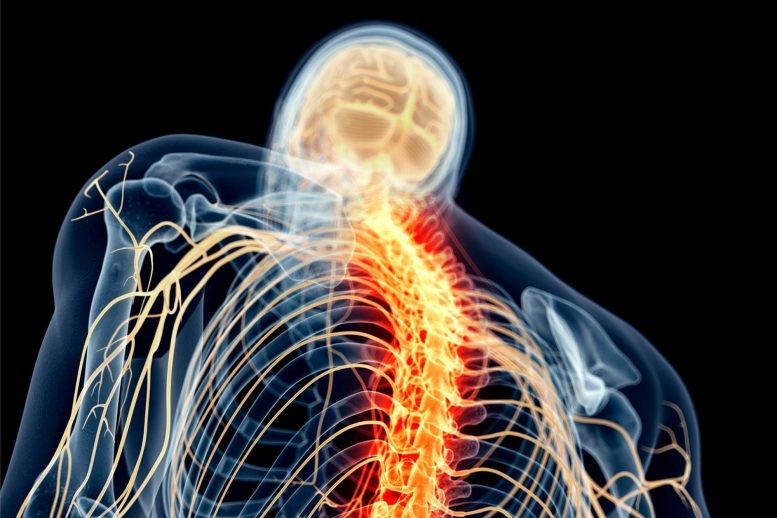
Human spinal cords don’t regenerate. They scar. The immune system overreacts. It creates a wall of tissue that blocks nerve connections. Movement is lost. Permanent damage follows.
Zebrafish do something else entirely. They heal.
New research from the Center for Regenerative Therapies at TU Dresden and the University of Edinburgh explains how. The secret isn’t a magical growth factor. It is a specific signal from a specific immune cell. It is a process called neutrophil-mediated immune modulation. This mechanism allows zebrafish to control inflammation long enough to rebuild neural circuits.
The study, published in Journal of Neuroinflammation, identifies a subpopulation of neutrophils that act as conductors. They prevent the immune system from destroying the very tissue they are meant to protect.
The Neutrophil Misconception
We tend to view neutrophils as the body’s cleanup crew. They arrive first at a wound site. They eat debris. They fight bacteria. When they are done, they die. It is a simple cycle of destruction.
But in spinal cord injury, that cleanup crew is often too aggressive. In humans, this aggressive response leads to chronic inflammation. It creates scar tissue. It stops repair.
In zebrafish, neutrophks take on a second role. They release a signaling protein called Il-4 (Interleukin-4).
“They act like conductors that tell other immune cellsto return to a harmonious rhythm.”
– Prof. Thomas Becker, TU Dresden
This Il-4 signal is not just about clearing trash. It is a command. It tells other immune cells—specifically macrophages—to calm down. To reduce the inflammatory response. To stop producing excessive inflammatory proteins.
Without this signal, inflammation runs wild. It blocks regeneration. With it, the path clears.
Blocking the Signal Breaks the Process
To prove this, the researchers didn’t just watch. They intervened. They used genetic tools to disable the relevant neutrophil subpopulation in larval zebraffish.
The results were predictable and stark.
Without these specific neutrophils:
* Inflammatory proteins spiked.
* Nerve fibers stopped growing.
* The fish could not recover movement.
The immune system locked into a destructive cycle. It prioritized defense over repair. It scarred over the injury before nerves could reconnect.
Then came the twist. The researchers didn’t add more neutrophils. They added pure Il-4 directly to the injury zone.
Even without the cells to produce it, the signal alone was enough. Inflammation subsided. Nerves regrew. Spinal cords regenerated. The fish walked again.
This confirms that Il-4 is the key regulator. It is the switch that flips the immune response from “attack” to “repair.”
Timing and Intensity Matter
Successful regeneration depends on control. Not just suppression. Not just activation. Control.
The intensity of the immune response must be balanced. The timing must be precise. Too little immunity? The fish succumbs to infection or damage spreads. Too much? Scar tissue forms. Repair is impossible.
Zebrafish neutrophils provide that balance. They release Il-4 to dampen macrophage activity. They create a window of opportunity for delicate nerve fibers to grow through the injury site.
It is a delicate dance. And in humans, the music is off.
Does This Apply to Humans?
This is where the hope meets the hard wall of biology.
Why can zebrafish regenerate spinal cords while humans cannot? We do not know for sure. We suspect our immune systems are harder-wired for scarring. It is a defense mechanism that prevents bleeding but also prevents healing of the central nervous system.
The study identifies Il-4 as a key player in zebrafish. It does not prove Il-4 works the same way in humans.
“It remains to be seen if Il-4 playa similar role in humans and whether itcan finely balance the inflammation.”
– Xiaobo Tian, Lead Researcher
Human macrophages might respond differently. Human tissue might react to Il-4 in ways we do not yet understand. Or it might work exactly as it does in fish.
We simply do not know yet.
Further research is needed. We need to determine if human immune cells can be coaxed into this reparative mode. Can we mimic the neutrophil signal? Can we use Il-4 or similar molecules to calm inflammation in spinal cord injury patients?
If we can, we might stop creating scar tissue. We might start creating regeneration.
It is a promising avenue. A difficult one. But for the millions of people with spinal cord injuries, it is the only path forward. The zebrafish shows us it is possible. The question is whether we can replicate the trick.
Reference: Tian X, Docampo-Seara A, Heilemann K, et al. “A reparative neutrophil subpopulaction accelerates spinal cord regeneration in zebafish by controlling macrophage infammation via Il-4.” Journal of Neuroinflammation. 2026. DOI: 10.1188/s12974-603878-8
Funding: Chinese Scholarship Council PhD Fellowship, Alexander von Humboldt Stiftung Professorship, TU Dresden core funding.


