


Fixing a glitch in a multimillion-dollar science project usually means spending millions more. Or inventing something brand new.
Not this time.
Scientists working on the Laser Interferometer Gravitational-Wave Observatories (LIGO) found a solution to a persistent engineering headache using something you might buy online. An off-the-shelf thermal imaging camera.
It sounds almost too simple for a facility designed to detect ripples in spacetime caused by colliding black holes. But that’s exactly what a team led by Jonathan Richardson from the University of California, Riverside has done.
How thermal imaging corrects mirror distortions in LIGO
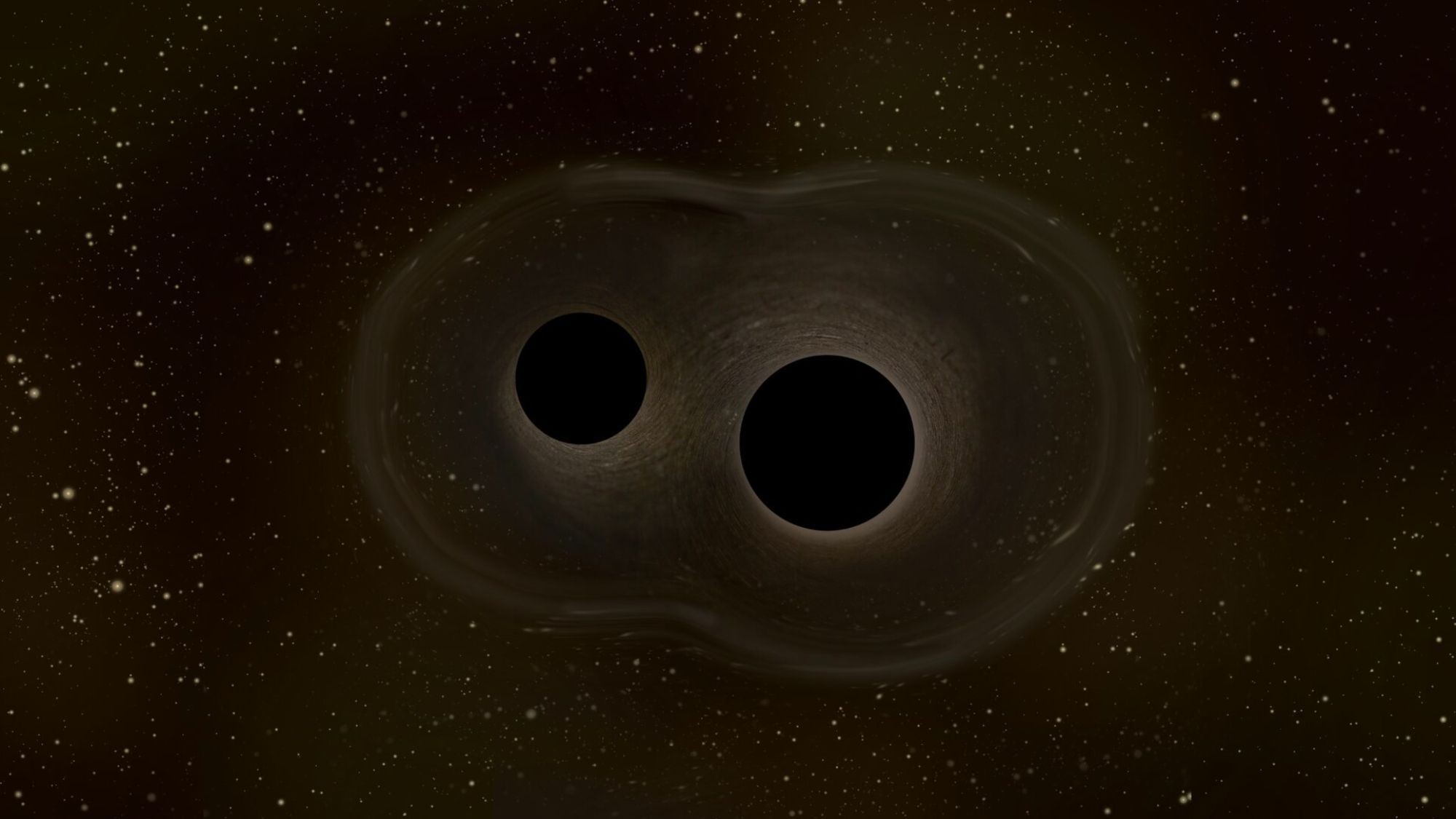
LIGO listens for the universe’s most violent events. When two black holes smash together, they send shockwaves through space-time. These gravitational waves pass through Earth, stretching and squeezing space itself by microscopic amounts.
Inside LIGO’s twin L-shaped facilities in Washington and Louisiana, laser beams travel down 2.5-mile tunnels. They bounce off mirrors so perfect they reflect 99.9997% of the light hitting them. The purity of these mirrors is staggering. They are among the best optical components ever made.
But perfection has a cost. Even the best mirrors absorb a tiny fraction of the laser energy. That energy turns into heat.
The heat warps the mirror’s surface by just a few nanometers. It’s a microscopic distortion, but it scrambles the laser beam. This limits how far LIGO can “see.” Or rather, how far it can “hear.”
Richardson’s team paired commercial thermal cameras with computer models. They created a map of the heat distortions on the mirrors. Think of it like diagnosing a car engine by scanning its temperature. You see the hot spots on the outside. You infer what’s happening inside.
With this map, physicists can apply targeted heat to the back of the mirror. This counteracts the warping. The laser beam stays clear. The sensitivity improves.
“It doesn’t require any new technology development. Which is almost unheard of for solving a LIGO instrument problem.”
Why this upgrade expands LIGO’s reach by 33 million light-years
Why does a better mirror matter?
Space is three-dimensional. When you extend your reach in one direction, your volume of observation grows exponentially.
Richardson’s fix pushes LIGO’s effective range out by roughly 33 million light-years.
That number might look small next to the scale of the cosmos. But in terms of data? It’s huge. A slightly larger window means many more detectable events. Astronomers will catch more black hole mergers. More neutron star collisions. The universe gets louder.
This isn’t just a patch job for existing equipment. It’s a blueprint for the future.
The technique is already being baked into the design of Cosmic Explorer. This next-generation observatory aims for the mid-2030st. Its arms will stretch 25 miles—ten times longer than LIGO’s.
If LIGO’s fix adds depth, Cosmic Explorer aims for a tenfold increase in sensitivity overall. The main enemy there isn’t just heat. It’s quantum noise. The fundamental fuzziness of physics that limits measurement precision. But getting the thermal distortions under control is step one.
Is commercial technology better for sensitive scientific instruments?
There’s a comfort in the mundane. A standard thermal camera costs pennies compared to R&D budgets. It’s available. It’s proven.
LIGO’s reliance on off-the-shelf hardware flips the script on high-tech elitism. Sometimes the best tool isn’t the one built from scratch in a lab. It’s the one already sitting on a shelf.
The fix is ready. It will be part of LIGO’s next upgrade cycle. Then it goes into Cosmic Explorer.
The mirrors are still warm. The data is still coming in. But now we know where to look for the heat. And once you see the distortion, you can fix it.
Which leaves one question. What other cosmic secrets are hiding behind thermal noise?


