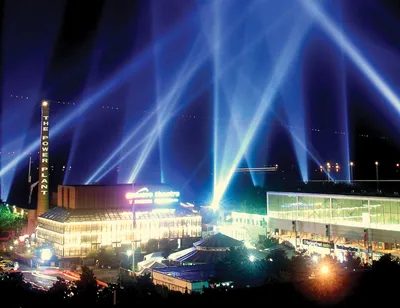
It is a beam of pure, concentrated power. A high-intensity electric light designed to cut through the dark. The searchlight uses a reflector shaped to focus that beam onto distant objects. It serves as a beacon. It searches for targets. It illuminates the impossible.
The technology is older than you might think. Carbon arc lamps have been used since about 1870. They were the first to provide that intense glow. But brilliance needed more. By about 1910, scientists added rare-earth fluorides or oxides to the carbon. The result was exceptional brilliance. The light became brighter. It became sharper. It could reach further.
Design mattered just as much as the fuel. In 1877, Col. Alphonse Mangin of the French Army invented a double spherical glass mirror. It was a significant leap forward. Engineers widely employed this design until about 1885. Then, the parabolic reflector took over. It focused light more efficiently. For military use today, the reflector is generally metal. It is durable. It is precise.
How does the technology work today? The answer depends on the scale. The largest modern searchlights still employ carbon arcs. They remain the gold standard for raw power. Smaller units, however, have moved on. They use incandescent and electric discharge lamps. The goal remains the same. Shine light where it is needed most.
The searchlight is not just a lamp. It is a tool for seeing in the blind spots of the night.
Why do we still use carbon arcs for the biggest beams? They produce a unique quality of light. One that other sources struggle to replicate at that scale. The smaller lights offer convenience. They offer longevity. They are practical. But the giants of illumination stick to the old ways.
This is how we light up the horizon.