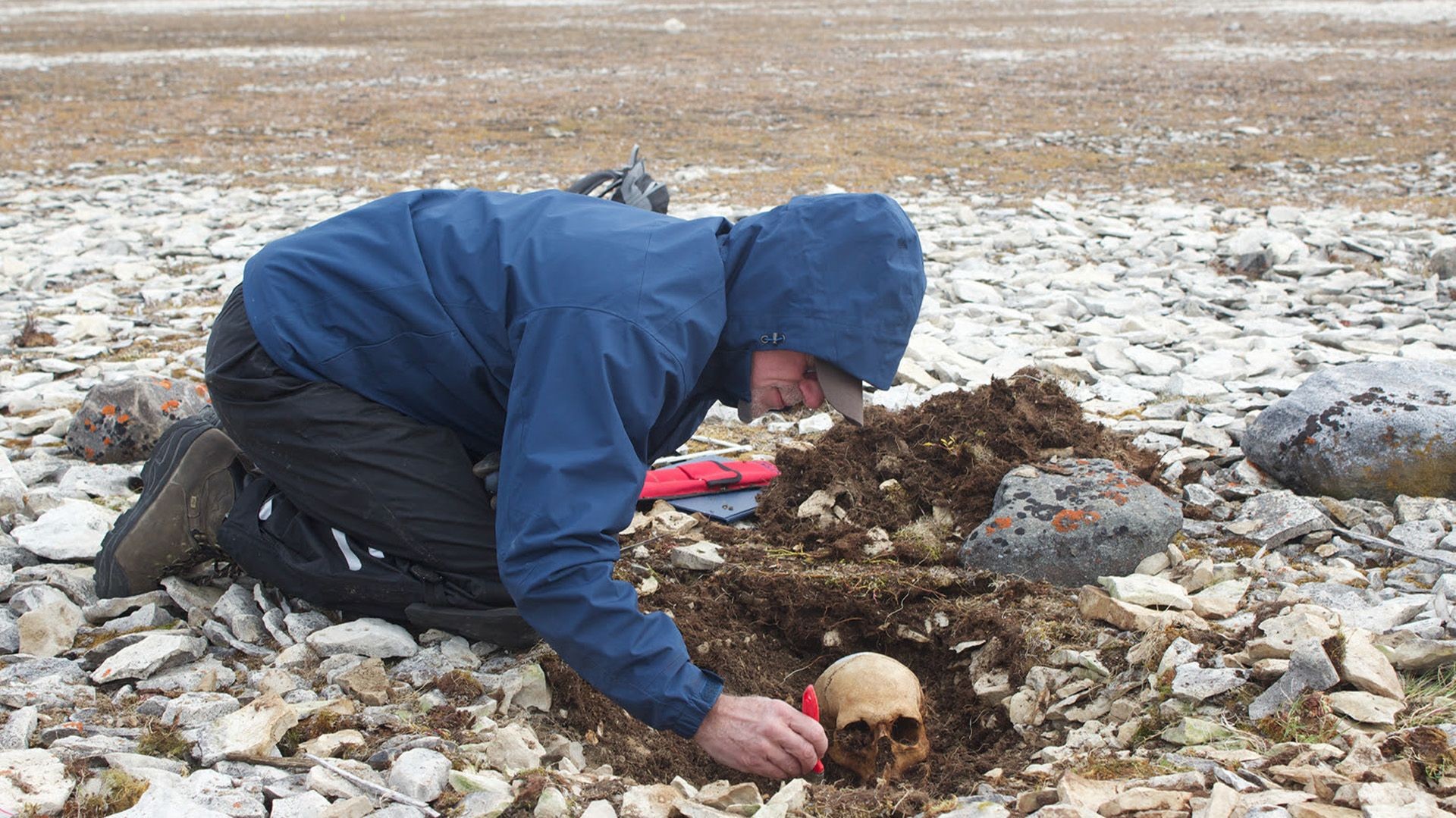
Nearly 180 years after vanishing into the Arctic ice, four crewmembers of Sir John Franklin’s doomed expedition have been positively identified. Thanks to advanced genetic analysis matching ancient DNA with that of living descendants, researchers have not only named these men but also uncovered poignant details about their final days. These findings, published recently in the Journal of Archaeological Science: Reports and Polar Record, offer a rare glimpse into the human tragedy behind one of history’s most famous maritime disasters.
The Human Cost of the Northwest Passage
The Franklin expedition departed England in May 1845 with 129 men aboard two ships, HMS Erebus and HMS Terror. Their mission was to chart the Northwest Passage, a lucrative Arctic route connecting the Atlantic and Pacific oceans. However, the fleet became trapped in ice off the Canadian archipelago in late 1846. Commander Sir John Franklin died on June 11, 1847, and by April 1848, the remaining 105 survivors abandoned the ships near King William Island.
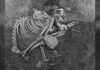
In a desperate bid for survival, the crew attempted to march overland to the Canadian mainland, dragging boats on sleds. None of them survived the journey. While subsequent search parties in the 19th and 20th centuries recovered artifacts and remains, the identities of most victims remained unknown until now.
New Identifications Shed Light on the End
The latest studies identify four individuals, providing crucial context to their final movements:
- Three from HMS Erebus: William Orren (an able seaman), David Young (a boy first class), and John Bridgens (a subordinate officer’s steward) were found near Erebus Bay. Crucially, the proximity of their remains suggests they died together, not in isolation. Researchers noted that “none of the men [from HMS Erebus] were alone when they died,” implying that others were still alive and nearby at the time of their passing.
- One from HMS Terror: Harry Peglar, a captain on the Terror, is the first crewmember from that ship to be identified via DNA. His remains were discovered approximately 125 miles (200 kilometers) from the frozen ships, indicating he traveled far into the remote wilderness. Unlike the Erebus group, evidence suggests Peglar died alone, dressed in the uniform of a steward.
Profiles of the Lost
The identification process relied on DNA samples provided by descendants, allowing researchers to cross-reference historical records with physical evidence.
- William Orren: A seasoned sailor who first went to sea at age 15, Orren returned to naval service at 38 to join the Erebus. Historical records describe him as 5 feet 4 inches tall with dark hair and brown eyes. His identification was made possible through DNA from a descendant of his sister.
- David Young: Only 17 when he joined the Erebus, Young followed in his father’s naval footsteps, though his father was not part of the expedition. His identity was confirmed using DNA from a descendant of his brother.
- John Bridgens: Born in 1818, Bridgens was trained as a hairdresser by his stepfather but chose a life at sea. He served as a musician during the war with China before volunteering for the Franklin expedition at age 26. Records indicate he was illiterate, marking his documents with a cross. His remains were identified using DNA from a descendant of his half-sister.
- Harry Peglar: Peglar’s personal effects, including poetry and journal entries describing life on board, were found on another body in 1859. His remains, located far from the ships, highlight the extreme distances some survivors covered in their final attempts to find safety.
Why This Matters
These identifications do more than just name the dead; they reconstruct the timeline and geography of the disaster. The fact that three Erebus men died together challenges narratives of total isolation in the final stages of the trek, suggesting small groups may have lingered near the ships longer than previously thought. Meanwhile, Peglar’s distant burial site underscores the vast, treacherous terrain the survivors attempted to cross.
“For the living descendants, these findings provide previously unavailable details regarding the circumstances and locations of their relatives’ deaths, as well as the identities of some of the shipmates who died with them,” said Douglas Stenton, an anthropologist at the University of Waterloo and lead author of one of the studies.
Conclusion
The identification of Orren, Young, Bridgens, and Peglar marks a significant step in closing the chapter on the Franklin expedition. By combining forensic science with historical archives, researchers are transforming anonymous remains into named individuals with stories, families, and final moments. As work continues, these discoveries promise to further illuminate the tragic journey of the 129 men who sought to conquer the Arctic.