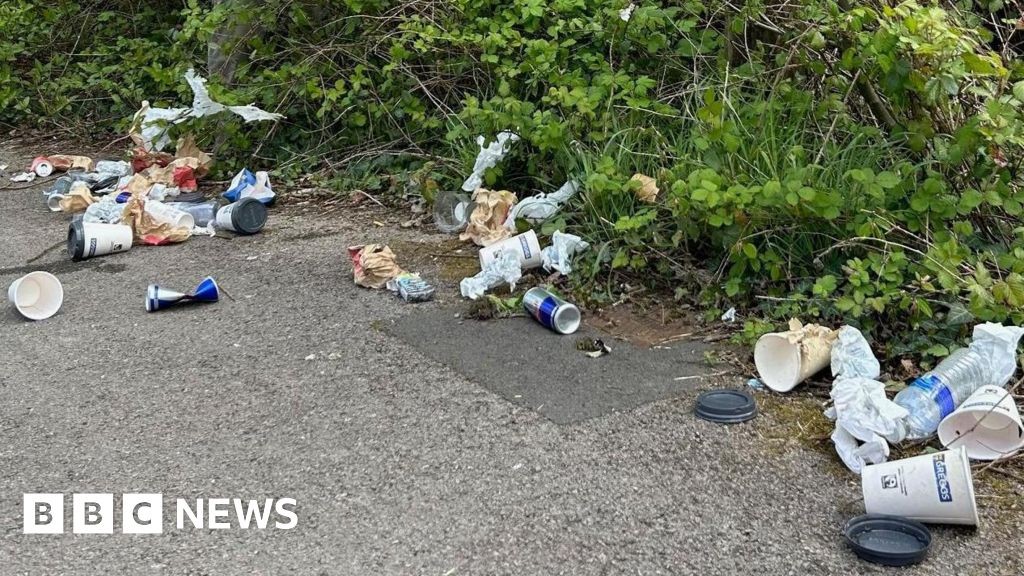
A comprehensive survey conducted by the environmental charity Keep Wales Tidy has revealed a startling statistic: litter is present on 98.8% of A and B roads across Wales. This near-universal contamination, described by campaigners as an “extraordinary rise,” highlights a growing behavioral issue among motorists who are increasingly discarding waste from their vehicles.
The data, gathered between April and December 2025, paints a grim picture of the Welsh landscape. The most prevalent offenders are items associated with on-the-go consumption:
* Smoking litter: Found on 88.1% of surveyed roads.
* Confectionery packaging: Present on 80.7% of routes.
* Drinks containers: Spotted on 72.1% of roads.
* Fast-food waste: Identified on 67% of routes.
The Human Cost of Convenience
Behind these statistics are the volunteers and municipal workers tasked with cleaning up the mess. For Ron Ford, a 75-year-old volunteer litter picker in Torfaen, the problem is both persistent and physically demanding. His group has collected nearly 14,000 bags of litter since 2018, with over 650 bags gathered in just the first few months of the current year.
Ford notes that much of the debris is not dropped accidentally but is deliberately tossed from vehicles. “It’s the quick ‘in the bush’ kind of thing,” Ford explains, describing how rubbish hidden in foliage creates hazardous conditions for cleaners who must “clamber through” dense undergrowth to retrieve it. He identifies fast-food outlets as significant contributors to the local problem, noting that areas near major chains are constantly littered.
Fellow volunteer Alison Harrison, 59, echoes this sentiment, stating that the situation has deteriorated significantly in recent years. Despite the “disheartening” nature of the work, volunteers remain driven by the immediate visual improvement their efforts bring to their communities.
Safety, Cost, and Public Responsibility
Owen Derbyshire, Chief Executive of Keep Wales Tidy, argues that the surge in “on-the-go” litter reflects a broader societal shift where individual responsibility is being overlooked. He emphasizes that tossing waste from car windows is not only unsightly but dangerous.
“It is ridiculous to me that anyone feels that it’s appropriate to chuck stuff out of their window while they’re driving. It shouldn’t be acceptable in Wales in 2026.”
The consequences extend beyond aesthetics. Discarded items, particularly vapes containing lithium batteries, pose a severe fire risk and can cause significant damage to vehicles. Furthermore, the cleanup process itself is perilous for workers.
The financial burden falls squarely on the taxpayer. Keep Wales Tidy estimates that approximately £3 million is spent annually across Wales solely on tackling roadside litter. This funding supports both volunteer initiatives and professional council teams, who often face difficult logistical challenges.
Operational Challenges for Councils
For highway maintenance teams, such as those in the Vale of Glamorgan, clearing litter from busy or rural roads often requires closing traffic lanes to ensure worker safety. Tony Spear, from the council’s Highways Maintenance team, explains that on rural roads, there is often “no other safe way” to conduct cleanup operations than to temporarily halt traffic, causing inconvenience to commuters.
Conclusion
The widespread presence of litter on Welsh roads is not merely an eyesore but a significant public health and safety issue driven by careless driver behavior. With nearly every major road affected, the solution requires a collective shift in attitude: individuals must take responsibility for their waste, recognizing that the cost of cleanup is borne by the public and poses physical risks to those tasked with maintaining clean environments.