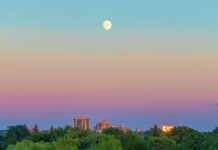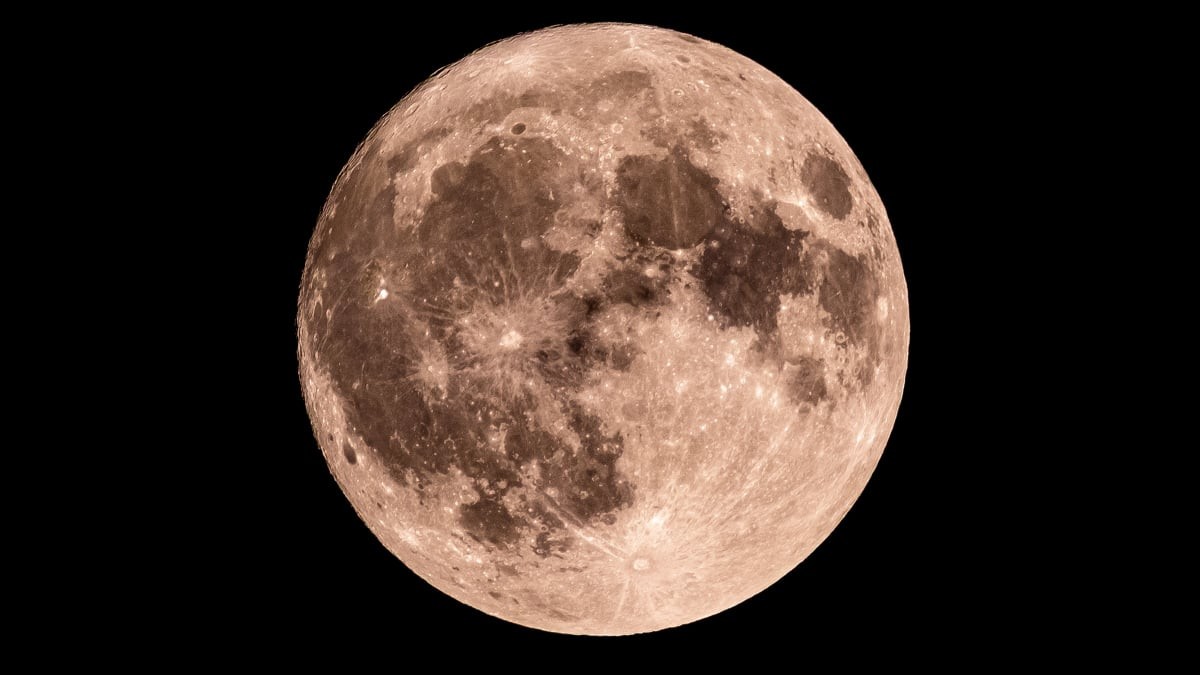
The night sky is brightening as we approach the next Full Moon. On Monday, April 27, 2026, the Moon is in its Waxing Gibbous phase, meaning it is steadily growing in illumination as it moves toward a complete circle.
Tonight’s Lunar View
According to NASA, approximately 82% of the Moon’s surface will be illuminated tonight. Because such a large portion of the Moon is lit, there is a significant amount of detail visible to observers, depending on the equipment used:
- With the naked eye: You can clearly observe the lunar “seas” (maria), specifically Mare Vaporum, Mare Tranquillitatis, and Mare Fecunditatis.
- With binoculars: The view expands to include the Mare Frigoris, Mare Nectaris, and the Apennine Mountains.
- With a telescope: Enthusiasts can dive into much finer details, such as the Apollo 15 landing site, the Rima Hyginus (a lunar rille), and the Fra Mauro Highlands.
Looking Ahead: The May Full Moons
If you are waiting for the Moon to reach its peak brightness, you won’t have to wait long. The next Full Moon is scheduled for May 1. Notably, May will feature two Full Moons, a phenomenon often referred to as a “Blue Moon” if the second occurs in the same calendar month.
Understanding the Lunar Cycle
To understand why the Moon changes shape, it is helpful to look at its relationship with the Sun and Earth. While the Moon takes about 29.5 days to complete a full orbit around our planet, we never see the “dark side” of the Moon; rather, we see different amounts of its sunlit side. This cycle consists of eight distinct stages:
The Growing Phases (Waxing)
As the Moon moves away from the Sun from our perspective, it appears to “grow”:
1. New Moon: The Moon is between Earth and the Sun, making its visible side dark.
2. Waxing Crescent: A small sliver of light appears on the right side (in the Northern Hemisphere).
3. First Quarter: Exactly half of the Moon is illuminated on the right.
4. Waxing Gibbous: More than half is lit, but it has not yet reached full illumination.
The Peak and Shrinking Phases (Waning)
After reaching its fullest state, the light begins to recede:
5. Full Moon: The entire face of the Moon is illuminated.
6. Waning Gibbous: The light begins to diminish from the right side.
7. Third Quarter: Half of the Moon is lit, but on the left side.
8. Waning Crescent: A final thin sliver of light remains on the left before the cycle resets.
Summary: Tonight’s 82% illuminated Waxing Gibbous Moon offers an excellent opportunity for stargazing, providing a clear view of lunar geography as we head toward a double Full Moon event in May.