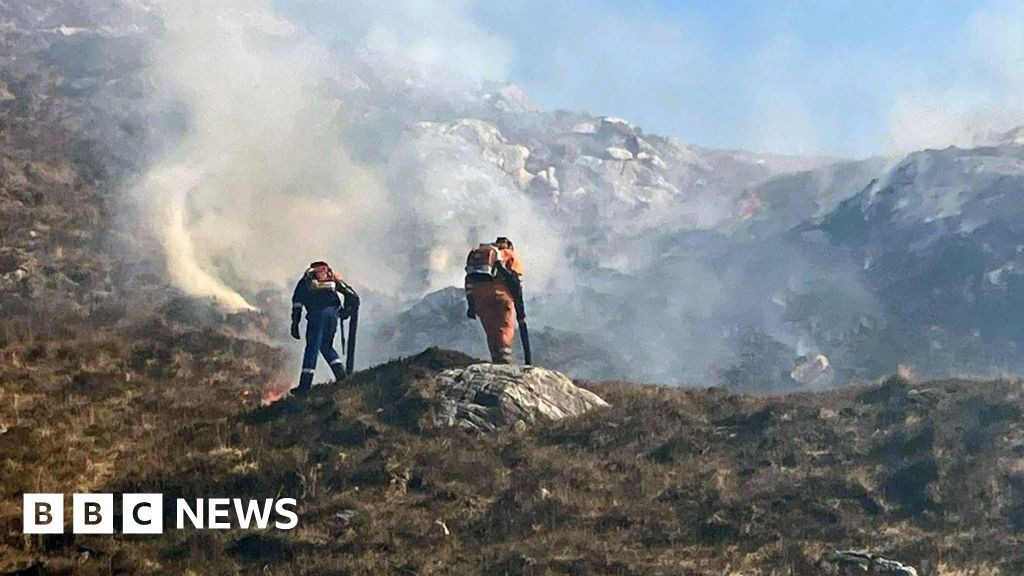
A series of wildfires swept across Scotland this weekend, prompting emergency services to issue “extreme” wildfire warnings for several regions. While no injuries have been reported, the scale and frequency of the blazes highlight a growing seasonal threat to the country’s landscapes.
Weekend Incidents Across the Country
Firefighters worked through the night and into Sunday morning to contain multiple outbreaks across different terrains:
- Loch Lomond (Tarbet): An “established blaze” behind the village required four crews and a specialist team. Operations lasted over nine hours, ending after midnight, before crews were called back early Sunday morning.
- The Highlands (Lochinver): A fire spread across five miles along the banks of Loch Fionn. Local workers and the Assynt Foundation utilized leafblowers to assist fire crews in controlling the flames.
- Isle of Skye (Struan): A grass fire was successfully contained by three crews within two hours of being reported.
- Aberdeenshire (Peterhead): A fire at Ugie Beach was extinguished by late Saturday night; however, Police Scotland is investigating the incident as a deliberate act.
The Seasonal Threat: Why Now?
The Scottish Fire and Rescue Service (SFRS) has placed Western Scotland under an “extreme” warning, with central and eastern areas facing “very high” risk levels. This surge in activity is not coincidental; it follows a predictable but dangerous seasonal pattern.
Data from the SFRS reveals that 80% of large outdoor fires since 2010 have occurred between March and May. This period represents a “perfect storm” for wildfire development due to three primary factors:
1. Fuel Accumulation: Dead vegetation left over from winter provides highly flammable material.
2. Rising Temperatures: Increasing seasonal warmth dries out this vegetation.
3. Human Activity: More people are spending time outdoors, increasing the likelihood of accidental ignition.
Emergency Response and Public Safety
In response to the escalating threat, the SFRS has implemented a new strategy during these high-risk months. This includes investments in specialized equipment and an expanded community scheme that integrates local volunteers and resources to assist professional crews.
Kenny Barbour, SFRS head of prevention, has urged the public to exercise extreme caution. Key safety recommendations include:
* Avoid lighting outdoor fires in impacted areas.
* Stay vigilant: A single spark can trigger widespread damage.
* Report immediately: If a large fire is spotted, call 999 with precise location details to ensure a rapid response.
“People living in the impacted areas should be mindful that one spark can spread, causing a large amount of damage,” warns Barbour.
Conclusion
The recent wave of fires underscores the seasonal vulnerability of the Scottish landscape to rapid wildfire spread. As temperatures rise and vegetation dries, public vigilance and community cooperation remain essential to preventing large-scale environmental damage.