The lunar south pole is one of the harshest environments in the solar system. When night falls, temperatures plummet to -330 degrees Fahrenheit (-200°C) for a two-week stretch. For decades, this extreme cold has been a graveyard for robotic explorers; few landers or rovers have ever survived the lunar night, as soldered joints fail and batteries die in the deep freeze.
However, NASA is developing a new piece of hardware designed to defy these odds. The Lunar Environment Monitoring Station (LEMS) aims to become the first U.S. instrument to survive a full polar night without relying on nuclear heat sources. This breakthrough could fundamentally change how we build long-term infrastructure on the Moon, making future missions simpler, cheaper, and safer.
The Challenge of the Lunar Night
As global interest in lunar exploration intensifies, the logistical hurdles have become clearer. While landing on the Moon is difficult, surviving there long-term is even harder. Most previous missions used radioisotope heater units —small nuclear devices that generate heat through radioactive decay—to keep electronics warm.
While effective, these nuclear sources are problematic:
* They rely on scarce fuel.
* They add significant cost and complexity to missions.
* They require rigorous safety reviews and handling protocols.
If NASA can prove that equipment can survive the lunar night using only sunlight, batteries, and advanced insulation, it opens the door for faster, simpler, and more scalable surface gear. This is critical for the Artemis program, which aims to return humans to the Moon and establish a permanent presence, potentially as early as 2028 with the Artemis IV mission.
How LEMS Stays Warm
At NASA’s Goddard Space Flight Center in Maryland, engineers are currently testing LEMS in a thermal vacuum chamber. The device is subjected to repeated cycles ranging from 300°F to -330°F, mimicking the drastic temperature swings between deep shadow and full sunlight at the lunar south pole.
The secret to LEMS’ survival lies in its internal climate control. While the exterior shell endures the brutal extremes, the critical internal components—such as the autonomous computer and battery—are kept within a manageable range of -22°F to 86°F. This stability is achieved through two key innovations:
- Integrated MultiLayer Insulation (IMLI): A proprietary thermal blanket developed by Quest Thermal Group. This advanced material acts as a high-efficiency barrier, trapping heat inside the unit.
- Smart Battery Management: Lithium-ion batteries struggle in extreme cold, often suffering from “lithium plating” (where the battery can no longer absorb energy carriers) below -30°C. NASA engineers have adjusted the charging protocols to prevent this failure mode, ensuring the battery remains viable throughout the two-week night.
“No one, no American payload, as far as we know, has ever been able to say that they have survived the lunar south pole during its lunar night and been functional,” said Samantha Hicks, lead systems engineer for LEMS. “We are on track to become the first U.S. payload to do that.”
Why Monitoring Moonquakes Matters
LEMS is not just a test of durability; it is a vital scientific instrument. The suitcase-sized, 66-pound box (which feels like only 11 pounds on the Moon due to lower gravity) is designed to monitor seismic activity for up to two years.
Despite lacking plate tectonics like Earth, the Moon remains seismically active. It experiences:
* Moonquakes (deep and shallow tremors)
* Thermal events (shaking caused by rapid temperature changes)
* Meteoroid impacts
Previous Apollo missions placed seismometers on the Moon in the 1960s and 70s, but those instruments were located on the near side and shut down in 1977. They provided an incomplete picture of the lunar interior. Naoma McCall, LEMS co-investigator, notes, “There’s a lot we don’t know about the lunar interior because we only had the observations from the near side.”
Data from LEMS will help NASA assess the seismic stability of the lunar south pole. If the region shakes more frequently or violently than predicted, it will influence where astronauts build habitats and how those structures are engineered.
Simple Deployment for Astronauts
The design of LEMS prioritizes ease of use for astronauts, who will be wearing bulky spacesuits. The deployment process is intentionally simple:
1. An astronaut places the box in a trench.
2. Two sensors are buried in nearby drilled holes.
3. The astronaut flips three switches and walks away.
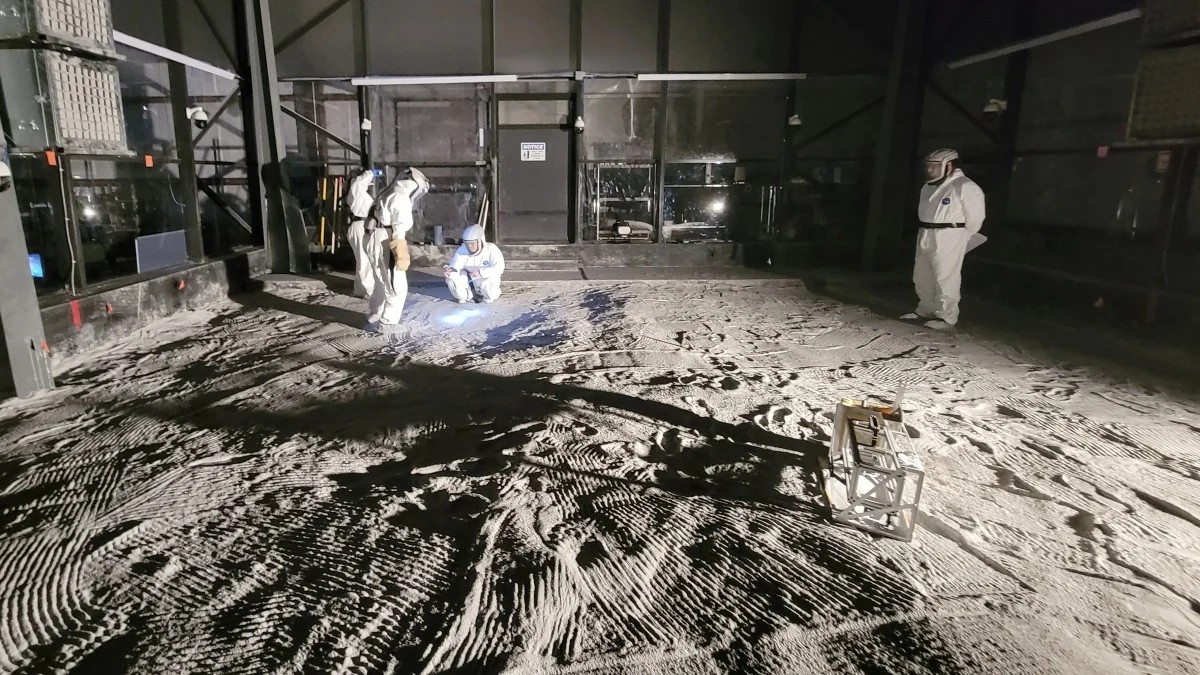
The system is then autonomous. To ensure reliability, the team has practiced deployments in simulated lunar soil at the University of Central Florida, confirming that the setup can be executed in straightforward steps without complex adjustments.
Conclusion
The development of LEMS represents a shift from short-term survival to long-term sustainability on the Moon. By eliminating the need for nuclear heat sources, NASA is paving the way for a more accessible and cost-effective lunar economy. If successful, this technology will not only provide crucial data on the Moon’s interior but also serve as a blueprint for the next generation of lunar infrastructure.