Clothes get dirty.
Then you wash them.
And somewhere between the spin cycle and the dryers heat, you are polluting the planet. A lot.
Think about the water.
Just one load?
10.5 to 16. That’s gallons. Forty to sixty liters of clean fresh water going down the drain in the span of an hour. Throw in the detergents that scrub those stubborn oil stains loose. They strip microplastics off synthetic fibers. They leave chemical residues in wastewater that flows right back into the ecosystem. It’s a bad loop.
Even if you have a shiny new high-efficiency washer, it doesn’t change the fundamental problem. In China alone, laundry chugs through 2.6 billion gallons of water every year.
Globally?
Even worse.
Chemists from Southeast University and Jilin University in China decided to stop looking at the machine and start looking at the fabric itself. Their work appeared in Communications Chemistry in March. It’s called molecular armor. Sounds dramatic.
It’s actually just really clever chemistry.
How It Works
Instead of blasting dirt off with chemicals, why not prevent it from sticking in the first place?
That is the core premise.
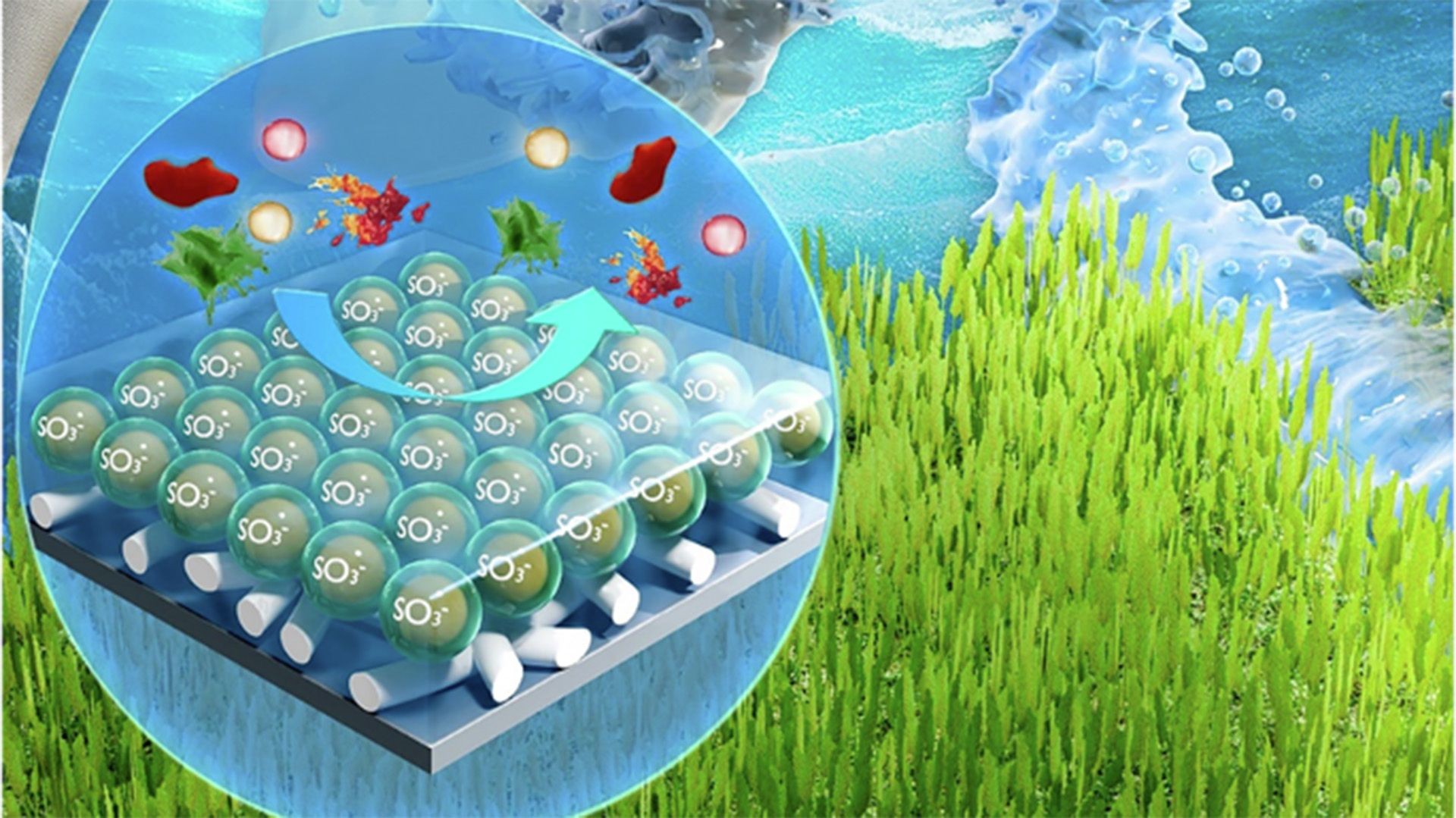
The researchers spray-coated fabrics with alternating layers of positive and negative polymers.
It’s a thin film. Ultrathin, really. But it does something weird on a microscopic level.
The coating is rich in sulfonate groups. These sulfur-containing units are hydrophilic. They love water.
When exposed to moisture, these groups pull water molecules to the surface of the fiber. They organize them. They create a stable, invisible sheet of hydration.
“Molecular water armor.”
This layer sits between the textile and the grime. Oil. Food. Sweat. Germs.
None of them can make direct contact with the fabric because they are separated by this hydrated barrier. The contaminants slide right off.
Water flows over them and washes them away.
No soap required. No agitating needed. Just a rinse.
This isn’t like waterproofing, which makes water bead up and roll away like a hydrophobic nuisance. This armor uses water against the stain.
It’s counterintuitive. But effective.
The Test Drive
They didn’t just theorize.
They got the clothes dirty. Real dirty.
Ketchup. Chili oil. Soy sauce.
Stain type matters here.
Water-soluble messes? Easy enough with old methods. But oil-based stains usually need surfactants to break their grip on fabric. Not these coated textiles.
The team ran them through a single rinse cycle.
The result?
Stains removed.
Sometimes better than conventional detergent washing. Sometimes just as well, but without the chemical bath.
“Stains do not adhere strongly in the first places.”
But the real win isn’t just cleanliness. It’s what’s left behind in the water.
The coating suppressed the release of microplastics. Drastically. Any tiny fiber shedding was trapped within the polymer matrix or washed away before it could proliferate.
The stats are staggering.
Water demand dropped by over 82%. Electricity dropped similarly because you aren’t running the heating elements or the agitation drums for forty minutes.
If you bought these fabrics today, they cost more to make.
Sure. But you recoup that difference in fifteen loads of laundry.
Maybe less if your detergent bill is high.
The Catch
Here’s where it gets messy. Not physically.
Psychologically.
We are addicted to the signal of cleaning.
Foam. Scent.
When the washing machine churning out white suds and smells like artificial lavender, your brain registers “Clean.”
There is no foam with this method. No heavy fragrance masking odors. Just a wet towel and a rinse.
Do you trust a clean shirt if it didn’t smell like lilies?
Probably not. Yet.
The scientists acknowledge this hurdle. “Consumer trust will require clear evidence,” they wrote. We need transparent testing. We need demonstrations that work in plain sight, not in a lab.
Hygiene is also a concern, though the data is reassuring. The same barrier that keeps out oil keeps out bacteria and fungi. Microbes can’t latch on to sweat or skin cells because they can’t touch the fabric. Odors don’t build up. Mold doesn’t grow in the closet.
Is it safe for your skin?
Initial tests say yes. Safe. Durable. The armor survives 100 plus cycles without falling apart. And since the coating is nanoscale thin, the cloth feels the same. It breathes. It moves. It doesn’t feel plastic or stiff.
Next Steps
So why isn’t this on every t-shirt in H&M yet?
Because science moves slow.
Commercialization requires more than good lab results.
You need independent safety audits. Durability standards. Lifecycle analysis that proves it’s not creating problems elsewhere.
You need real people washing these clothes in real sinks and washing machines, subjecting them to bleach, to iron heat, to the chaotic friction of a Tuesday afternoon laundry pile.
The team calls their study the proof of principle.
It works. The chemistry holds up.
Now they have to solve the human variable.
Can we train ourselves to believe in cleanliness we cannot smell?
Or are we stuck washing our guilt in 16 gallons of water and detergent sludge for years to come?
“The next challenge is to translate this… into a trusted product for everyday use.”
That sounds easy enough.
But changing habit?
That is the hardest stain to remove.