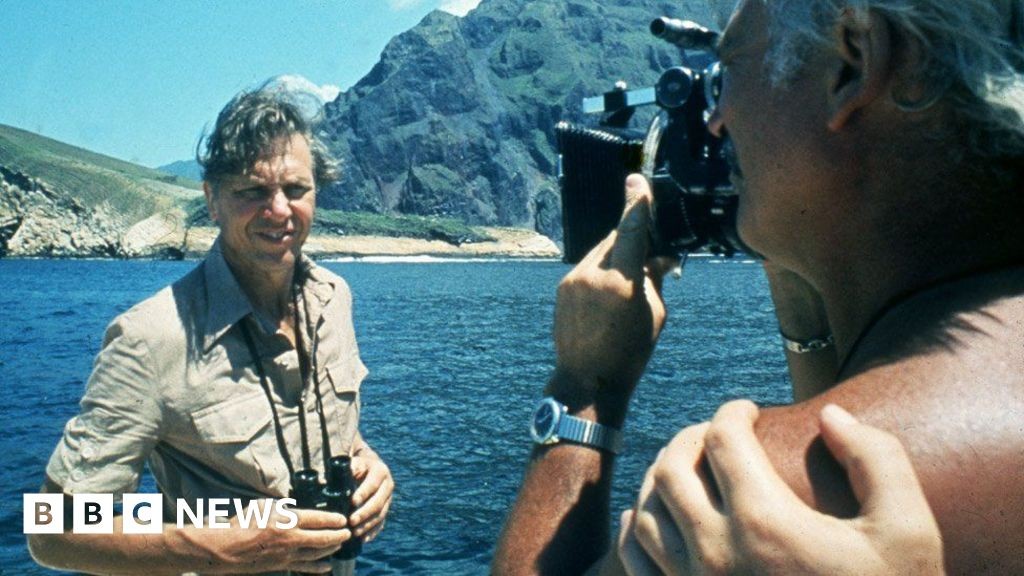
Sir David Attenborough’s career spans more than seven decades, transforming how humanity perceives the natural world. From the groundbreaking intimacy of Life on Earth to urgent modern pleas for climate action, his work has not only educated billions but also shifted global conservation priorities.
To mark his 100th birthday, this guide highlights ten of his most significant documentaries. These selections trace the evolution of wildlife filmmaking—from studio narration to immersive, on-location storytelling—and underscore the shifting focus from pure observation to critical environmental advocacy.
Note: All viewing information below refers to availability in the UK. International viewers should check local streaming platforms or BBC iPlayer archives.
1. Life on Earth (1979)
The Blueprint for Modern Natural History
Life on Earth was a revolutionary attempt to narrate the history of life, from primitive cells to contemporary ecosystems. It established Attenborough not just as a presenter, but as a central character in the narrative.
- Why it matters: This series pioneered on-location filming. For the first time, cameramen were sent globally to capture animal behavior in the wild, rather than relying solely on studio commentary.
- Key Moment: Attenborough’s intimate interaction with mountain gorillas in the penultimate episode remains one of the most iconic scenes in television history.
- Impact: With an estimated 500 million viewers worldwide, it set the template for the “Life Collection” and cemented Attenborough’s status as a cultural icon.
- Where to Watch: Available on BBC iPlayer; a retrospective, Making Life on Earth: Attenborough’s Greatest Adventure, was released to mark his centenary.
2. The Trials of Life (1990)
Uncovering the Hidden Realities of Survival
Moving beyond general observation, this series focused on the specific challenges animals face from birth to death. Producers collaborated closely with scientists to film behaviors previously unseen on television.
- Key Discoveries: The series captured the first televised evidence of chimpanzees using tools and documented the brutal, cooperative hunting of colobus monkeys by chimps—a behavior debated in scientific circles at the time.
- Why it matters: It demonstrated that nature is not always gentle, providing a more nuanced and scientifically rigorous view of animal survival strategies.
3. The Blue Planet (2001)
Revealing the Ocean’s Secrets
This comprehensive series explored the natural history of the world’s oceans, revealing the spectacular diversity of marine life. It allowed viewers to experience the underwater world in a way that was previously unimaginable.
- Technological Leap: Advanced filming techniques enabled close-up views of deep-sea creatures and pack-hunting behaviors, such as killer whales attacking a grey whale calf.
- Legacy: Blue Planet II (2017) expanded on this foundation, explicitly linking marine life to the plastic pollution crisis, highlighting how human waste threatens ocean ecosystems and, by extension, human health.
4. Planet Earth (2006)
The High-Definition Revolution
Filmed across 64 countries over five years, Planet Earth became the most expensive nature documentary series commissioned by the BBC at the time. It introduced high-definition (HD) broadcasting to wildlife television, offering unprecedented clarity and scale.
- Cinematic Sweep: The series rekindled public interest in nature documentaries with epic sequences, such as the battle between a polar bear and a walrus.
- Evolution: Its sequel, Planet Earth II (2016), further increased engagement, attracting younger audiences with high-tension narratives, including snakes hunting iguanas. The series proved that wildlife content could compete with mainstream entertainment in terms of viewership and production value.
5. Frozen Planet (2011)
Climate Change on Ice
Focusing on the Arctic and Antarctic, Frozen Planet highlighted the impact of climate change on polar ecosystems. It showed species like penguins, polar bears, and fur seals struggling to adapt to rapidly changing environments.
- Key Moment: The harrowing sequence of a minke whale escaping a pod of killer whales became an enduring image of nature’s brutality and resilience.
- The Warning: In the final episode, On Thin Ice, Attenborough delivered an impassioned speech about shrinking glaciers and rising temperatures, marking a shift toward explicit environmental advocacy.
- Sequel Impact: Frozen Planet II (2021) used racer drones to capture extreme environments, delivering an even starker warning about the accelerating effects of climate change.
6. Our Planet (2019)
The Streaming Era and Conservation
Produced in collaboration with the World Wildlife Fund (WWF) and released on Netflix, Our Planet was the first natural history series entirely devoted to addressing climate change and conservation.
- Global Reach: Viewed by 100 million households, the series brought Attenborough’s voice to a new generation. Notably, non-English-speaking audiences in Spain and Latin America heard narration from local celebrities like Penelope Cruz and Salma Hayek, broadening its cultural impact.
- Visual Excellence: Maintaining the high cinematic standards of Blue Planet and Planet Earth, it combined stunning imagery with urgent messages about biodiversity loss.
7. Wild Isles (2023)
Rediscovering Home
In his mid-90s, Attenborough broke a long-standing BBC convention to focus exclusively on the British Isles. Wild Isles revealed that local wildlife offers drama and beauty comparable to global expeditions.
- New Perspectives: The series featured first-time footage of white-tailed eagles catching geese in mid-air and leaping salmon filmed with underwater drones.
- Personal Connection: Attenborough visited locations personally, including a puffin colony in Wales (accompanied by medical support) and a 700-year-old oak in London.
- Continuation: Wild London (2026) continues this theme, exploring urban wildlife in the capital.
8. Ocean (2025)
The Final Frontier
Released in his 100th year, Ocean argues that the sea is humanity’s greatest ally against climate catastrophe. Attenborough describes it as one of the most important films of his career.
- Core Message: The film posits that protecting ocean biodiversity is critical to stabilizing the global climate. It presents the oceans not just as a habitat for wildlife, but as the planet’s essential support system.
- Urgency: It frames the current state of the oceans as a crossroads, urging immediate action to prevent irreversible damage.
9. Secret Garden (2026)
Nature in Your Backyard
As wildlife gardening gains importance, Secret Garden leverages Attenborough’s credibility to encourage people to rethink their outdoor spaces.
- Goal: The series aims to inspire viewers to create gardens that support struggling species, demonstrating how small-scale individual actions can contribute to broader conservation efforts.
- Influence: Producer Bill Markham notes that Attenborough’s voice carries particular weight in advocating for this accessible form of environmental stewardship.
10. Gorilla Story (2026)
A Personal Legacy
Revisiting the most famous encounter of his career, Attenborough narrates the fate of the gorilla group he met in Rwanda in the 1970s for Life on Earth.
- Narrative Arc: Directed by Oscar-winner James Reed and executive-produced by Leonardo DiCaprio, the film follows the descendants of his young friend, Pablo, exploring their struggles for survival and supremacy.
- Reflection: This documentary serves as a poignant bookend to his career, connecting his earliest work with his current advocacy for primate conservation.
Conclusion
David Attenborough’s documentaries have evolved from simple educational tools into powerful instruments for global change. By combining technological innovation with compelling storytelling, he has not only captured the beauty of the natural world but also illuminated the urgent threats it faces. His work remains a vital resource for understanding our planet and the role humanity plays in its future.