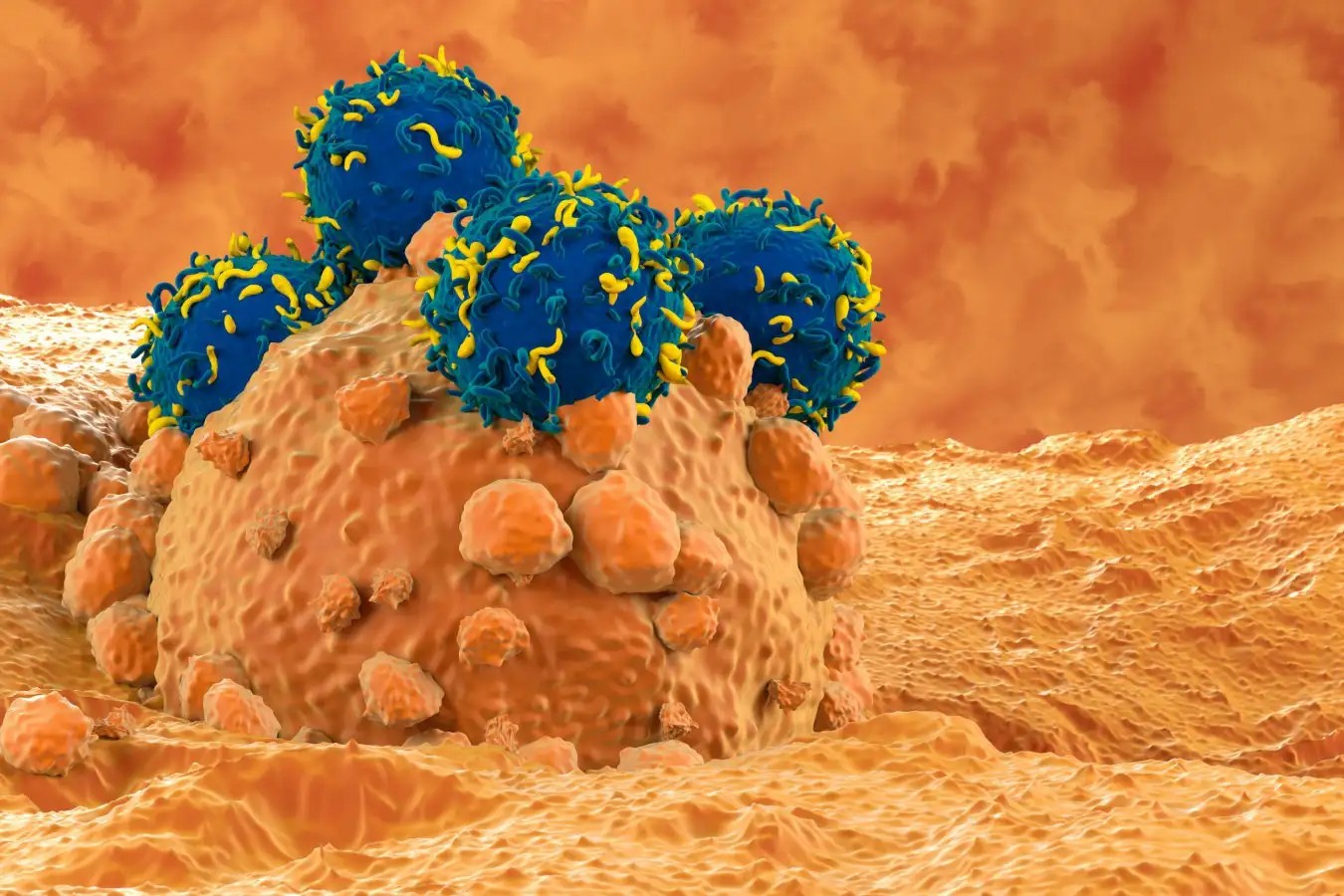
A novel approach to cancer treatment is showing promise by addressing a physical weakness in tumor cells: their softness. Research suggests that making cancer cells stiffer before administering immunotherapy can significantly boost the effectiveness of treatments like CAR T-cell therapy. In a recent study involving mice with aggressive melanoma, this “stiffening” strategy led to complete tumor regression in nearly half of the treated subjects, whereas all mice receiving standard immunotherapy alone succumbed to the disease.
The Physics of Immune Evasion
The core insight behind this research lies in the mechanical properties of cells. It is a well-established biological fact that cancer cells are often softer than healthy cells. However, the implications of this softness for immune defense were previously underexplored.
T-cells, the immune system’s primary assassins, are equipped with mechanosensors that allow them to feel the stiffness of their surroundings. Researchers hypothesized that the inherent softness of cancer cells might allow them to evade detection or resistance by T-cells. By manipulating this physical trait, scientists could potentially force the immune system to engage more aggressively.
“We were very curious about whether the softness of cancer cells may help them evade the immune system, and how T-cells’ mechanical sensing may influence their response to cancer,” explains Li Tang from the Swiss Federal Technology Institute of Lausanne (EPFL).
Uncovering the Role of Cholesterol
To test this hypothesis, the research team first investigated why cancer cells are softer. By comparing the cell membranes of healthy and cancerous cells from both humans and mice, they discovered a key culprit: cholesterol.
Cancer cell membranes contain higher levels of cholesterol, which contributes to their softer, more pliable structure. This finding provided a clear target for intervention. If cholesterol causes softness, then reducing it should stiffen the cells.
The Experiment: A Tale of Two Groups
The team conducted a rigorous experiment using 24 mice implanted with melanoma cells, the most lethal form of skin cancer. After nine days, all mice received an infusion of genetically engineered T-cells designed to recognize the tumors, mimicking the mechanism of CAR T-cell therapy. They also received IL-15, a protein that enhances the killing power of these T-cells.
The mice were then divided into two groups:
- Control Group: Received saline injections.
- Treatment Group: Received daily injections of methyl β-cyclodextrin (meβCD) directly into the tumors. This compound is known to extract cholesterol from cell membranes.
The results, presented at the Biophysical Immunoengineering conference in London, were stark:
- Control Group: All 12 mice died within a month due to rapidly growing tumors.
- Treatment Group: Only 7 mice died. 5 mice saw their tumors completely disappear.
How Stiffness Enhances Killing
The success of the meβCD treatment wasn’t just about reducing tumor size; it was about improving the mechanics of the immune attack. Analysis revealed that by removing cholesterol, the treatment stiffened the cancer cell membranes.
This increased stiffness allowed T-cells to latch onto tumor cells more strongly. With a firmer grip, the T-cells could more efficiently deliver toxic molecules, such as perforin, which puncture holes in cancer cells to destroy them. Essentially, the physical modification of the tumor removed a barrier that was previously hindering the immune system’s precision and power.
From Mice to Humans: The Next Challenge
While the results are impressive, the path to clinical application involves significant hurdles. Lance Kam from Columbia University noted, “The numbers are great; it’s quite impressive,” but cautioned that translating mouse studies to human therapies is historically difficult.
Many drugs that target immune proteins in mice fail in humans due to fundamental differences in immune system biology. However, Kam suggests this physical approach may have a better chance of success. The softness of cancer cells is a consistent trait across both mice and humans, meaning the underlying biological mechanism is likely conserved.
Future Directions
The research team is now focused on two main objectives:
- Broadening the Scope: Testing the stiffening approach against a wider variety of tumor types in animal models to see if the effect is universal or specific to melanoma.
- Drug Development: Creating new drugs that mimic the effect of meβCD but can be delivered via a single injection, rather than the daily regimen used in the study.
“It’s a completely new concept,” says Yi Sui from Queen Mary University of London. “It’s really tackling a medical problem from a physical point of view. I think it’s highly promising.”
Conclusion
This research marks a shift from purely biochemical interventions to biophysical strategies in cancer treatment. By proving that altering the physical stiffness of cancer cells can dramatically enhance the efficacy of existing immunotherapies, scientists have opened a new avenue for improving survival rates. While human trials are still distant, the potential to “stiffen” tumors into submission offers a compelling new angle in the fight against cancer.