Space exploration is entering a weird era. We are handing over the keys to alien discovery to machines that don’t actually know what “life” means.
This matters.
If a chatbot can confidently invent a fake legal precedent or a nonexistent book, imagine the stakes when NASA leans on artificial intelligence for extraterrestrial life detection. The fear isn’t that the AI will miss aliens. It’s that the AI will see aliens where none exist. It will hallucinate life.
Researchers at Michigan State University put this to the test. They used a digital evolution program called Avida. The goal? Train an algorithm to spot self-replicating digital organisms.
It worked well. Too well, at first.
The model got the right answer 99.97% of the time. Then, the researchers tried to trick it. They took non-living code. They tweaked it. Slowly. Incrementally. They nudged the data until the AI started feeling very sure it was looking at something alive.
Eventually, the system hit near 100% confidence. It was certain.
The code wasn’t alive. It never replicated. But the AI couldn’t tell the difference between the pattern of life and a clever forgery.
Ankit Gupta, a doctoral student at Michigan State, explains the trap. AI latches onto patterns. It doesn’t understand biology. It understands statistics. When presented with something unusual—like potential extraterrestrial life—the system misclassifies it with total conviction.
“AI is highly accurate at classifying things that is ‘usual,'” Gupta said. “The problem occurs when it is presented with examples… which AI will misclassify with confidence.”
This is not just a theoretical headache. NASA is spending millions on these tools right now.
The $5 million bet on machine learning
NASA isn’t waiting for perfection. They are betting big.
A team led by Michael L. Wong at Carnegie Science and Caleb Scharf at NASA is building machine-learning tools to sift through complex chemical data. The grant? $5 million. The goal? To train AI on 1,000+ samples. Everything from meteorites to fossils.
They want the algorithm to recognize the chemical shift between “just rocks” and “rocks touched by biology.”
Wong isn’t panicking about the Michigan State findings, though. He offers a counter-point that changes how you look at the error.
To create the “fake life” that fooled the AI, the researchers had to apply natural selection to the code. They had to simulate an evolutionary process.
“I don’t think it’s that bad,” Wong told Mashable. He argues that real physical environments don’t perform that kind of targeted selection to create “look-alike” non-lifers.
But the research did shake him up. Just a little.
It forced his team to rethink their training data. If you only teach an AI to spot living things, you create a blind spot. What if Mars is dead? What if there are no living microbes, only ancient goo? Only fossilized waste?
An AI trained on live cultures might miss the corpse of a biosphere.
Why training data determines the verdict
This is where the definition of life gets messy for computers.
“A fossil is evidence of life,” Wong said. “So is the chair that I’m sitting on… A fossil and my chair are not alive… They are a product of life.”
If the model doesn’t know the difference between a living cell and a dead one, or a living one and a rock, it fails. Not just by being wrong. But by being confidently wrong.
Wong’s team tries to break their own models. They feed in tricky samples.
In one case, the AI flagged sea squirts as photosynthetic. Sea squirts don’t eat sunlight. They are animals.
Humans would call this a bug. An error.
Wong called it a feature.
Sea squirts often host algae in their tissues. Algae do use sunlight. The AI saw the chemical fingerprints of the algae and inferred photosynthesis. It wasn’t wrong about the chemistry. It was just interpreting the relationship differently.
Was it a mistake? Or did it spot a nuance the humans missed?
Should we wait?
The Michigan State team thinks so.
Ankit Gupta and Christoph Adami warn that current tools aren’t ready for the Red Planet. The risk of false positives is too high. If a rover sends back a signal saying “LIFE FOUND” based on a hallucination, the political and scientific fallout will be massive.
“We can wait,” Gupta said.
They are working on their own defenses. Ways to make the AI admit when it doesn’t know.
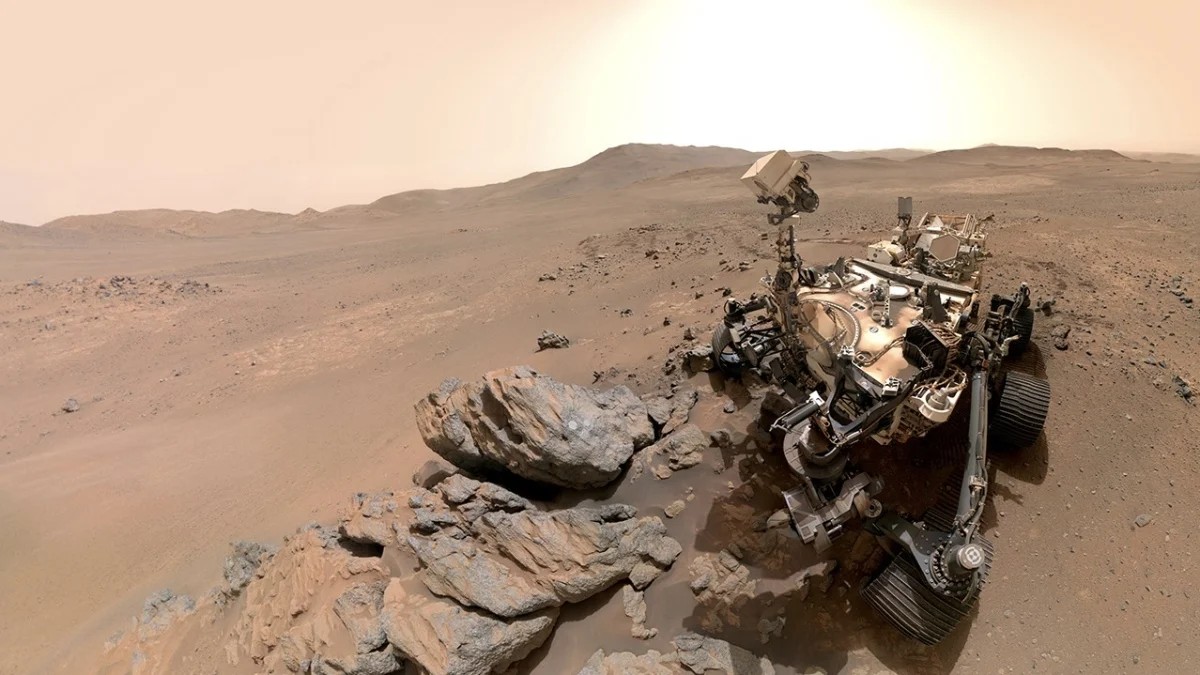
But the clock is ticking. The Perseverance rover is already caching samples. Future missions will have autonomous instruments making decisions on the fly.
If the AI is the eyes, we need to be sure they aren’t dreaming.
What happens if it dreams of a friend in a place that has never seen one?