The James Webb Space Telescope just dropped some heavy news about the infant cosmos. We’re talking about the cosmic ‘factories’ that pumped the early universe full of stardust. That dust? It was the raw material for everything we see now. New stars. Big galaxies. Us.
But let’s be real. Looking directly at those ancient galaxies is tough. JWST is powerful, sure. It sees them. But getting the gritty details? Still a challenge.
So the team behind this breakthrough did what smart scientists do. They cheated. Sort of.
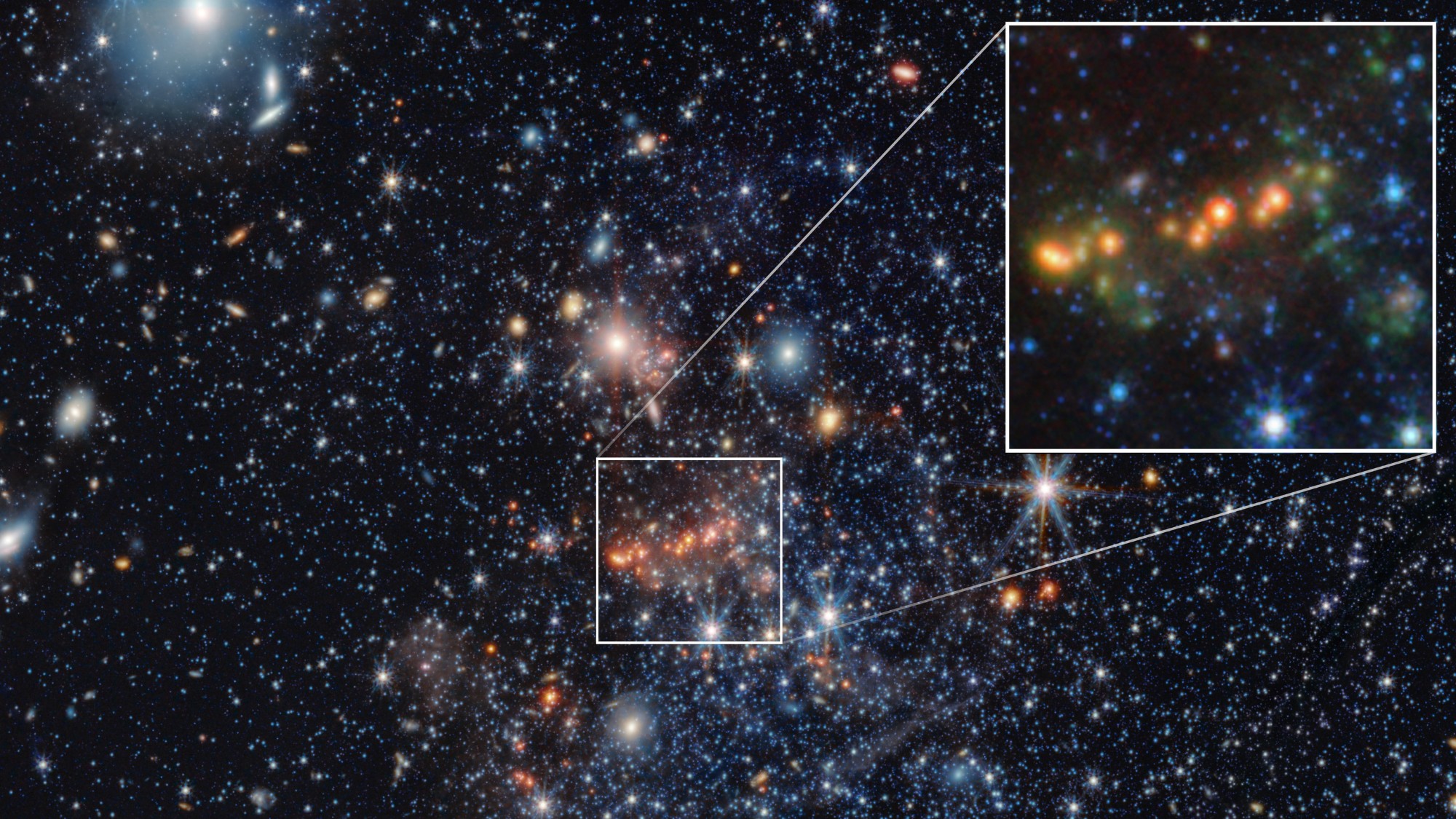
Instead of hunting for needle-in-a-haystack proof in the deep dark, they looked closer to home. They studied Sextans A. A dwarf galaxy just 4.6 million-light-years away. It’s modern. It’s close. And it wears the chemical clothes of the universe’s first galaxies like a well-tailored suit.
“Directly studying the galaxies that populated the the early universe is still very difficult,” team leader Claudio Gavetti from INAF explained. “Observing a nearby galaxy like Sextans… offers us a precious opportunity.”
Why Sextans A Matters
Let’s rewind. The early universe was chemically boring. Mostly hydrogen. Some helium. A tiny, tiny pinch of heavier stuff. Astronomers call those “metals.”
The first stars—POP III stars—were born from this bland soup. They were metal-poor. But they weren’t idle. They fused hydrogen and helium. They forged heavy elements. When they died? They blew up. Supernovae scattered those metals across the interstellar medium.
Next generation: POP II stars. These guys inherited the wealth. They had metals. Our Sun? We’re POP I stars. Even richer in metals. But not every galaxy got the memo. Dwarf galaxies like Sextans A stayed poor. Sextans A holds only 1% to 7% of the metals found in the Sun.
It’s a time capsule. A proxy for the metal-poor galaxies that built the universe.
Unmasking the Dust Factories
Gavetti and colleagues pointed JWST’s NIRCam and MIRI instruments at Sextans A. High-res observations. They mapped the whole star population, focusing on a specific lifecycle phase. The “asymptotic red giant branch.”
Here’s the mechanics. Stars bigger than the sun exhaust their helium core. They develop an inert carbon heart. Fusion continues in shells outside. Helium and hydrogen burning. Alternating layers.
The star puffs up. Brightness spikes. A thousand-fold increase.
What did they find?
Roughly 90% of these asymptotic red giants lacked dust envelopes. Bare. But about 20 of them? Buried in thick dust shells. These were the factories.
They formed between 2 and 3 billion years ago. From stars that started with 1.5 times the sun’s mass.
The Bigger Picture
This isn’t just about Sextans A. It’s about the lineage. This research clarifies which early-universe stars likely seeded the dust clouds. The dust that enriched future stars.
We’re piecing together how the universe evolved. How it went from a dull hydrogen soup to the structured, metal-rich cosmos we inhabit today.
This level of detail? Impossible before Webb. Now, it’s just Tuesday for astronomers.
But the questions remain open. How many other “Sextans As” are hiding in the dark? Did the universe get lucky with this one specific dwarf galaxy acting as a mirror? We might never know for sure. But we have a start.