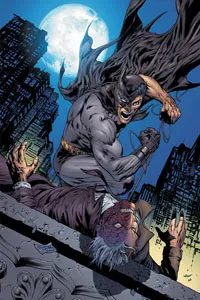
Blam! Zap! Pow! These aren’t just random noises scribbled in a corner. They are the visual dialect of a specific kind of human communication. You know them as the heartbeat of comic books.
These publications hold a weird, wonderful place in American history. They’re the apple pie and Fourth of July of literature. Full of iconic imagery, high-stakes drama, and occasionally, art that belongs in MOMA.
You see them everywhere now. Strip mall bookstores. Geek boutiques. Newsstands. The movies based on them dominate box offices for months. It makes sense. These stories inspired a fanatical subculture with its own slang and inside jokes. Any fan of Kevin Smith’s early work knows exactly what I mean.
But films aren’t the only medium pulling from this well. The variety of comics and related works is so vast that we need to define the term first.
Defining the Medium: Beyond Just “Funny Pages”
A comic book blends drawn art—color, black-and-white, or both—with text to tell a story. They are usually 20 to 30 pages long. Once they get longer, publishers start calling them graphic novels.
Spotting them stylistically is easy. Each page is segmented into panels (or frames). These have borders separating them from other panels. Each panel holds one part of the story. Maybe it’s dialogue. Maybe it’s a character’s inner thoughts, shown through speech and thought balloons.
The panels are routinely separated by blank areas called gutters. Artists layout pages so panels flow logically. They guide your eye. This makes the reader absorb the story sequentially. Hence, comics are often called sequential art. A specific type of graphic storytelling.
People still scoff at the idea of comics as “art.” The medium has a history linked to cheap, low-brow entertainment. But those days are gone. Modern comics span as many genres and subjects—frivolous and mature—as traditional novels.
Comics are global. But for this look at how comic books first came to life, we will focus on the American evolution of comic art. With nods to international giants.
The Origins of the First Comic Book
Ask three experts to name the very first comic book. You will likely get three different answers. It depends on the exact semantics they use to define the medium.
However, history points to 1842. That is when a book complete with paneled drawings and captions first appeared in America. It was “The Adventures of Obadiah Oldbuck.” Written by Rodolphe Topffer. He was a Swiss teacher and artist. Many historians consider “Obadiah” the first comic book.
After Topffer’s breakthrough, comics spread slowly. They moved through printed media like a slow burn.
Modern comic books grew out of comic strips. These were almost always humorous. Which is why the word “comic” stuck around. Those short narratives with just a few panels, like “The Yellow Kid,” graced newspaper pages starting in 1895. “The Yellow Kid” used speech balloons. A convention still used in modern comics today.
Comic strips were just one phase in the evolution of comic books. From the turn of the century to the 1930s, publishers cranked out hundreds of different strips. They featured still-famous characters like Dick Tracy, Popeye, and Little Orphan Annie.
These strips didn’t just appear in the Sunday funnies. Other forms of comics appeared on newsstands and in gas stations. They came as cartoon books. And as advertising gimmicks.
In 1933, the modern comic began to take shape. It started with “Funnies on Parade.” Eastern Color Printing reprinted this short collection of comic strips. They used tabloid-sized pages. This simply meant the publication was a smaller size than newspapers of the time.
“Funnies” wasn’t for sale. Proctor and Gamble gave it away as part of a corporate promotion. It turned out to be very successful.
Eastern Color decided to capitalize on the momentum. They started selling a book of comics. These were still reprints of funny Sunday strips. They sold quite well on newsstands. This opened the door for the next big jump in the comic book metamorphosis.
The epic adventure of comic books had just begun. Newfangled comic books and their lead characters were about to revolutionize comic art. With only a smidgen of hyperbole, they might have changed the course of humanity.
Comics Across the Pond
Europe has its own rich comics history. Just as a cheeseburger in France is distinctive from one in the U.S., the art of comics looks different depending on which side of the pond it came from.
Landmark titles originated in Europe. They have their own stylistic tendencies and themes. You have “TinTin” from Belgium. “Asterix and Obelix” from France. “Tex Willer” from Italy. “Agent 372” from the Netherlands. “The Beano” from England. And even “The Smurfs” from Belgium.
The groundwork is laid. The stage is set. But the real explosion of the American comic industry—the one that built the superhero genre we know today—is just around the corner.
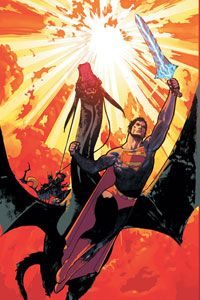

The golden age didn’t just end. It got suffocated.
By the late 1940s, the post-war glut of superheroes had worn thin. Publishers scrambled to survive. They pivoted hard into science fiction, Westerns, crime, and horror. Horror, specifically. That was the killer move. And the one that backfired catastrophically.
Enter Frederic Wertham. A psychiatrist with a bone to pick. In 1954, he dropped Seduction of the Innocent. The book didn’t just critique comics. It blamed them for juvenile delinquency. It claimed reading about vampires and gangsters turned kids into criminals. Parents panicked. The cultural mood shifted overnight.
The industry didn’t fight back with lawyers. It fought back with a muzzle.
The Comics Code Stranglehold
To save their skins, publishers formed the Comics Code Authority (CCA). This wasn’t a suggestion box. It was a strict set of rules designed to make comics completely sterile.
The goal? Total innocence.
If you wanted that official seal of approval, you had to follow the code. No “terror.” No “horror.” Vampires? Banned. Zombies? Gone. Werewolves? You didn’t see them. Torture? Not in your pages.
Superman and Batman didn’t need to change much, but the genre shifted. Horror comics were effectively dead. Mainstream titles became bland, safe, and utterly forgettable. Parents felt better. Sales? Well, sales stagnated. The medium lost its edge. It became a guilty pleasure for kids who wanted to sneak a peek at something slightly naughty, but never anything truly transgressive.
Or so it seemed.
The Underground Explosion
The code killed mainstream horror. It also created a vacuum.
And into that vacuum stepped the counterculture of the 1960s.
Independent artists and publishers realized they weren’t bound by the CCA if they didn’t want the seal. They didn’t care about the seal. They cared about freedom. This gave rise to underground comics, often dubbed comix.
These weren’t superhero books. They were messy, loud, and explicit.
- Sex. Drugs. Rock and roll.
- Political satire.
- Visual obscenity.
Artists like Robert Crumb became the new rock stars. Fritz the Cat became a cultural phenomenon. Trashman and Wonder Wart-Hog offered absurdity and satire that mainstream publishers would never touch.
This wasn’t just rebellion. It was an artistic awakening.
Without sales quotas or censorship, creators experimented. Storylines got complex. Art became sophisticated. The medium shed its campy skin and developed a literary backbone. Critics who had called comics “trash” started to take notice. The stigma was cracking.
The underground proved that comics could be about more than just spandex. They could be about art. About truth. About the messy parts of being human.
Breaking the Seal
It took decades for the mainstream to catch up. But the shift was inevitable.
In 2011, DC Comics made a quiet but monumental decision. They officially withdrew from the Comics Code Authority. It was the end of an era. Fifty years of self-censorship, gone in a signature.
Marvel had already left the code years prior. But DC’s departure was symbolic. It signaled that the fear of “corrupting youth” was no longer a business necessity. It was just history.
A Medium’s Metamorphosis
The result? A comic book landscape that was no longer defined by what it couldn’t do.
The medium had survived its own purification. It had survived the backlash, the censorship, and the cultural purges. It emerged from the underground and the mainstream pressure to become something more resilient.
Today, you don’t see “terror” or “horror” banned from pages. You see them everywhere. From Hellboy to Saga. The code is a ghost.
But the scars remain. The industry still balances between accessibility and complexity. Between the kid who wants to save the world and the reader who wants to explore the darkness.
The revolution didn’t happen with a bang. It happened with a whisper. And then a shout. And finally, a silence that let the real stories breathe.
What happens when the last barrier falls? We’re still watching to see.
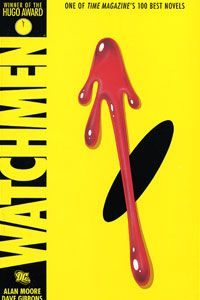
The 70s and 80s changed everything. Comics stopped being just disposable fun. They became serious. The industry started using the term graphic novel to describe longer, more complex stories. These weren’t simple tales of good versus evil. They tackled heavy philosophy. They explored morality. The heroes were flawed. They were damaged. They were human.
Think about the titans of that era. Watchmen. Maus. The Dark Knight Returns. These weren’t just books. They were cultural events. They proved that the medium could handle nuance. They showed what happens when smart writers collaborate with incredible artists. The result was a tour-de-force display of storytelling power.
Since those groundbreaking releases, the genre has exploded. Creators haven’t looked back. They’ve taken those lessons and applied them to every single genre imaginable. If you want to dig deeper into the history of the term itself, our guide on how graphic novels work breaks down the evolution.
The Duopoly Dominates
You might think the indie scene is thriving. It is. But look at the numbers. In the U.S., DC Comics and Marvel aren’t just big. They are everything. They account for roughly 80% of all comic sales. That’s eight out of ten books.
Why? Blockbuster movies. Superman. X-Men. Iron Man. These franchises drive sales in ways that standalone indie titles rarely can. The synergy between screen and page is undeniable.
Manga Takes Over
While America was perfecting its superhero industrial complex, Japan was doing something entirely different. Post-WWII Japan didn’t just adopt comics. They embraced them en masse. The result is manga.
Manga is bigger in Japan than comics are in the U.S. It’s a cultural spectacle. It targets everyone. Kids. Teens. Adults. Men. Women.
“Manga are often simply black-and-white drawings, with only occasional color, and feature stories that appeal not to boys, but to girls.”
Here’s the twist. In the U.S., manga isn’t just growing. It’s outselling American titles in some categories. Take Death Note or Fake. These aren’t niche products. They are mainstream hits.
And here is the surprising part. The driving force behind this market? Girls. Most manga titles are geared toward female tastes. The art style. The story arcs. They are designed to grab that demographic.
The creativity is still high. In Tokyo and New York, writers and artists are pushing boundaries. They are making characters leap off the page. But how do they actually do that? The mechanics of that magic are next.

The Assembly Line of Imagination
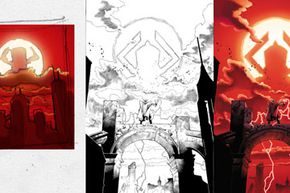
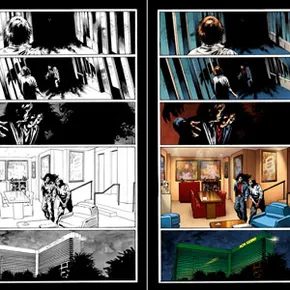
Comic book creation is rarely a solo act. While you might picture a lone genius sketching away in isolation, mainstream comics rely on a specialized assembly line. A single book usually requires a writer, a penciler, an inker, a colorist, and a letterer. Each role is distinct. Each is essential.
The writer sets the foundation. They conceptualize the plot and craft the dialogue. But they aren’t just typing words in a void. They’re visualizing how text and image will interact. Sometimes they dictate every panel. Other times, they collaborate heavily with the art team to ensure the story flows visually as well as narratively.
Then comes the penciler. These artists draw the rough initial panels. They establish the characters and the setting. Think of these sketches as the skeletal structure. Without them, there is no architecture for the rest of the team to build upon.
Adding Muscle and Mood
Once the pencils are down, the inker steps in. This isn’t just tracing. It’s about adding life. Inkers use complex shading schemes to inject drama and motion into static images. A heavy line weight can make a character look imposing. A lighter touch can suggest speed or fragility. The inker decides what the eye should focus on.
After the ink dries, the colorist takes over. This is where mood becomes tangible. Colorists select a specific palette that matches the tone of the story. Dark hues don’t just fill space; they add gravity and drama. Brighter tones can evoke joy or wonder. The right color choice can shift a scene from terrifying to triumphant in seconds.
Finally, the letterer adds the final layer of communication. They place captions and speech balloons. The font choice matters. Bold fonts convey emphasis. Squiggly, shaky letters imply uncertainty or fear. The lettering guides the reader’s pace, forcing them to slow down or rush forward.
The Time Crunch
Laura Martin, a colorist for Marvel Comics, points out that while some artists do attempt to handle all these roles themselves, it’s rare in mainstream publishing. Why? Deadlines.
Mainstream comics hit shelves at a brutal pace: one issue per month. Time restrictions make the collaborative model not just preferred, but necessary. Most pencilers and inkers can crank out roughly one page per day. By the end of the month, a standard 20- to 30-page issue is ready to go. It’s a high-pressure environment. But the system works.
Free Comic Book Day
This collaborative effort culminates in events like Free Comic Book Day. Held annually on the first Saturday of May, this isn’t just a charity event. It’s a strategic move by comic shops.
Stores give away specific titles for free. Yes, it’s marketed as a gift for “nice” kids. In practice, it’s open to everyone. The goal is twofold: thank loyal readers and attract new audiences. It’s an entry point. A way to turn a browser into a buyer.
A Comics Life For Me
But how did these professionals get there? And what does the day-to-day reality look like?

The grind of mainstream comics publishing is unforgiving. Deadlines are brutal. Brian Stelfreeze, who has drawn dozens of covers for DC and Marvel, knows this better than most. He insists that teamwork is everything in this environment.
It wasn’t always that way for him.
“I started my career as a commercial illustrator, so the process of an assignment divided into three artists seemed quite foreign to me,” Stelfreeze says.
Now? He’s sold on the synergy.
“Comics depend on the synergy of specialists and creating a work greater than the sum of its parts,” he explains. “But I find it often only as strong as its weakest link.”
This highlights a harsh reality about comic book industry workflow. You can have a god-tier writer and a legend inker, but if the colorist misses the mood, the whole thing sags. It’s not just art. It’s assembly.
The Non-Linear Path to Inking
You might wonder how a world-class artist like Stelfreeze ended up in comic books.
The road isn’t straight.
Stelfreeze’s background is a patchwork. He drew editorial cartoons in high school. He airbrushed t-shirts in Myrtle Beach. He skipped art school entirely to take a job as a commercial illustrator.
Then, he fell back in love with comics.
“I had always wanted to draw comics as a kid, so I thought I’d try it just once,” he said. “Fateful last words spoken by many an alcoholic, junkie, (and) vampire.”
It’s a common refrain. One try leads to another. Then a contract. Then a career.
Laura Martin bit the bullet at university, but for different reasons.
“I read comics as a child and in my early teens, but I’d largely dismissed them until I was in college,” Martin says.
At the University of Central Florida, she majored in graphic design and minored in art history. But the real education happened at night. She worked at Kinko’s.
Several employees were comics fans. Their enthusiasm reactivated her own.
“It got me excited about comics again,” she says.
Digital Colorists and Creative Constraints
Martin’s work is 99% digital these days.
But style and technique vary wildly depending on the artist.
“Comic coloring is part of a collaboration,” Martin notes. “We’re not creating new art ourselves. Our job is to enhance the black and white artwork drawn by a penciler and inker, which is drawn based on a story written by a writer.”
This means artists rarely have complete creative control.
Your work is dictated by the story’s setting. The mood matters. The lighting dictates your palette.
Efficiency is key.
“Many pros color over sixty pages per month,” Martin says. “So we have techniques and styles in place to maximize productivity while not sacrificing storytelling or style.”
Sixty pages a month. That’s roughly two pages a day. Every day.
No room for error. No time for overthinking.
From Ink to Screen
Reading this description of a comics workflow might make you think the whole process sounds vaguely cinematic.
It does.
Storyboards. Color scripts. Team-based production.
On the next page, you’ll see how the work these artists do really does wind up on the big screen.
Comics Take the Silver
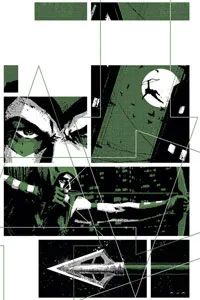
Comics aren’t just for kids anymore. Over the last twenty years, they’ve seeped into every crack of our culture. Hollywood is practically drowning in adaptations.
We’ve seen everything from Spider-Man and Watchmen to the gritty darkness of From Hell and Ghost World. The material is there. The suspense is there.
Sometimes, it works. Spectacularly.
Take The Dark Knight. Warner Bros. poured their energy into that epic Batman flick, and the box office confirmed it. It raked in over $500 million. Iron Man wasn’t far behind, pulling in more than $300 million. Each of the first three Spider-Man movies also cleared that $300 million mark.
Then there is Barb Wire.
That one? A spectacular flop. It earned less than $4 million. Total disaster.
How Audiences Connect with Comic Book Movies
The data is clear. Audiences connect when these stories hit the big screen. But why do some soar while others crash?
Brian Stelfreeze, a noted comic artist, has thoughts on the matter. He argues that comic book movies face a unique hurdle. They are only as good as the source material they pull from. But there is a fundamental difference in how we consume these stories.
“We consume movies but we interpret comics,” Stelfreeze explained.
Movies are static. They are what they are. Comics are immersive. They are interactive.
When you read a comic, you fill in the gaps. You provide the acting. You provide the direction. You imagine the sound, the movement, the weight of the punch. The text and art might only provide ten percent of the actual story. The rest? That’s your imagination working overtime.
The Gap Between Page and Screen
This creates a strange dynamic for film adaptations.
Stelfreeze points out that the quality of a comic book film often matches the average comic. He cited the last Punisher movie as a prime example. On paper, it was fine. Average, even.
But readers have a fantasy version of The Punisher in their heads. That internal version is always better than the movie. It’s always more brutal, more nuanced, more you.
Movies can’t replicate that personalized fantasy. They just can’t.
Comics have proven their worth. They’ve infiltrated society. Hollywood knows it. But as we move forward in this series, we’ll look at how comics are finding fame in other parts of America’s cultural dialogue.
The Imminence of Comics
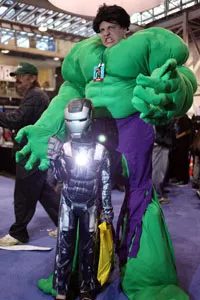
Forget the idea that graphic novels are just for kids who can’t handle a novel. The medium has undergone a massive identity shift. It started as pulp entertainment. It survived censorship. Now it’s a legitimate educational tool.
Teachers who used to confiscate Superman comics are now handing them out. Why? Because visual storytelling unlocks comprehension for reluctant readers. When you struggle with dense text, pictures provide a bridge. They help students grasp symbolism and narrative structure without getting lost in the syntax. The barrier to entry isn’t gone, but it’s lower.
This versatility extends beyond fiction. Biographical comics are becoming a go-to format for explaining complex lives. Take Bluewater Productions. They didn’t just stick to superheroes. They tackled real people.
In late 2011, they released a title on Donald Trump. That’s just one entry in a catalog that includes Barack Obama, Justin Bieber, and Jon Stewart. The format allows for quick, digestible timelines of public figures. It turns biography into a visual timeline.
Then there is the internet. Web comics changed the game entirely. They aren’t just scanned pages of print comics. They are native digital experiences. Artists talk about the infinite canvas. It’s a term that describes the screen as a limitless workspace. You aren’t bound by page turns or print costs.
You can scroll vertically. You can expand panels infinitely. The layout itself becomes part of the story. This digital freedom has spawned genres that exist nowhere else in print.
We’ve come a long way from the “funny book” stereotype. The medium has beaten government suppression. It has won over educators. It has moved from single-panel jokes to novel-length epics. And now, it lives online.
If the history is any guide, the story isn’t over. It’s just getting started.
Special Thanks
Special thanks go to Laura Martin and Brian Stelfreeze for their help with this article.