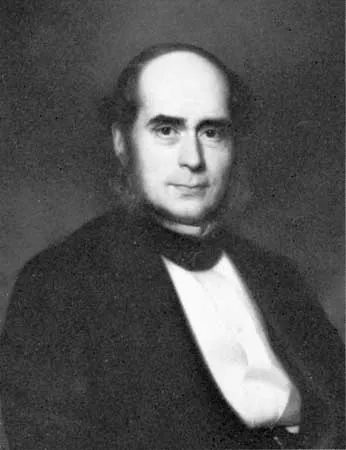
Henry Bessemer was born in 1813 in Hertfordshire, England. He died in London in 1898. Before he changed the world, he made money selling fake gold powder for paint. That was just the start.
The son of an engineer and typefounder, Bessemer had mechanical skill early on. He improved typesetting machines. He invented movable stamps for dating legal documents. Then came the gold powder. It was brass-based. The Victorian era loved florid decoration. They needed it by the ton. His secret process made him wealthy.
But he soon turned to metallurgy. He designed sugarcane-crushing machinery. It was advanced. Yet steel remained out of reach for most people.
The Problem With Iron and Steel
In the mid-19th century, there were only two iron-based materials. Cast iron came from blast furnaces using coke. It was great for columns or bridge piers. It held weight well. But it was brittle. You could not use it for rails or girders.
Wrought iron was the alternative. It came from cast iron via “puddling.” This was slow. Workers stirred melted iron in primitive furnaces. They removed carbon and raked off slag. The result was “blooms.” These were 100-to-200-pound lumps. They were full of impurities. Steam hammers had to forge them together. Then they could be rolled into useful shapes.
The only true steel was even harder to get. It required adding carbon to pure wrought iron. The process was slow and discontinuous. This steel was hard. It took an edge. It was used almost entirely for cutting tools.
The Accidental Discovery
The shift happened during the Crimean War. Bessemer invented an elongated artillery shell. It was rotated by powder gases. The French authorities rejected it. Their cast-iron cannons were not strong enough.
Bessemer needed stronger iron. He experimented. He noticed that oxygen in hot furnace gases removed carbon from preheated iron pigs. It left a skin of pure iron. This was similar to puddling but faster.
He then tried blowing air through melted cast iron. It purified the metal. It also heated it further. The oxygen reacted with carbon and silicon in the iron. The heat allowed the purified iron to be poured easily.
He invented the tilting converter. Molten pig iron went in. Air blew in from below. This was the core of the Bessemer process. Robert Forester Mushet later added an iron-manganese alloy. This removed excess oxygen. The result was large, slag-free ingots. They were as workable as wrought iron but far larger.
The Phosphorus Trap
Bessemer announced his process in 1856. He spoke before the British Association for the Advancement of Science in Cheltenham. Ironmasters flocked to him. They took out licenses.
It failed quickly. Two elements—phosphorus and sulfur—remained in the iron. The fireclay lining of his converter did not remove them. The process only worked on phosphorus-free iron. Bessemer unknowingly used good ore. His licensees did not. Their iron was fine for puddling because lower temperatures removed phosphorus there. But it ruined their Bessemer batches.
Bessemer recalled his licenses. He found a source of iron in northwestern England that had no phosphorus. He entered the steel market himself.
The problem was not solved until about 1877. Sidney Gilchrist Thomas, a British metallurgist, developed a new lining. It removed phosphorus. This allowed the use of phosphoric ores from the Continent. Once this worked, Bessemer licensed again. Vast profits followed.
Why This Matters Today
The Bessemer process enabled “mild steel.” It was distinct from hard tool steel. It could replace wrought iron reliably. Ship plate, girders, sheets, rods, wire, rivets—these all became cheaper and more plentiful.
It transformed construction. Railways expanded. Skyscrapers became possible. The infrastructure of the modern world rested on this cheap, strong material.
The open-hearth process, also known as the Siemens-Martin process, eventually outstripped Bessemer’s invention in the late 1860s. Today, oxygen steelmaking is the standard. It is a refinement of the Bessemer process. The lineage is direct.
Bessemer was nearly 70 before his process became a clear success. He never stopped inventing. He built a solar furnace. It was more than a toy. He designed an astronomical telescope. He created machines for polishing diamonds, helping to revive that trade in London.
He tried to build a passenger ship with a gimballed cabin to prevent seasickness. It failed.
He was knighted in 1879. He became a Fellow of the Royal Society. His An Autobiography, published in 1905 with a chapter by his son, remains the primary source for his life.
The world still uses steel. It is stronger now. The methods have changed. But the basic idea—that you can blow air through molten iron to clean it and strengthen it—started with Bessemer’s converter. The rest is engineering.