China’s Tianwen-1 orbiter snagged something special while hovering over Mars.
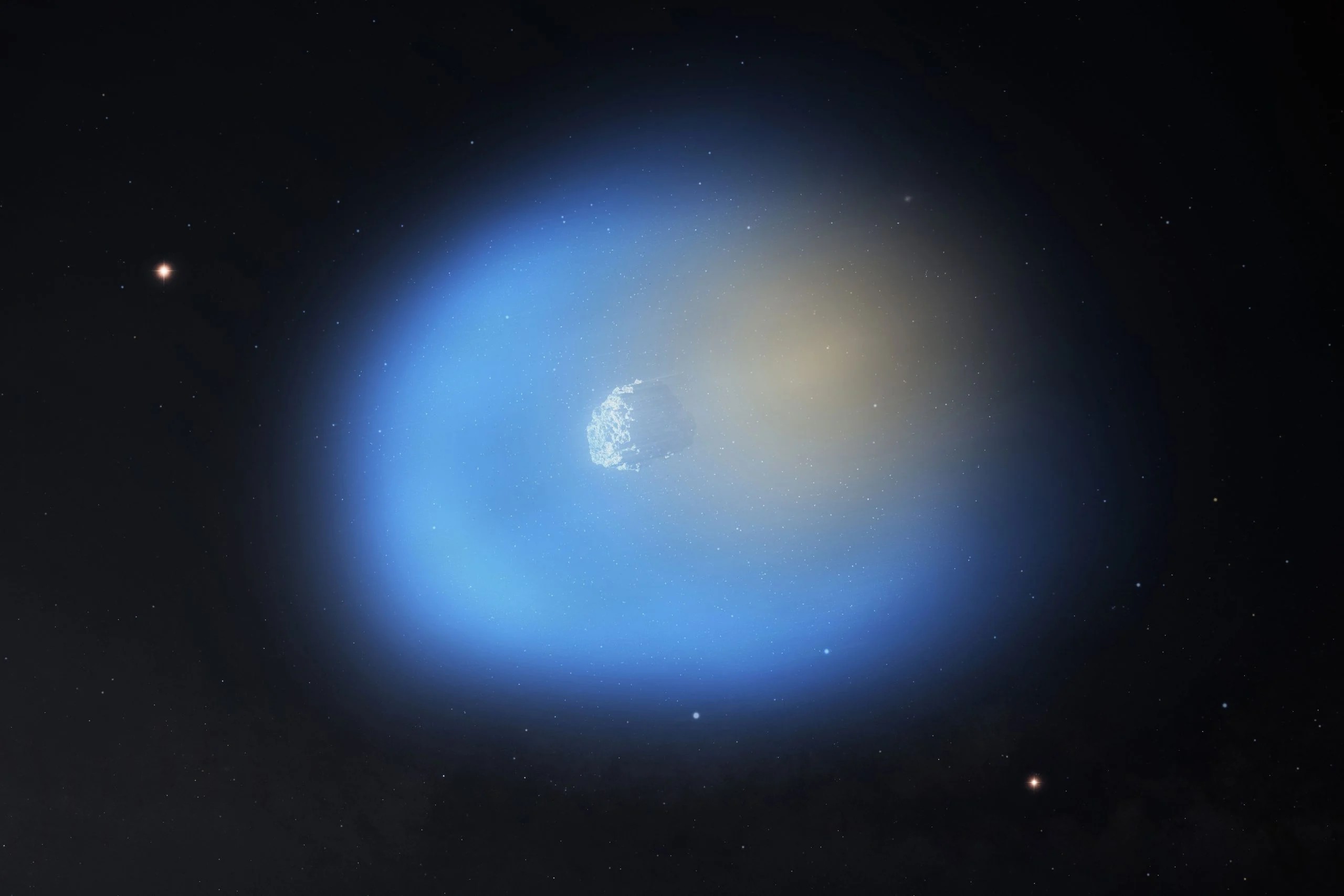
It photographed 3I/ATLAS. An interstellar visitor. The shots reveal the fuzzy coma and the tail of an object that didn’t come from our solar system. It arrived from the dark space between stars, swept by the Sun’s gravity, and passed Mars right when China’s aging but capable spacecraft looked up.
How Tianwen-1 imaged 3I/ATLAS
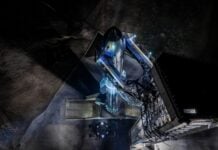
The China National Space Agency confirmed the data. Their high-resolution camera, HiRIC, captured the comet from about 30 million kilometers away. That is 18.6 million miles. Not exactly close-up, but in the grand scheme of interstellar travel? Pretty darn close.
This makes Tianwen-1 one of the nearest observers to 3I/ATLAS since it was first spotted back on May 7, 2025.
The images show the basics. A hazy envelope. A tail trailing behind. Scientists stitched multiple frames together. The result is an animation. You can watch the object trace its path, hurtling toward the Sun for its closest pass. It is still moving. Still changing.
The comet is made of water and volatiles. They are outgassing as heat builds. Typical comet stuff. Except this one isn’t from here.
It also serves as a test run. Think of it as practice. China’s Tianwen-2 mission is coming soon. It will rendezvous with a Near-Earth Asteroid and a comet later this decade. Seeing how the instruments handle this faint, fast target helps validate that future strategy.
The technical challenge of photographing an ISO
Getting this image wasn’t easy. In fact, it was tricky.
The HiRIC team started prepping in early September. Simulations. Models. Checks on the hardware. All of it.
The target was difficult for two reasons.
- Size. At 5.6 kilometers (3.5 miles) across, it’s small.
- Speed. Relativistic nonsense applies here. 3I/ATLAS moved at 58 km/s. Tianwen-1 zipped by at 86 km/s. The relative speed makes focusing like hitting a bullet with another bullet.
There’s another layer of difficulty. The camera wasn’t built for this.
HiRIC was designed for bright Martian landscapes. It works in daylight conditions. 3I/ATLAS was roughly 10,00 to 100 times fainter than the rocks and dust it usually images.
Compare that to ESA’s efforts on the same day, October 3. The Mars Express orbiter used HRSC. The ExoMars Trace Gas orbiter used CaSSIS. Both got images.
Their exposure times? Half a second for HRSC. Five seconds for CaSSIS.
Tianwen-1’s exposure time? Not public.
But the camera was built for fast responses and high time accuracy. It managed to freeze the action. The image is grainy. A bit blurry. Real life, not studio quality.
It proves the hardware can handle extreme contrast and speed, even if the primary design focus was planetary surface geology.
Why scientists care about interstellar objects
Here is the core question. Why do we care?
Why chase a faint speck of ice through the void?
Because it’s time travel. Sort of.
3I/ATLAS is leftover material from another star’s birth. Asteroids and comets hold the building blocks of other worlds. Study them, and you learn about conditions in other systems without launching a ship there.
Sending probes to other stars takes centuries. Billions in budget. ISOs bring the neighborhood samples to us.
Short term? We watch. We photograph. We analyze spectra.
Long term? The plan is to catch them.
ESA is building Comet Interceptor. Expected completion? 2029. It’s a wait-and-see mission. Park in space. Wait for a new interstellar visitor. Then go.
We aren’t ready for that intercept today. But we are getting better at tracking them. Tianwen-1 helped bridge that gap. It showed we can spot these objects as they pass nearby.
The data is flowing in. Animations are being processed.
What’s in the tail? Exactly what mixture of volatiles are outgassing? The details will come as analysis continues. The comet will leave Mars’s vicinity soon. The window for these specific imaging geometries is narrow.
For now, we have pictures. Rare, fuzzy, valuable pictures.