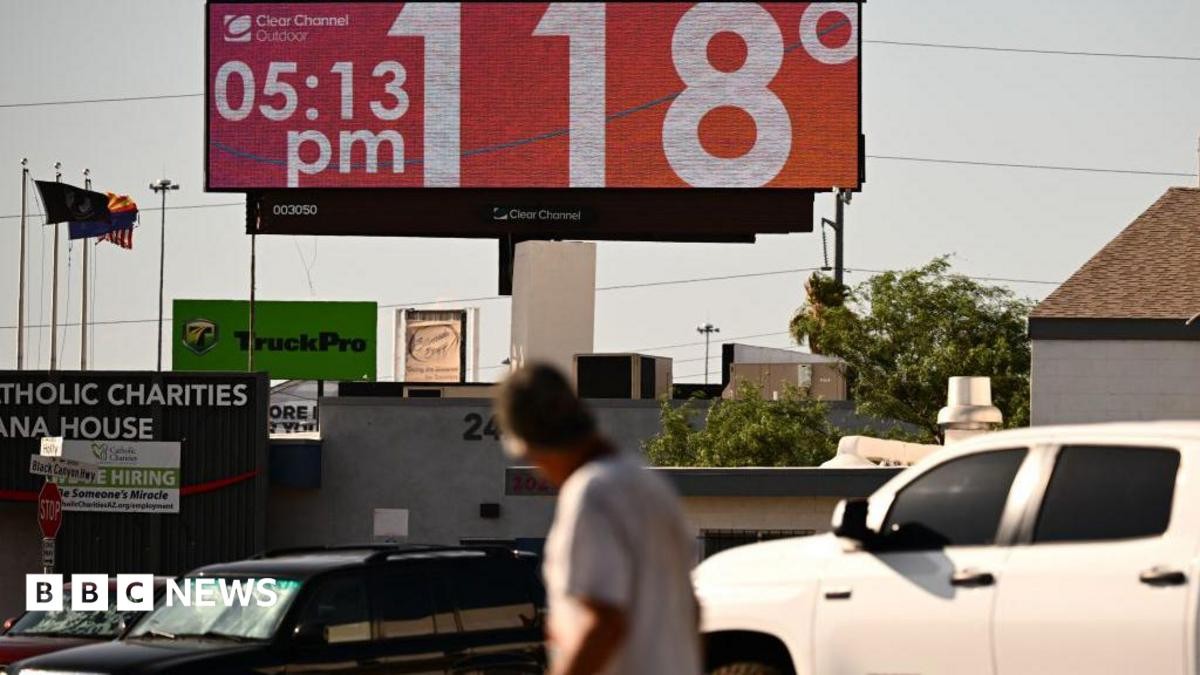
It gets hotter. Then it gets worse.
Summer isn’t what it used to be. Scientists have said it before. You heard it last week. But now? Now it’s the baseline.
Look at Europe. France buried more than 2,00 extra souls during the June heatwave. England and Wales? That number tops 2,700 since May. Here in the US, forty-four people died just over the July 4th weekend.
Shocking? To many. But to the folks in Phoenix, Arizona, heat isn’t a surprise anymore. It’s Tuesday.
Maricopa County sits in one of the harshest climates on earth. They knew this coming. So while other places panic, Phoenix plans. They’ve been working for years on how to keep people alive when the mercury spikes. And guess what? It works.
How Maricopa County Cuts Heat Mortality Rates
Let’s talk numbers. Because data doesn’t lie, even if politicians do.
Heat deaths in the area hit a peak in 2023. Six hundred and forty-five. Scary right? It was.
By 2025, that number dropped. Down to 405.
Did climate change reverse course? No. The planet is still baking.
So what changed? Policy. Specific, boring, effective policy.
Most heat deaths don’t happen to people with deep pockets. They happen to the poor. To those without power. To folks living on the street. Phoenix realized this. They stopped treating heat as an weather event and started treating it like an infrastructure problem.
The fix wasn’t high-tech. It was basic.
- Access. Cooling centers that stay open. Some run 24/7. No gates. No checks. Just cold air.
- Equipment. Repairs and replacements for air conditioners. If you can’t afford the fix, the county steps in.
- Responsibility. They appointed a Heat Officer. Someone whose only job is heat.
“It’s incredibly important to make someone accountable. If no one owns the problem, the problem ignores you.”
— Ladd Keith, University of Arizona
Simple stuff? Maybe. But other cities lack it.
Why A Dedicated Heat Officer Changes Everything
Think about your local government. Who handles the rain? The snow? Usually someone.
But who handles 110 degrees for four days straight?
Ladd Keith argues that having a specific “Heat Officer” bridges the gap. This person coordinates between agencies. They ensure cooling centers open before the emergency hits. They handle comms. Without that single point of failure, things fall through the cracks.
Jennifer Marlon, a researcher at Yale, sees it clearly.
“The world has a lot to learn,” she says.
You can replicate Phoenix’s model elsewhere. But it takes admitting something ugly: the heat is coming for everyone.
Even if emissions stopped tomorrow, we are locked in. The Earth is already 1.1 degrees Celsius warmer than pre-industrial times. The roads buckle. Planes can’t take off when the air gets too dense with heat. This isn’t just a health crisis. It’s an economic one too.
The Uncomfortable Truth About Future Heat Records
Here’s the rub. The wins in Phoenix don’t last forever if we don’t keep up.
As of early July, the county already had 23 confirmed deaths. 282 more pending investigation. If those count? They’re ahead of last year.
Progress isn’t automatic.
Experts warn that planning based on historic heat is dead. You can’t design a city for the weather of 1990. You design for 2035.
And 2035 will be hotter.
Keith doesn’t mince words. “It’s going to be hotter longer.”
Records will break. Year after year. Across the globe.
We aren’t bouncing back. The cool nights? Those are rare now. Your body needs the dark hours to repair itself from the day’s thermal stress. Without that drop, the system crashes.
So we adapt. We build better grids. We open doors. We accept the new reality.
Or we don’t.
Either way, the heat is waiting. And it isn’t leaving.