As the world approaches the 40th anniversary of the Chernobyl disaster, the focus remains fixed on the shattered remains of Reactor 4. Beneath the massive, modern New Safe Confinement structure lies a landscape of extreme radiation, crumbling concrete, and unpredictable physical hazards.
While much of the world views Chernobyl as a historical relic, for a select group of scientists, it is a living, breathing, and highly volatile environment that requires constant monitoring.
The Scientist in the Shadows
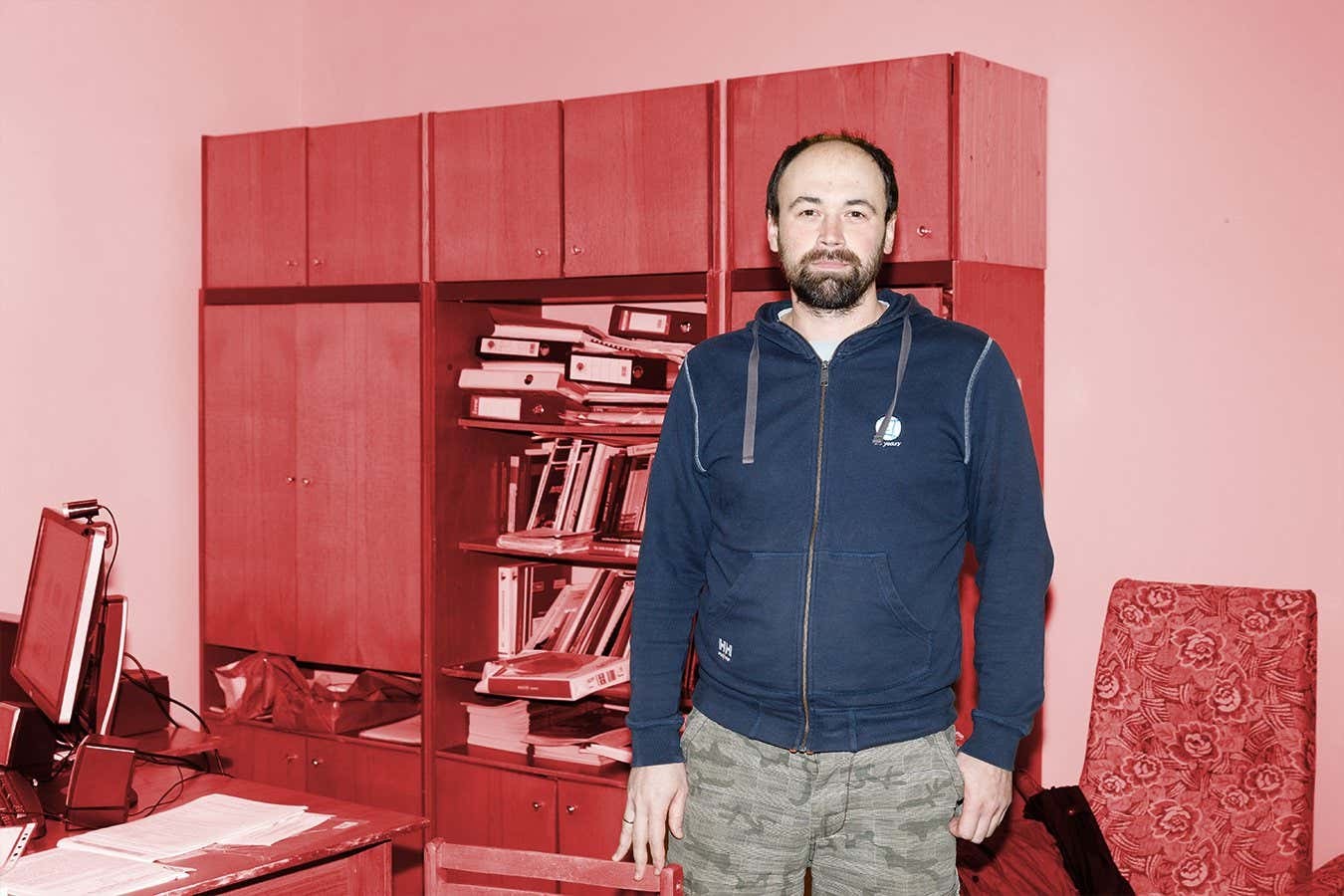
At the heart of this ongoing mission is Anatoly Doroshenko, a scientist at the Institute for Safety Problems of Nuclear Power Plants (ISPNPP). His role is uniquely perilous: he must physically enter the ruins of the reactor to collect samples and radiation readings, often coming within eight meters of the exposed core.
For Doroshenko, the work is a delicate balance of psychological discipline and technical precision. He describes the experience not as a moment of fear, but as a high-adrenaline endeavor akin to exploring the deep ocean or scaling Everest.
“You should be aware that everything is contaminated… You want to do the work, but it’s not an excursion. You’re working there, so you should be aware of everything you need to do and keep it in your head.”
Navigating a Radioactive Labyrinth
The interior of Reactor 4 is a chaotic maze of debris, characterized by:
– Corium: A lethal, lava-like mixture of melted fuel, concrete, and metal formed during the 2,500°C meltdown. This substance has oozed into bizarre shapes, earning nicknames like the “Elephant’s Foot.”
– Structural Instability: The “Upper Biological Shield”—a 2,200-tonne slab nicknamed “Elena”—sits at a precarious 15-degree angle. A collapse could trigger massive clouds of radioactive dust.
– Unpredictable Pathways: The explosion transformed the reactor into a labyrinth of twisted pipes and rubble, making movement difficult even for experts.
To survive these environments, scientists rely more on knowledge than equipment. While protective gear—ranging from respirators and gloves to multi-layered polythene suits and lead aprons—is essential, the true defense is a deep understanding of dosimetry and radiation safety.
Why Constant Monitoring is Critical
A primary reason for these dangerous excursions is the unpredictable nature of the nuclear material remaining inside. The reactor is not “dead”; it is chemically and physically active.
The risk lies in neutron flux. When radioactive fuel decays, it emits neutrons. If these neutrons are captured by other nuclei, they can trigger new fission reactions. The stability of these reactions depends heavily on moisture:
– High humidity acts as a moderator, slowing neutrons down and preventing a chain reaction.
– Dry conditions can lead to sudden “spikes” in nuclear activity.
With the installation of the New Safe Confinement, humidity levels inside the reactor are changing. Scientists are bracing for potential spikes in activity, making Doroshenko’s regular, hands-on data collection vital to predicting and preventing new accidents.
The Human Cost of Safety
The work is physically and mentally taxing. Researchers at the ISPNPP note a growing concern regarding the aging workforce and a shortage of young specialists skilled in complex dosimetry. For those like Doroshenko, the job is a heavy responsibility—one that requires a constant, healthy level of concern for their own safety to ensure they never make a fatal mistake.
Conclusion
The mission inside Chernobyl is a race against time and physics. As the environment within the reactor shifts due to new containment measures, the data gathered by these scientists remains the only way to ensure the site remains stable for future generations.