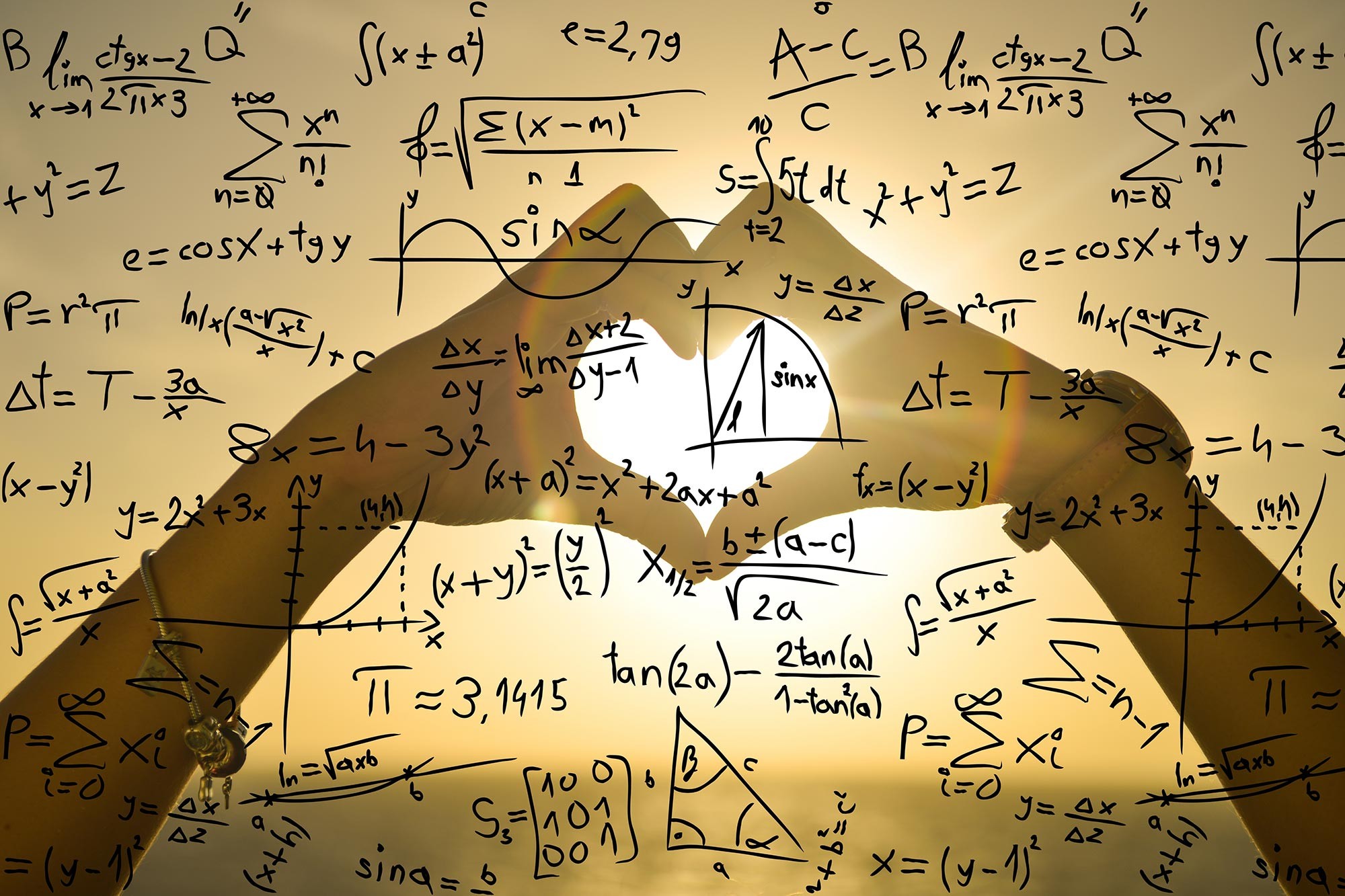
Can math actually save your marriage? Or is love too chaotic for equations?
Three decades of research suggests the former. Scientists have started mapping romantic dynamics using the same formulas that track rabbit populations. The result? We can now identify “relationship danger zones” with startling precision.
It’s not magic. It’s not a magic potion. And it’s certainly not mysterious enchantment. As Professor Laurent Pujo-Menjouat from the University of Lyon I writes in his book Love! Valour! Equations!, that would have been known by now. But if the math works, hope isn’t lost. It’s actually where things get interesting.
From Rabbits to Romance: The Origins
The trail starts with rabbits.
Seriously. The models used to predict romantic outcomes are borrowed directly from population dynamics. We’re talking Malthusian models—originally designed to track the spread of invasive rabbits in Australia—and predator-prey equations from the 1920s, like those describing Canadian lynxes hunting snowshoe hares.
Researchers also applied the “Allee effect” to love. This concept states that populations below a certain threshold collapse, while those above it flourish.
“Just as we can predict endangered species, we can model the evolution of feels within a couple,” Pujo-Menjouat explains. He isn’t trying to predict who you will fall in love with. He wants to understand why some couples stay stable despite life’s shocks while others drift apart.
The lineage is long. Thomas Malthus (18th century). Lotka-Volterra (1920s). Then came the crossover crowd. Psychologist John Gottman. Economist José Manuel Rey. Physicist Sergio Rinaldi. Mathematician Steven Strogatz. They all took dynamical systems theory and applied it to romance.
“The important question isn’t whether couples argue. It’s whether they have enough resilience to returnto equilibrium afterward.”
The Critical Threshold for Love
Here is the kicker: Every relationship has a minimum strength threshold.
If feelings dip below this line and stay there? The math predicts an inevitable slide toward separation. It’s not a suggestion. It’s a trajectory.
Understanding this threshold is powerful. It gives couples a tool. You can see the danger before it consumes you.
Pujo-Menjouat’s team built a model that includes the usual suspects: arguments, stress, outside pressure. But it also measures recovery. How fast do you bounce back?
The model highlights three factors for long-term stability:
* Attraction levels between partners.
* The rate at which feelings weaken (forgetting rates).
* Reaction patterns—how each person responds to the other’s emotions.
If these interact poorly, disruption wins. Pujo-Menjouat compares it to The Three Little Pigs. Life always sends its wolves: illness, work stress, kids, financial hits. Math helps you build a brick house, not a straw one.
Will AI Become Your Relationship GPS?
The next step is artificial intelligence.
Imagine an algorithm that tracks your interactions via data input and flags when you’re approaching a risky state. Pujo-Menjouat calls it a “relationship GPS.”
It shows you where you are. It shows where you’re heading. It suggests routes to your desired destination.
But it doesn’t tell you who to love. It explains how love evolves. And what you can do to protect it.
Think of it as a warning system. A chance to course-correct.
The Limits of Calculation
Don’t get too carried away. The models have massive limits.
Most data comes from Western relationships. Forces behind success or failure shift across cultures, religions, economies, and generations. A global model? That’s a complexity nightmare.
Plus, humans are irrational. Behavior is unpredictable. These equations show tendencies, not certainties. Couples often break the predicted path through sheer will, therapy, or personal growth.
“Mathematics can illuminate patterns and provide guidance… but ultimately, the success of a relationshipdepends on two people choosing, every day,to nurture their connection.”
The math can show the path. But you still have to walk it. Together.
So, are you in the danger zone? Or did you just ignore the signs because you prefer chaos? Hard to say. The equations offer probability. You offer the choice.