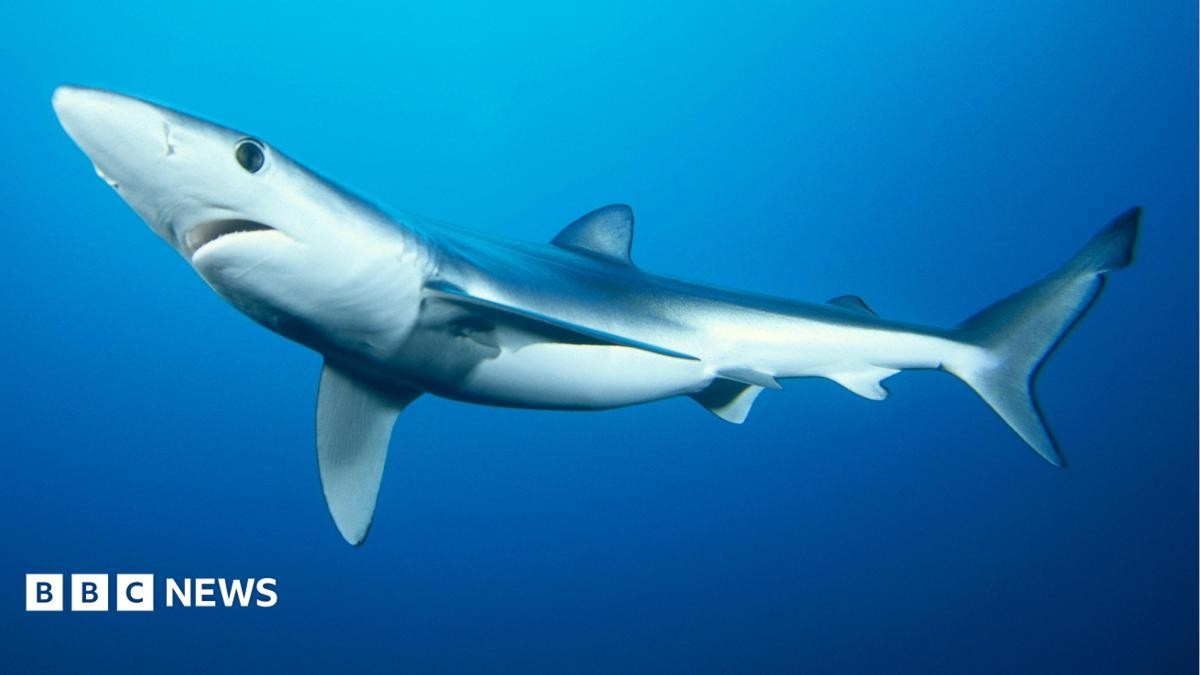
Natural England just handed over nearly £1 million for a stark purpose. Scientists are tracking the movement and breeding habits of three specific, endangered shark species. This isn’t just about counting heads. It’s about survival.
The focus? Blue sharks. Porbeagles. And tope.
These creatures are under severe pressure. To understand how to fix their decline, researchers need precise data on where they live and where they spawn.
Using tags to map blue shark migration routes
Electronic tags are the primary tool. They will attach to these sharks to pinpoint their migration routes with high fidelity. But it’s not just about open-water wanderlust.
The team is also studying how these fish react to capture. Specifically, they are looking at what happens after an angler releases one back into the sea. Most releases end poorly for the animal, and we don’t fully know why across different species.
To build a robust picture of distribution, the study involves humans. Anglers in hubs like Looe, Falmought, and Brightlingsea will provide catch records. This grassroots data is critical for filling the gaps left by scientific sampling.
Coastal and open ocean sharks are among the most threated groups of animals. They hold huge ecological value yet we know too little.
Dr. Matthew Witt, a marine scientist at the University of Exeter, puts it bluntly. The value these sharks provide—ecological, cultural, and economic—is immense. Ignorance of their biology is no longer an acceptable option.
Why ultrasound scanning matters for conservation
Science will also dive underwater. Or rather, into the biology.
Researchers will use ultrasound scanning to detect pregnancy. It sounds clinical. It is vital. Identifying pregnant sharks allows the team to locate pupping grounds. These nursery areas are where the population reproduces. If they disappear, the recovery stops.
Finding these hidden hubs is a matter of priority. Protecting a feeding ground does nothing if the sharks aren’t there to eat.
Working with anglers on release techniques
Here’s a hard truth. Angling is both a threat and a potential conservation tool. The project leverages the former to fix the latter.
Experts plan to conduct workshops. They’ll hold structured interviews with at least forty-five anglers. Why? Because local anglers know things scientists don’t. They know local ecology. They’ve seen the size of sharks caught in recent years. Their collective memory