Think about your morning coffee. Or that vanilla latte. Or the aspirin in your cabinet. You’re interacting with flowering plants every day, usually without thinking about the sheer, unbroken line of evolutionary time they represent.
Now, imagine pulling the thread on that history.
Scientists have issued a stark warning: we are on the verge of losing more than a fifth of that timeline. Not just any plants. The oldest, weirdest, and most distinct lineages are disappearing.
And until now, the tools to measure this loss were barely being applied to flora. We’ve tracked endangered tigers. We’ve watched coral reefs bleach. But for flowering plants—the bedrock of most terrestrial ecosystems—conservation prioritization lagged behind. That changed this year.
Understanding EDGE Scores and Plant Conservation
To grasp the severity of the crisis, you have to understand the metric driving it. It’s called the EDGE score.
The concept dates back to 2007. Researchers at the Zoological Society of London devised a way to weigh two factors simultaneously:
1. Evolutionary Distinctiveness (ED): How unique is this species on the tree of life? Is it a lonely branch, or one of millions from a crowded limb?
2. Global Endangerment (GE): How close is this species to wiping out?
When you combine these, you get a score that highlights species that are both unique and under threat. It prioritizes the irreplaceable.
For decades, this tool shone a spotlight on oddball animals like the aardvark or the pangolin. Plants were left out. Why? Because the data infrastructure was thinner. Because the urgency felt less immediate. That perception is now obsolete.
“For nearly two decades, the EDGE approach allowed conservationists to identify the most overlooked animals needing urgent action,” says Rikki Gumbs of the Zoological Society. “Plants have remained significantly underrepresented. Now, we’re closing that gap.”
The Real Cost of Extinction to Humanity
Why should a human in Chicago care if a obscure shrub in Madagascar vanishes?
The answer lies in unique evolutionary traits. When a whole branch of the plant tree dies out, you aren’t just losing a pretty flower. You are losing genetic experiments that took hundreds of millions of years to evolve.
These plants are libraries. Some contain chemical compounds we haven’t even isolated yet.
“Loss of a deep branch… means the potential loss of the next-breakthrough cancer drug or antibiotic,” explains Kew botanist Matilde Brown. “There is no second chance.”
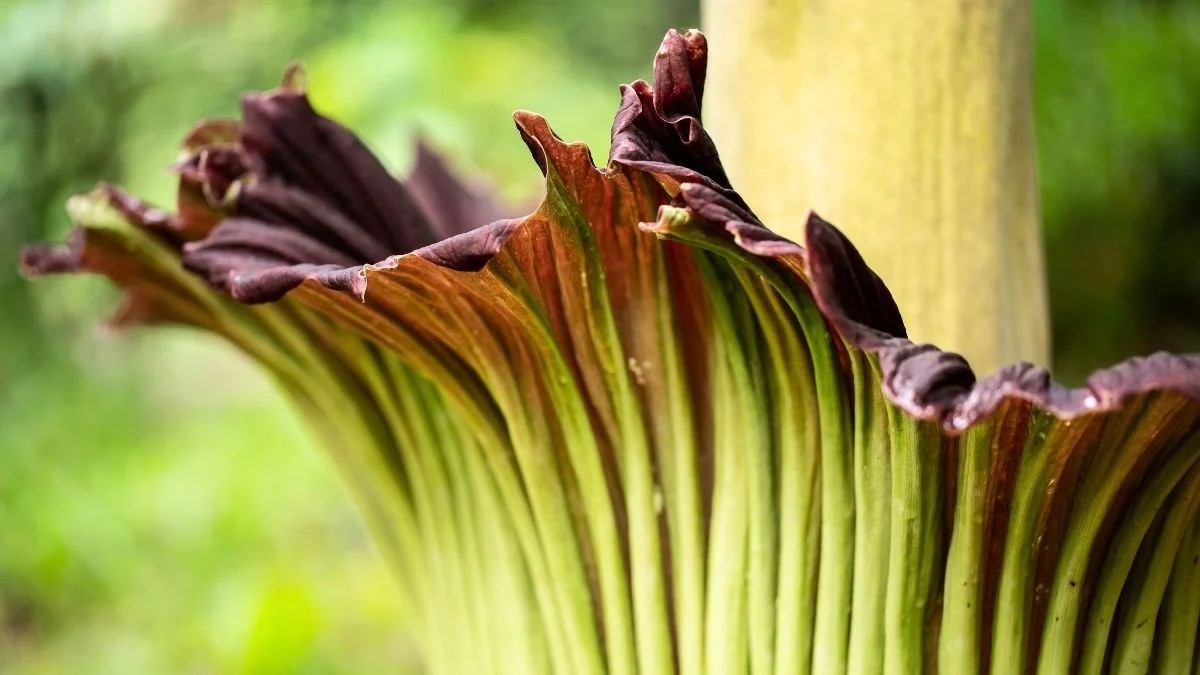
Think of it this way: Vanilla (Vanilla planifolia ) is on the list. The corpse flower (Amorphophallus titanum ) is on the list. These are not abstract data points. They are tangible parts of global culture, cuisine, and ecology. But the real stakes are often invisible. Take the jellyfish tree (Medusagyne oppositifolia ), found only in the Comoros islands. Or Hondurodendron urceolium, a tree from Honduras with no close living relatives.
These species represent unique survival strategies. Lose them, and you lose potential solutions to diseases we can’t even name yet.
The Numbers Behind the Loss
The research, published in the journal Science, utilized these EDGE scores for the first time across all angiosperms—flowering plants.
The results were sobering.
- 335,496 : The total known species of flowering plants analyzed.
- 9,945 : Species flagged as high-priority EDGE species (unique and endangered).
- 21.2% : The portion of total flowering plant evolutionary history at risk.
- 3% : The percentage of all known plant species that qualify as high-priority EDGE threats.
That means nearly one in thirty living plant species is an evolutionary outlier facing immediate extinction.
Consider the numbers for a second. Most people know about the dodo or the passenger pigeon. We mourn their absence. But if these plants vanish, they take with them entire chapters of evolutionary history. Ginkgo biloba—the sole survivor of its lineage, which stretches back 300 million years—illustrates what we value. But the new report flags thousands of new candidates for that same “sole survivor” status before they can be properly studied or saved.
Who is At Risk Beyond the Obvious
Yes, the vanilla orchid is on the list. Yes, the water lily with just one known surviving individual (Nymphaea thermar ) is on the list. But the roster is largely filled with names you won’t recognize.
“Each plant is an essential, leading building block to life on earth providing us with air to breath and food to eat.” — Rikki Gumbs
This isn’t just about saving cute flowers for Instagram. It’s about stabilizing ecosystems that are already buckling under human pressure.
“Flowers and forests aren’t just a pretty backdrop,” Gumbs adds. “They are the bustling engines of our biosphere.”
The study highlights that plant conservation can no longer treat all species as equal. Some hold vastly more evolutionary weight than others. Ignoring that distinction means wasting precious conservation funds on species that might survive on their own, while the truly unique ones quietly wink out.
The Window for Action Is Narrowing
Here’s the uncomfortable truth: The study estimates that more than two in five plant species are at risk of extinction overall. Of those, 75% that haven’t been discovered yet are predicted to be threatened.
We are losing history before we even finish writing its biography.
But there’s a counter-narrative in the data. Identifying these 9,945 priority species gives governments and NGOs a roadmap. Instead of scattering resources across broad areas with unknown impacts, they can target specific, high-value genetic reservoirs.
The researchers conclude that now is the time to “catalyze a new generation of plant conservation monitoring.”
Translation: We have the tools. We have the data. What we’ve lacked is the focus.
Why This Matters For You
You don’t need a degree in botany to see the implication. If the oldest, most distinct plants die out, our resilience as a species drops. Food systems become fragile. Medical inventories dry up.
The EDGE scores aren’t just academic labels. They are red flags.
“By applying the EDGE approach to flowering plants we are better able to protect out planet rich bustling ecosystems.” — Felix Forest, Kew Gardens
We’ve spent decades worrying about the loss of animals. The clock is ticking just as hard for the flora. And unlike animals, we often assume plants are plentiful. Disposable. Everywhere.
This study shatters that assumption for the species that matter most.
Will we save them? We might not know for decades if some of these jellyfish trees or Honduroid dendrons survive the century. Or we might lose them entirely. The only thing we can control right now is whether we pay attention before it’s too late.
The trees are still standing. But for many of the deepest branches of life? The bark is thin.