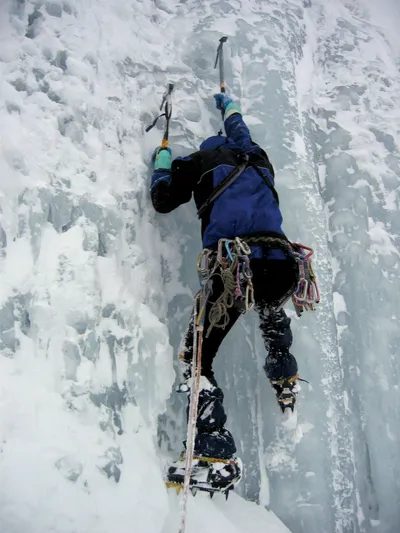
Hiking up a modest hill with a paved trail and a café at the top doesn’t count. That’s recreational walking. Mountaineering is something else entirely. It is the deliberate, often dangerous pursuit of high-altitude peaks where the terrain itself is the primary opponent. The allure isn’t just reaching the summit; it is the sheer pleasure derived from navigating hazards that demand respect, experience, and a rigid adherence to safety. For anyone without proper training, treating these environments as a casual weekend hobby is a fast track to disaster. The weather turns. The ice breaks. The altitude steals your breath. Nature does not care if you are tired.
The Wild Arena
What separates this from soccer or tennis? There is no referee. There are no boundary lines drawn in chalk. The field of action is the mountain itself, and it provides every single challenge. You are testing courage, resourcefulness, and physical stamina against a backdrop of inherent, unyielding risk. It is a test of cunning as much as strength.
“Mountaineering is a group activity where every member supports and is supported by the collective achievement.”
This interdependence is what makes it a deeply social sport, paradoxically, in such an isolated environment. You rely on the rope tied to your partner. They rely on you to catch a fall. The group’s success is the only thing standing between you and the void. For most climbers, the reward isn’t just the trophy of “conquering” a peak. It is the spiritual satisfaction of pushing human limits. It is the contact with raw, grand natural beauty that no stadium can replicate.
Historical Roots
The history of mountaineering is not a straight line of progress. It is a jagged path of exploration, tragedy, and obsession.
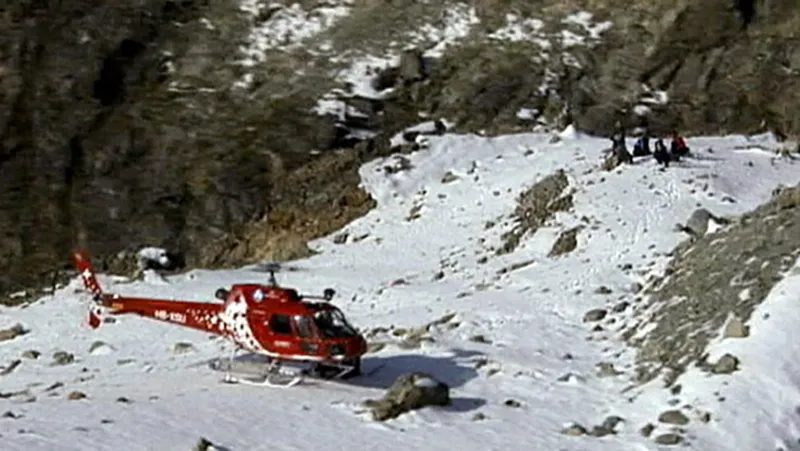
From Altars to Ascents: The Birth of a Sport
Long before it was a adrenaline-fueled hobby, climbing was about more than just reaching the top. Early attempts to scale peaks were driven by spiritual and practical needs. People wanted to build altars on forbidden heights. They wanted to see if spirits actually haunted the clouds. Some just wanted a better view of their own land or their neighbor’s. Others were scientists looking to measure the weather or study the rocks. Before the modern era, history barely recorded anyone climbing just for the bragging rights. That changed in the 18th century. Natural philosophers—the scientists of the day—began trekking into the European Alps for field work. The area around Chamonix in France became a hotspot. Why? Because of the massive glaciers on the Mont Blanc chain.
The First Prize and the First Climb
The modern idea of mountaineering as a sport really starts with one man: Horace-Bénédict de Saussure. He was a young scientist from Geneva. In 1760, he visited Chamonix. He looked up at Mont Blanc. At 15,771 feet (4,807 meters), it was the tallest peak in Europe. He decided he would climb it. Or he would make sure someone else did. He put up prize money for the first ascent. But money doesn’t move mountains immediately. It took 25 years.
In 1786, the prize was finally claimed. A Chamonix doctor named Michel-Gabriel Paccard and his porter, Jacques Balmat, made the climb. De Saussure wasn’t left out for long. A year later, he reached the summit himself. This was the spark. By 1850, British climbers were hiring Swiss, Italian, and French guides to take on the high peaks of Switzerland one by one. The sport was taking shape.
The Matterhorn Disaster and the Guide Era
A major milestone in the growth of mountaineering was the first ascent of the Matterhorn. It stands at 14,692 feet (4,478 meters). The climb happened on July 14, 1865. The party was led by Edward Whymper, an English artist. The ascent is remembered as spectacular, but also tragic. It was not just a victory; it was a lesson in risk. Meanwhile, the Swiss were building a reputation. They developed a group of expert guides. Their leadership turned climbing into a distinguished sport. They led the way to peak after peak across central Europe.
Beyond the Alps: A Global Hunt
By 1870, the map of the Alps was largely filled in. All the principal summits had been scaled. What next? Climbers started looking for harder routes on peaks they had already climbed. Once the minor Alpine peaks were conquered, eyes turned outward. By the end of the 19th century, the focus shifted to the Andes, the North American Rockies, the Caucasus, Africa, and finally, the Himalayas.
The race to the highest points on other continents began in earnest.
– Mount Aconcagua (22,831 feet / 6,959 meters) in the Andes was first climbed in 1897.
– Grand Teton (13,770 feet / 4,197 meters) in the Rockies was ascended in 1898.
– The Italian Duke d’Abruzzi made the first ascent of Mount St. Elias (18,008 feet / 5,489 meters) in 1897. This peak straddles the border between Alaska and Canada’s Yukon.
– In 1906, the same duke climbed Margherita Peak (16,795 feet / 5,119 meters) in East Africa’s Ruwenzori Range.
– Mount McKinley (now Denali) in Alaska was climbed by American Hudson Stuck in 1913. At 20,310 feet (6,190 meters), it is the highest peak in North America.
The way was open. But the final bastion remained. It would be mid-century before Mount Everest was finally conquered.
The Internationalization of High Altitude
As the 20th century progressed, mountaineering became truly global. Austrians, Chinese, English, French, Germans, Indians, Italians, Japanese, and Russians all turned their gaze to the Himalayas. After World War I, the British made Everest their specific goal. They weren’t the only ones climbing big peaks. Other countries were making spectacular successes elsewhere in the range.
A Soviet team climbed Stalin Peak (24,590 feet / 7,495 meters) in the Pamirs in 1933. It was later renamed Communism Peak, and then Imeni Ismail Samani Peak. A German party succeeded on Siniolchu (22,600 feet / 6,888 meters) in 1936. The English climbed Nanda Devi (25,646 feet / 7,817 meters) the same year. Then came the war. From 1940 to 1947, The Alpine Journal in London listed no peaks as ascended. The imperatives of World War II stopped the climbs.
The Golden Age of the Himalayas
The 1950s brought a series of successful ascents that redefined human limits.
– In June 1950, a French team climbed Annapurna I (26,545 feet / 8,091 meters).
– In 1953, Germans and Austrians scaled Nanga Parbat (26,660 feet / 8,126 meters).
– The British climbed Kanchenjunga (28,169 feet / 8,586 meters) in May 1955.
– The Swiss took Lhotse I (27,940 feet / 8,586 meters) in 1956.
But it wasn’t just the Himalayas. In July 1954, two Italian climbers scaled K2 in the Karakoram Range. At 28,251 feet (8,611 meters), it is the world’s second-highest mountain.
Standing on Top of the World
Above all those achievements, there was Everest. The British expedition led by Colonel John Hunt was the eighth team in 30 years to attempt the summit. There had also been three reconnaissance trips. But this one made history. On May 29, 1953, New Zealand beekeeper Edmund Hillary and Tibetan guide Tenzing Norgay stood on the top of the world. Everest stands at 29,035 feet (8,850 meters). It was a culminating moment.
The momentum didn’t stop there. An Austrian party reached the summit of Cho Oyu (26,906 feet / 8,201 meters) in October 1954. Just to the west of Everest, this was a significant gain. In May 1955, a French party got all its members and a Sherpa guide to the summit of Makalu I (27,766 feet / 8,463 meters). Another neighbor of Everest.
The British expedition that climbed Kanchenjunga in May 1955 was led by Charles Evans. He had been the deputy leader on the first successful Everest climb. Kanchenjunga is often considered one of the world’s most difficult mountaineering challenges. Evans knew the stakes. The mountains were getting lower, or at least, the easy ones were gone. The real test had only just begun.
By the 1960s, the game changed. Climbers didn’t just want the top anymore. They wanted the hardest way up. It was a return to the spirit of the Alpine golden age, but with bigger stakes and steeper faces.
Take 1963. Two Americans tackled the West Face of Everest. It wasn’t just a climb; it was a statement. This was part of a broader move toward difficult climbing routes that defied easy logic.
Vertical rock? Fine. Impossible? Even better.
New gear made the impossible possible. Artificial aids and advanced techniques let climbers scale sheer granite walls that had stood untouched for centuries. The results were grueling. Climbs lasted days, sometimes weeks.
Consider El Capitan in Yosemite. In 1970, a team of American climbers spent 27 days on the southeast face. The rock rose 3,600 feet straight up. The Sierra Nevada range in North America watched as they conquered the monolith. It wasn’t about speed. It was about endurance.
But gear wasn’t everything. A cultural shift was happening too. The Alpine style of mountaineering gained traction among high-altitude climbers. The idea was simple: go light. Go fast. No porters. No outside supply lines. Just the climber, their minimal kit, and the mountain.
This style demanded self-reliance. It stripped away the safety net of base camps and fixed ropes.
At the same time, the use of supplemental oxygen became less common at extreme heights. More climbers were attempting high altitude climbing without oxygen. It was risky. It was controversial. But it became a badge of honor.
Why did this happen?
Because the easy lines were done. The summits were crowded. The challenge shifted to the quality of the ascent. Was it clean? Was it fast? Was it pure?
The mountains didn’t get taller. The expectations got higher. Climbers started treating the climb like a performance, not just a conquest.
The emphasis moved to a search for increasingly difficult routes up the mountain face to the summit.
This wasn’t just about reaching the top. It was about how you got there. And for the next few decades, that distinction would define the sport.
The gear kept getting lighter. The routes got steeper. The oxygen bottles got left behind.
It was a different era. The mountains were still there. But the people on them were changing.
The Reality of Mixed Terrain Skills
Let’s cut through the myth of the all-terrain master. Sure, a complete mountaineer needs to juggle hiking, rock climbing, and snow-and-ice technique. In practice? Nobody is equally good at all three. Even the elite have weak spots. The trick isn’t perfection. It’s finding the right balance for your own body and mind.
Hiking: The Endurance Foundation
You might think hiking is the easy part. It’s not. It’s the baseline. Without it, you don’t climb mountains. You just stand at the bottom.
The hardest hours are rarely the technical pitches. They are the slow, steady grind on the approach trails. Hour after hour. Foot in front of foot. That endurance work sets the stage for everything else.
Rock Climbing and the Gear You Trust
Rock climbing has its own subculture. You often learn the basics on local cliffs before heading to the big walls. That’s where you pick up the rhythm. The teamwork. The control.
Then there’s the safety gear. The rope. The artificial anchors. The carabiner—a metal loop you snap into place to pass the rope through. These aren’t for show. They’re safety factors.
Except in tension climbing. There, the leader is supported by a string of anchors and carabiners. You move up, place another anchor, and repeat. It’s a slow, deliberate dance.
Anchors: Used Sparingly
Don’t mistake anchors for handholds or footholds. They’re too few and too critical. You use them with discretion.
Here is what you’re actually putting into the rock:
- The chock: A small, shaped metal piece. You wedge it by hand into a crack.
- The piton: A metal spike with an eye or ring. You hammer it in.
- The bolt: A metal rod hammered into a drilled hole. You attach a hanger to the threaded end.
- The “friend”: A chock with a camming device. It adjusts itself to the crack width.
Each has a purpose. Each has a place. But they are tools, not steps.
The Myth of Arm Strength in Rock Climbing
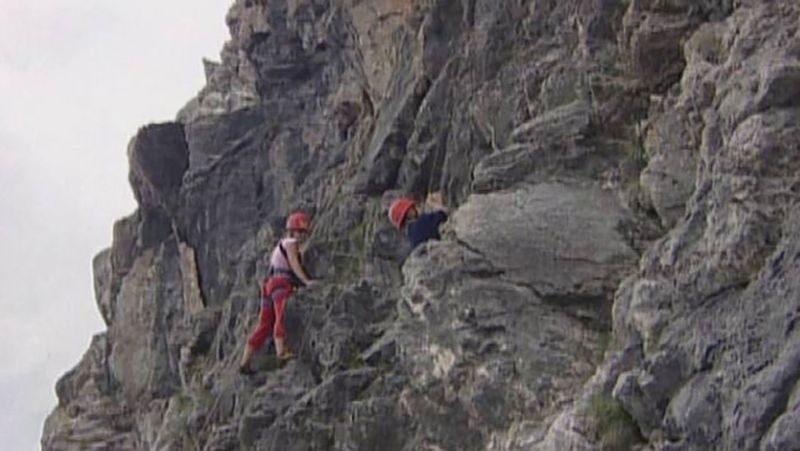
Most people think climbing is all about biceps and lats. It isn’t. For the vast majority of rock climbers, hands and feet are the primary tools, but not in the way you might think. Feet do the heavy lifting. Hands are mostly for balance.
You only need monstrous upper body strength for serious overhangs. On standard routes, your arms aren’t dragging you up the cliff. You’re standing. The body weight stays directly over the feet. You stay as upright as the rock allows. This posture frees up the fifth element of climbing: the eyes.
How to Master Climbing Rhythm
Look before you leap. Careful observation while moving up saves time. It prevents vain scrambles for footholds that don’t exist.
Climbers usually keep three points of contact with the rock. Either two hands and a foot. Or two feet and a hand. Jumping for holds is dangerous. It removes any safety factor. You’re gambling with gravity.
Rhythmic climbing can be slow. Or fast. It depends on the pitch difficulty. Rhythm is hard to master. When you get it, it marks you as a truly fine climber.
Where Hands Actually Work
The harder the climb, the more hands support the weight. But the technique changes based on the terrain.
In a chimney—a pipelike, nearly cylindrical vertical shaft—hands press on opposite sides in opposition to each other. On slabs, smooth rock surfaces rely on palm pressure. Friction provides the necessary hold. You’re sliding, not gripping.
The Art of Rope Handling
Climbing down steep rock is usually harder than going up. Why? You can’t see the holds from above. There’s also a natural reluctance to reach down and work hands low while descending.
The quick way down is rappelling. This uses a doubled rope. One end is firmly held or secured. The rope wraps around the climber’s body. It feeds out through one hand. Slowly. Or quickly. This lowers the body gradually down the rock face.
Rope handling is a fine art. It is just as essential on snow and ice as it is on rock. You need enough rope for the pitch. Plus enough length for rappelling.
A good rope handler is a valued person on the climb.
The rope is a lifeline. It receives the greatest care and respect. These techniques aren’t easily learned. They are mastered through experience.
Anchors and carabiners must be placed carefully. The rope must be strung to maximize safety. It must minimize effort during ascent and descent. Keep the rope away from cracks where it might jam. Avoid places where it could catch on rock outcrops or vegetation.
Never let a rope lay over rough or sharp-edged rock. Under tension, friction can damage it. Falling rock can cut it.
Helmets have changed the game. Once controversial—some said they were uncomfortable or limited vision—they are now common. Especially for technical climbs up rock faces. You still have to watch your step though.
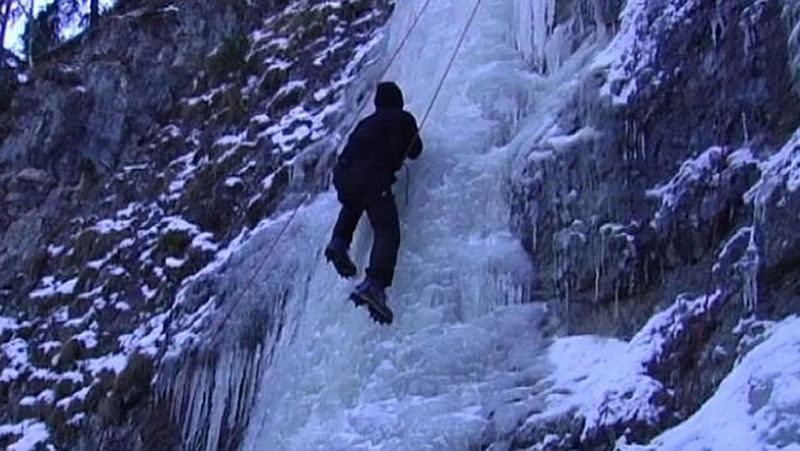
Snow doesn’t stay put. That’s the first rule of high-altitude travel, and it’s also the reason people die on mountains that look perfectly safe from the base. Conditions shift by the hour. A slope that was firm at dawn can turn into a slushy trap by noon as the sun beats down. Or worse, it might freeze over into a slick sheet of death.
Good climbers know this intimately. They don’t just look at the mountain; they read it. They scan for hidden crevasses that are covered by thin snow bridges. They assess avalanche risks before taking a single step. And they move through these treacherous zones with a toolkit that has barely changed in a century, though it remains absolutely critical.
Why Ice Axes Are Essential for Balance and Safety
At the center of this survival kit is the ice axe. It’s not just a walking stick for the high peaks. It’s a multi-tool that acts as an anchor, a probe, and a brake.
The design is simple but lethal. One end features a pick and an adze, opposite a spike. You use it to:
* Cut steps into hard ice
* Probe the ground for hollow spots (crevasses)
* Grip steep slopes for direct aid
* Find balance when the ground tilts away from you
* Arrest a slide if you slip
Yes, that last one is non-negotiable. If you fall on a steep incline, the axe is your only chance to dig in and stop gravity from taking over. It’s also used for securing the rope, a technique known as belaying, which keeps the rest of the team safe if someone goes over.
Crampons: The Spikes That Make Progress Possible
Boots alone are useless on steep ice. That’s where crampons come in. These are sets of metal spikes strapped to the soles of your boots. They bite into the surface, providing traction where smooth leather would offer zero grip.
On many slopes, crampons eliminate the need to cut steps. You can move faster, with less energy. But on extremely difficult terrain, even crampons aren’t enough. That’s when you bring out ice pitons and carabiners. You drive the pitons into the ice and let them freeze in place, creating a solid anchor point for the rope. It’s primitive, brutal, and effective.
The Rhythm of the Climb
Climbing long snow slopes is tedious. It’s a marathon, not a sprint. You need a slow, rhythmic pace that you can sustain for hours. Rushing is a mistake. Fatigue leads to errors, and errors on a glacier are fatal.
Timing matters just as much as technique. You want to start early in the day. Why? Because the snow is hardest then. As the sun rises, it warms the surface. The snow softens. Crevasse bridges weaken. Avalanche danger increases. Every factor—the length of the climb, the weather, the sun’s heat, the stability of the snow—must be weighed before you commit. Judgment is the most important gear you carry.
The Clubs That Keep the Tradition Alive
Mountaineering isn’t just an individual sport. It’s organized. The backbone of the community is the mountaineering or rock-climbing club. Almost every country with serious climbers has one.
The oldest and perhaps most venerable is the Alpine Club in Great Britain, founded in 1857. But the largest concentrations are in the Alpine countries, the British Isles, and North America. These