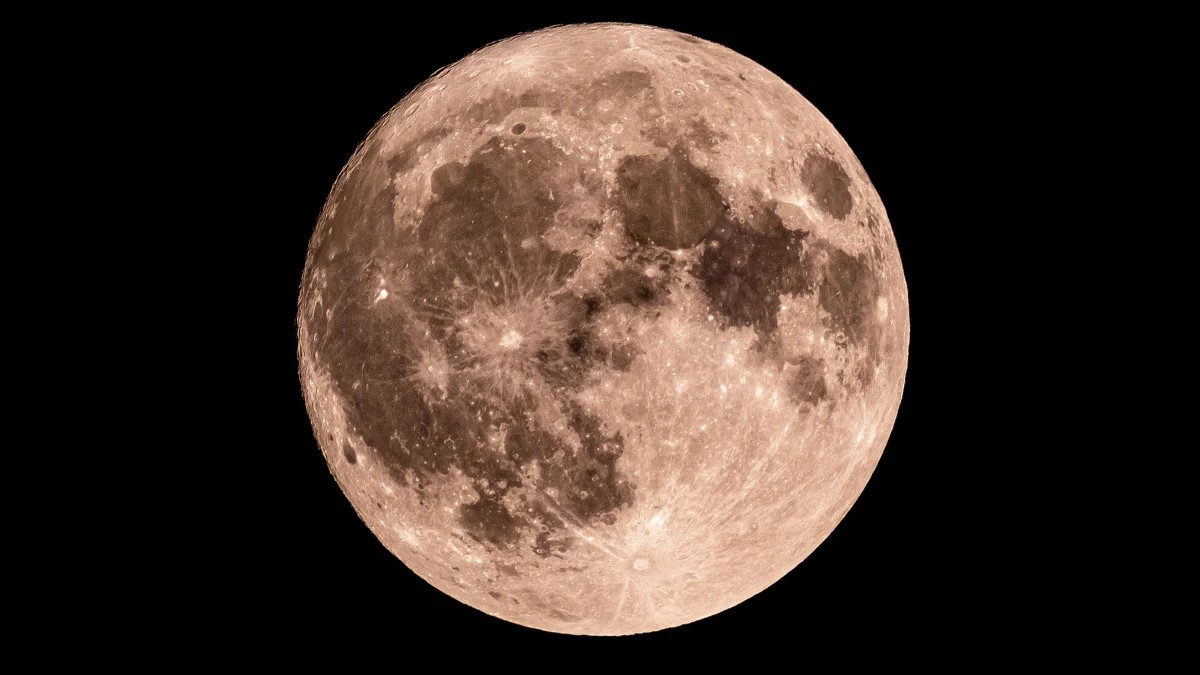
It’s Saturday. The moon is getting brighter. Not all at once, but inch by inch as the night goes on. If you look up now you’re staring at a Waxing Crescent. Roughly forty-four percent of that gray surface is catching the sun’s glare according to NASA’s daily guide. That’s decent for this stage of the game.
You don’t need much to see it. Just your eyes. Unaided vision reveals the Mares Fecunditatis and Serenitatis alongside the Crisium plain. Want more? Binoculars will pull the Endymion and Posidonius craters out of the dark along with Mare Nectaris. Bring a telescope and the view expands again. You can spot the Descartes Highlands and the Rupes Altai range. You’ll even find the exact patch of dirt where Apollo 17 set down.
The wait isn’t long. A Full Moon hits on June 29. Nine days to go.
So how does this change anyway? The moon orbits Earth once every 29.5 or so days. Eight recognized phases mark that journey. The same face always looks back at us obviously but the lighting shifts. The sun hits different angles as the satellite moves around our planet. It makes the shape seem to warp from a thin line to a glowing disc and back.
This repeating sequence of phases is the lunar cycle.
Here’s the breakdown:
- New Moon: Between us and the sun. Dark. Invisible.
- Waxing Crescent: A sliver lights up on the right side if you’re in the Northern Hemisphere.
- First Quarter: Half the disk glows. Right side only. It looks exactly like you’d expect.
- Waxing Gibbous: Past halfway but not quite done. More light hits the face than shadow covers it.
- Full Moon: All lit. Maximum visibility.
- Waning Gibbous: Light retreats from the right.
- Third Quarter: Another half-moon appearance. But the left side glows this time.
- Waning Crescent: A thin strip hangs on the left before the dark returns.
Does the phase matter to your schedule? Maybe not. But looking up is free. The light fades eventually anyway.