The deep ocean held a secret for eons. And it’s changing the story.
For 3 billion years, microbes ruled the planet. Boring, simple microbes. Then snap. Animals appear. Big ones. Ones that move. Ones that have sex. It wasn’t a gradual trickle; it felt like an explosion.
But the fossil record is frustrating. Sparse. Full of holes. We never quite knew when it started or how it spread.
Until now.
A new site in Canada’s Northwest Territories flips the timeline. Researchers found fossils 5 million to 10 million years old than anyone expected. Complex traits—movement, sexual reproduction—they happened sooner.
This matters. Because until 570 million years ago, everything was tiny and single-celled.
“If we want to understand when life became unmistakably animal… this new site has tremendous potential,” says Scott Evans of the American Museum of Natural History, who led the study.
Fossils in the Frost
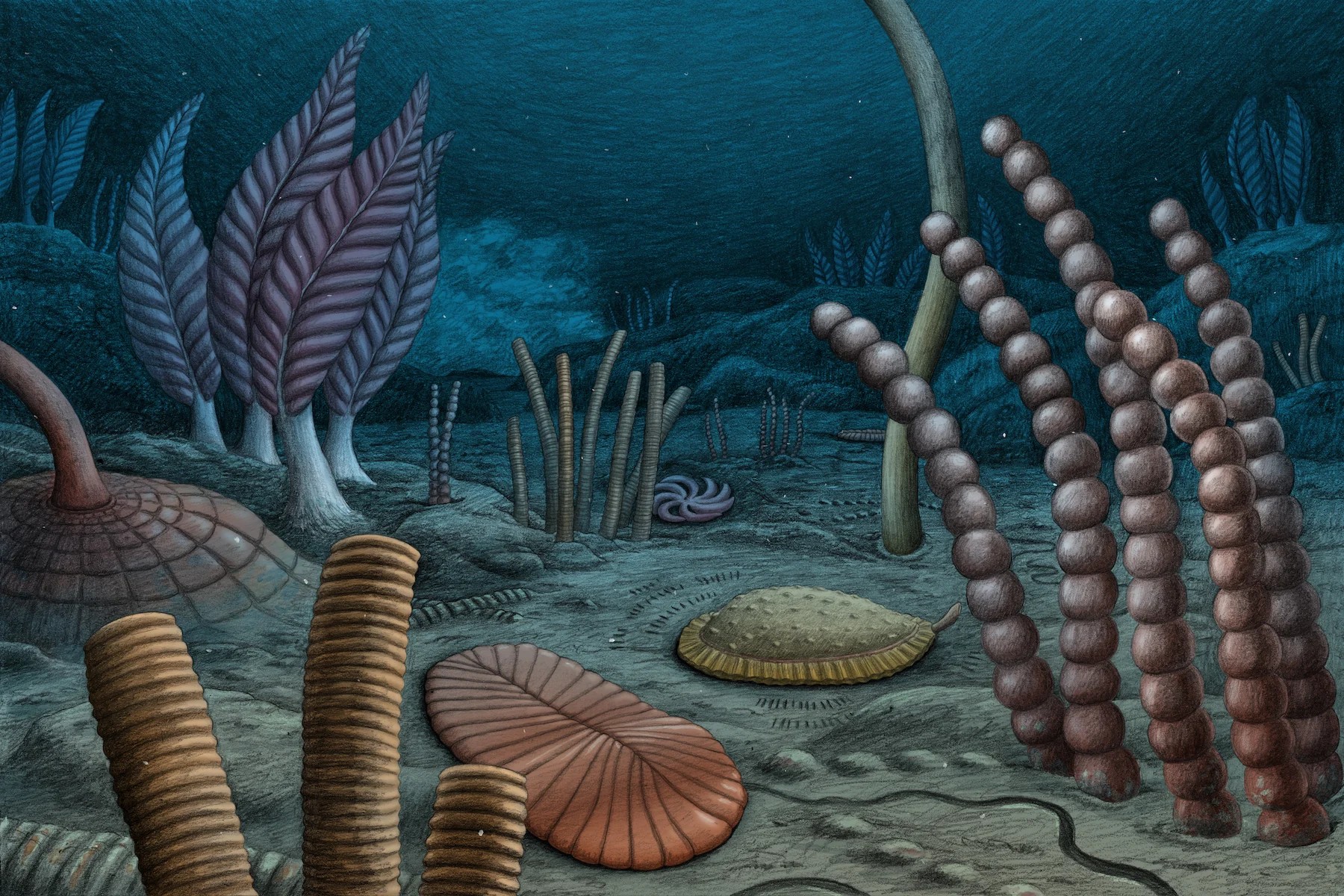
Ediacaran organisms are weird. Flat disks. Ribbed ovals. Leaf-like things. Most had no bones. No shells. Just soft tissue that rots away before it can become stone.
So finding them? Hard.
We have them from every continent except Antarctica. But diverse sites? Rare.
This new find changes that. It sits in the Mackenzie Mountains, on traditional Sahtú Dene and Métis lands. The researchers didn’t just show up. They asked permission. They were guided by the land itself.
The fossils belong to the White Sea assemblage. A group of ancient critters. We had them in Europe. Asia. Australia. North America was missing the piece.
Not anymore.
A Time Capsule
Here’s the kicker: these guys are 567 million years old.
Older. Much older.
The White Sea assemblage usually dates to 559-555 million years ago. These specimens? They predate the start date by millions of years. They overlap with the older Avalon assemblage.
“Not only is the site diverse… but it comes from rock layers where we’ve previously found nothing,” says co-author Justin Strauss. He’s been staring at that mountain range for fifteen years. “It’s really exciting.”
Hundreds of feet of rock lie below. More fossils might be sleeping there.
What They Ate, How They Loved
The new cache introduces North America to names we should recognize. Or maybe not, given how bizarre they are.
- Dickinsonia : It crawled. No mouth. Just absorbed nutrients like a biological sponge. A “pancake,” Evans calls it. Divided body. Flat on the bottom. It hunted for bacteria.
- Funisia : Tube-like. Sedentary. It proves sex existed 567 million years ago. Coordinated release of gametes into the water column. Corals still do this today. Ancestry is sticky.
- Kimberella : Muscular foot. Scratched the sea floor. A mollusk cousin? Probably the oldest bilaterian known to science. Left side mirrors the right. Head faces front. This body plan eventually claimed 99% of the animal kingdom.
- Eoandromeda : Eight spiral arms. Looks like a jellyfish. Might be one. Comb jellies, anyway.
Who would have guessed sex started before we were sure movement did?
Depth Is a Distraction
Here is where it gets counter-intuitive.
We think animals evolved in the shallows. Warm water. Light. Easy food.
Wrong.
These White Sea fossils came from deeper waters. Offshore. Darker. Cooler.
Why does this matter?
Deep water is stable. Temperature stays the same. Oxygen doesn’t fluctuate wildly. In the shallows? The water crashes against rocks. Conditions change with every storm.
“The deep ocean… is relatively stable. That stability provided opportunities.”
Innovation starts deep. It waits in the stable dark. Then it creeps toward the shore.
It reverses the narrative we were sold. We thought evolution marched from the edge outward.
Maybe it moved from the depths up.
The fossil record doesn’t tell a neat linear story. It tells a story of adaptation. Of holding ground in the crushing dark before expanding into the chaos of the shallows.
What else is hiding under the hundreds of feet of rock above these bones? We don’t know yet. The ice keeps moving.