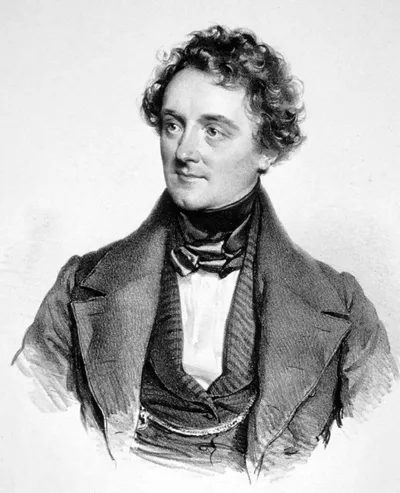
Johann Nestroy didn’t just write plays. He owned the stage.
Born in Vienna on December 7, 1801, and dying in Graz on May 25, 1862, Nestroy remains the towering figure of Austria’s 19th-century popular theater. He wasn’t just a playwright. He was a character actor of such brilliance that he dominated the Viennese stage for decades. His influence still ripples through modern comedy, yet his name rarely appears in mainstream pop culture conversations. Why? Because his legacy hides in plain sight, embedded in the DNA of American musicals and farces.
Before he was the king of satire, Nestroy was trying to sing his way to fame. From 1822 to 1831, he toured European cities as an opera singer. It didn’t work out. The voice failed, or perhaps the ambition outgrew the talent. Either way, he returned to Vienna with a new mission. He stopped singing and started writing. And acting. Mostly acting.
Nestroy wrote 50 plays. Almost all of them were adaptations. He took plots from older plays or novels and stripped them down to their satirical bones. But he didn’t just rewrite stories. He reinvented the protagonist.
The Virtuoso of Detachment
The central character in a Nestroy play is always a specific type. Brilliant. Detached. Cynical. And usually played by Nestroy himself.
These roles demanded a virtuoso performance. It wasn’t enough to know the lines. You had to master language, diction, and timing. The humor lived in the sharp nuances between what was said and what was meant. Nestroy used this technical precision to dissect the people around him. He targeted the newly rich bourgeoisie. He mocked the leading figures of Viennese society. He held up a mirror and made the audience laugh at their own reflection.
“Nestroy made use of satire, irony, and parody to dissect the newly rich bourgeoisie, as well as a number of the leading figures of Viennese society.”
His career shifted gears in 1854. He took over management of the Carl-Theater in Vienna. He ran the place until he retired in 1860. The stage was no longer just a place for him to perform. It was his domain.
From Viennese Farce to Broadway Hit
How did a 19th-century Austrian satirist end up influencing global theater? Look at the list of his most famous works. The connections are startling.
Take Der böse Geist Lumpazivagabundus oder Das Liederliche Kleeblatt, written in 1833. The title translates to “The Evil Spirit Lumpazivagabundus, or the Roguish Trio.” It’s a classic setup: chaos, mischief, and a trio of misfits. Nestroy’s ability to weave complex social commentary into light entertainment set the template for what came next.
Then there’s Der Zerrissene (1844). Known in English as A Man Full of Nothing. A title that feels suspiciously modern. It captures the essence of Nestroy’s detached protagonist—a man who is everything and nothing all at