All the dead are women.
Or at least that’s what the new protein data suggests.
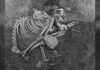
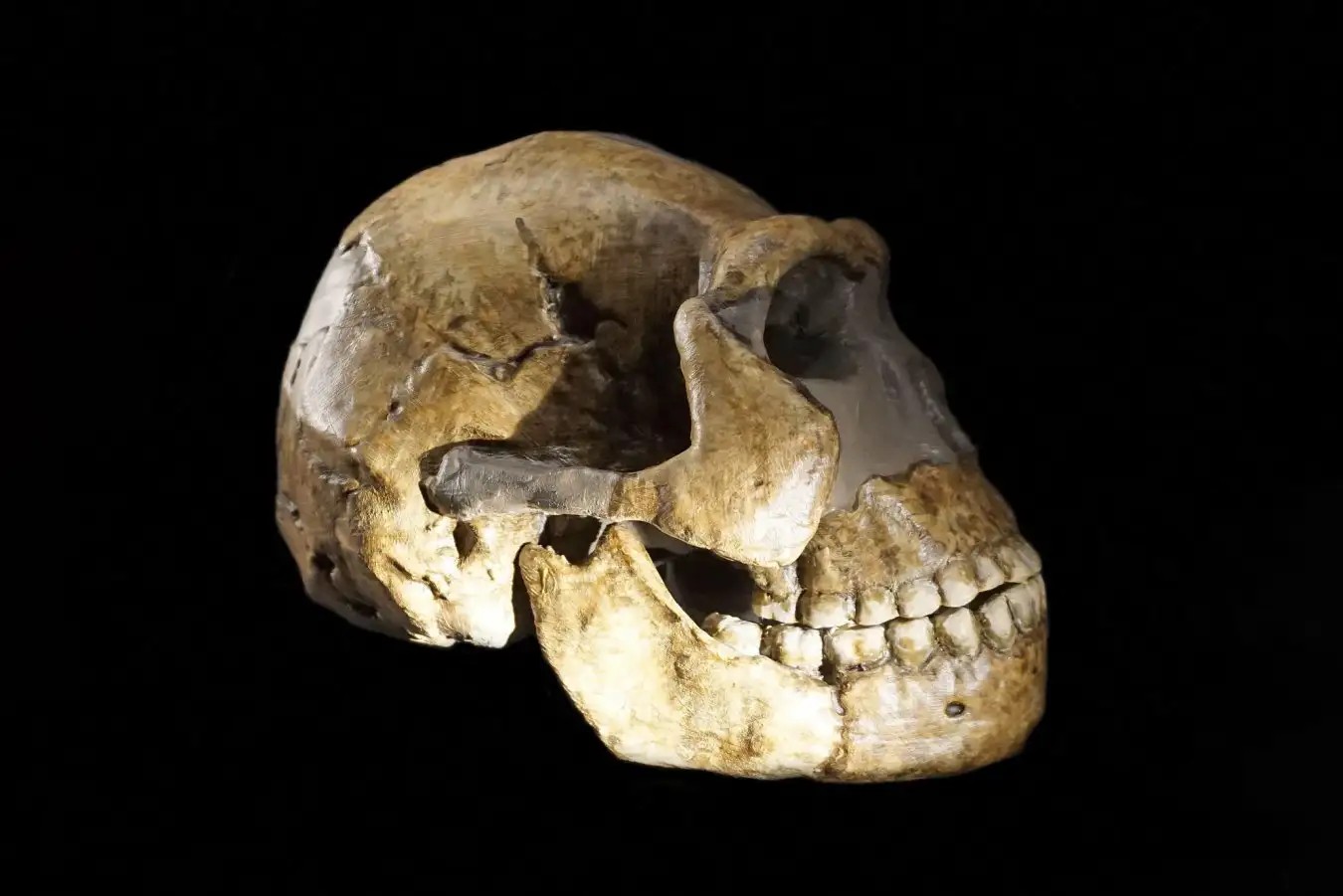
Thirteen years ago, two cavers dropped into the dark guts of South Africa’s Rising Star cave system. About forty kilometres from Johannesburg, deep in chambers hard enough to make grown scientists cry. They found skeletons. Dozens of them. Belonging to Homo naledi, a small-brained human relative who hung around roughly 236,00 to 335,00 years ago.
We’ve been trying to figure out how those bodies got down there ever since.
In 2015, Lee Berger and his team at the University of Witwatersrand floated a provocative idea: Homo naledi wasn’t just falling into these caves by accident. They dragged the dead there on purpose. Maybe dug graves. Used torches. Painted on the walls. It sounds almost too neat, which is exactly why skeptics pounced. Burial rites for a creature with the brain size of a chimpanzee? Hard sell.
But now, a Danish team led by Palesa Maudupe at Copenhagen University has dug into the chemistry of the teeth themselves. Specifically, the enamel.
Enamel doesn’t hold much genetic info. It’s not DNA. It’s protein. And proteins are stubborn things that stick around longer than genetic material does in the heat. Maudupe looked at two specific markers. The AMELX gene. Found on the X chromosome. Every human has at least one copy. Then there’s AMELY. On the Y chromosome. Only in males.
If you have AMELX, you could be a boy or a girl.
If you have AMELY too, you’re definitely a boy.
If it’s missing? You’re a girl.
The researchers checked 20 skeletons out of the 23 known naledi individuals.
Zero males.
“Honestly, it was very scary,” Maudupe says. She thought they messed up the lab work. Repeated it. Same result. No Y signal. Not one.
Was it contamination? Decay?
Maudupe’s team already knew better. They’d looked at other South African fossils two million years older. Those teeth still showed the male AMELY marker. So Homo naledi males weren’t invisible to science just because of age.
Maybe the gene mutated?
Some humans do carry deleted AMELY genes. It happens. Rarely. Like once in a blue moon. But even in those rare cases, not every man loses it. The stats show a less than one in a million chance that a random mix of males and females would look all-female just because of gene glitches.
So what are we looking at?
Twenty naledi females.
If they’re all female, the “natural disaster” theory dies a quick death. You don’t get a cave full of only women if animals are just wandering in and dying of heatstroke or getting trapped by accident.
It means selection.
Berger sees confirmation of his ritual burial theory. Intentional deposition. They put the women there.
Others aren’t ready to buy into the ritual angle quite yet.
Bernard Wood, at George Washington University, shrugs off the idea that dumping bodies means they had a culture or belief system. Maybe. But he does think it points to behavior. Deliberate choice. “I have no idea why they weren’t putting the males in,” he notes. A valid question.
Could it be easier for women to climb?
The cave is a nightmare of vertical drops and narrow cracks. The first archaeologists to scale those walls were women. Small frames. High skill. Maybe the larger-bodied males just couldn’t get down there as easily. A practical bias. Not spiritual. Just logistical.
Or maybe it was about where the tribe lived.
Michael Petraglia suggests that Homo naledi might have lived in groups with skewed gender ratios, much like some primates today. Small groups foraging together. If the foragers were mostly female, maybe that’s who died nearby.
Except the babies are women too.
Eric Crubézy points out a snag. Even in male-dominated or female-heavy primate troops, infants show up roughly equal. One male, one female. Birth doesn’t pick a team.
In the naledi caves, the juveniles are all female.
That breaks the “random demographic slice” theory. You don’t lose a whole generation of baby boys unless you’re hiding them or leaving them elsewhere.
What did the men even look like?
We have no clue. Homo naledi skulls from the women are slender. Did the men have huge sagittal crests like the robust Paranthropus boise? Big teeth? Broad faces? Wood guesses they lacked the crests. He guesses because he has to.
There are holes in the picture. Big ones.
Did naledi build graves or just toss bones in holes? Was this religion or hygiene? Did they hate their brothers?
Palesa Maudupe found something terrifyingly consistent. All these bones. All female. It doesn’t wrap up in a nice bow. It leaves us staring into a dark cave, wondering where the men are.