AI finally read the unreadable.
Long lost philosophy has surfaced from papyrus scorched by Mount Vesuvius in AD 79. Researchers pulled the text out of high-resolution 3D scans without ever touching the brittle paper. They didn’t unroll it. They never unrolled it.
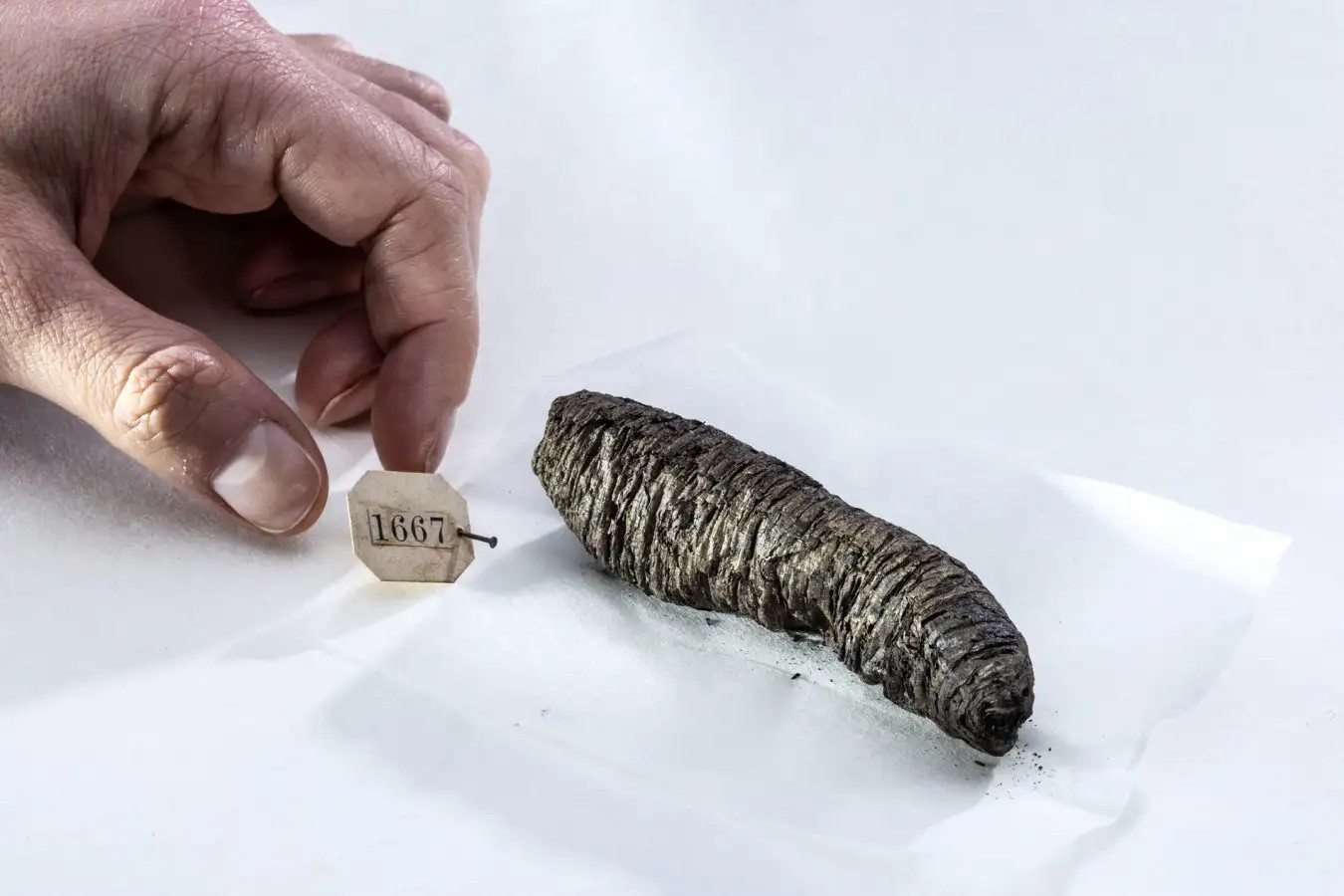
The library at Herculaneum got buried nearly 2000 ago. Found in 1752, the scrolls looked like charcoal lumps. Scholars tried for centuries to read them. Mostly they failed. Physical unrolling means destruction anyway. The ink is invisible against the char. To human eyes it is just noise.
Then the Vesuvius Challenge changed the game in 2023.
Particle accelerators scanned the scrolls. The data went to an online community. Programmers built AI tools to digitally unwrap the layers and find ink traces. It worked for snippets before. Titles. Authors. Short quotes.
Now it uncovered 1.5 meters of text. Twenty-two columns wide.
“Virtual unwrapping was able to change history.” — Federica Nicolardi, University of Naples
Federica Nicolardi pointed out that scholars stripped the outer layers of this specific scroll centuries ago trying to open it. They left only a couple of visible letters. The core remained intact inside.
Brent Seales from the University of Kentucky calls this an “impossible scroll”. Early papyrologists burned through the easy ones. They damaged the hard ones. Seales says the breakthrough comes from imaging down to two micrometers resolution and feeding the data-hungry AI enough training material.
Currently the models need customization per scroll. Inks differ. Charring differs. Seales hopes future AI will generalize like large language models did after swallowing the internet.
The recovered text talks ethics. Art. Human nature. It leans heavily into Stoic doctrine. Nicolardi spots a mention of the nephew of Greek Stoic philosopher Chrysippus. This makes Chrysippus the most likely author.
Why does it matter?
Chrysippus is an architect of Stoicism. Almost all his writing vanished. We know him through critics and summaries. Secondhand info is shaky. It can be twisted. Thomas Coward at Bristol compares this find to discovering a lost work by Einstein. Or Newton. Original sources trump commentary every time.
Accessing the source text rather than modified summaries is vital for historical accuracy.
There is irony in who funded the rival philosopher whose scrolls also survived. Lucius Calpurnius Piso, Julius Caesar’s father-in law, owned the Herculaneum collection. He sponsored the Epicurean Philodemus. Philodemus hated Chrysippus.
Another scan identified Book 8 of Philodemus’s On Gods. He only wrote seven? Maybe he wrote eight.
Nicholas Freer at Newcastle sees a radical shift ahead. Hundreds of scrolls are still unopened.
“It isn’t a single breakthrough. It is the start of decades-long recovery.”
Seales admits he is working himself out of a job. The tech obsession ends here. Now the scrolls do the talking.
“It is all about restoring the lost voices.”
He regrets the originals from 1752 got destroyed by well-meaning experts back then. Those were the easiest to read. We might have known everything by now if they hadn’t pulled them from the ground.
The ash remembers what we forgot.