Big rockets wait in hangars. It is quiet.
Then the quiet ends.
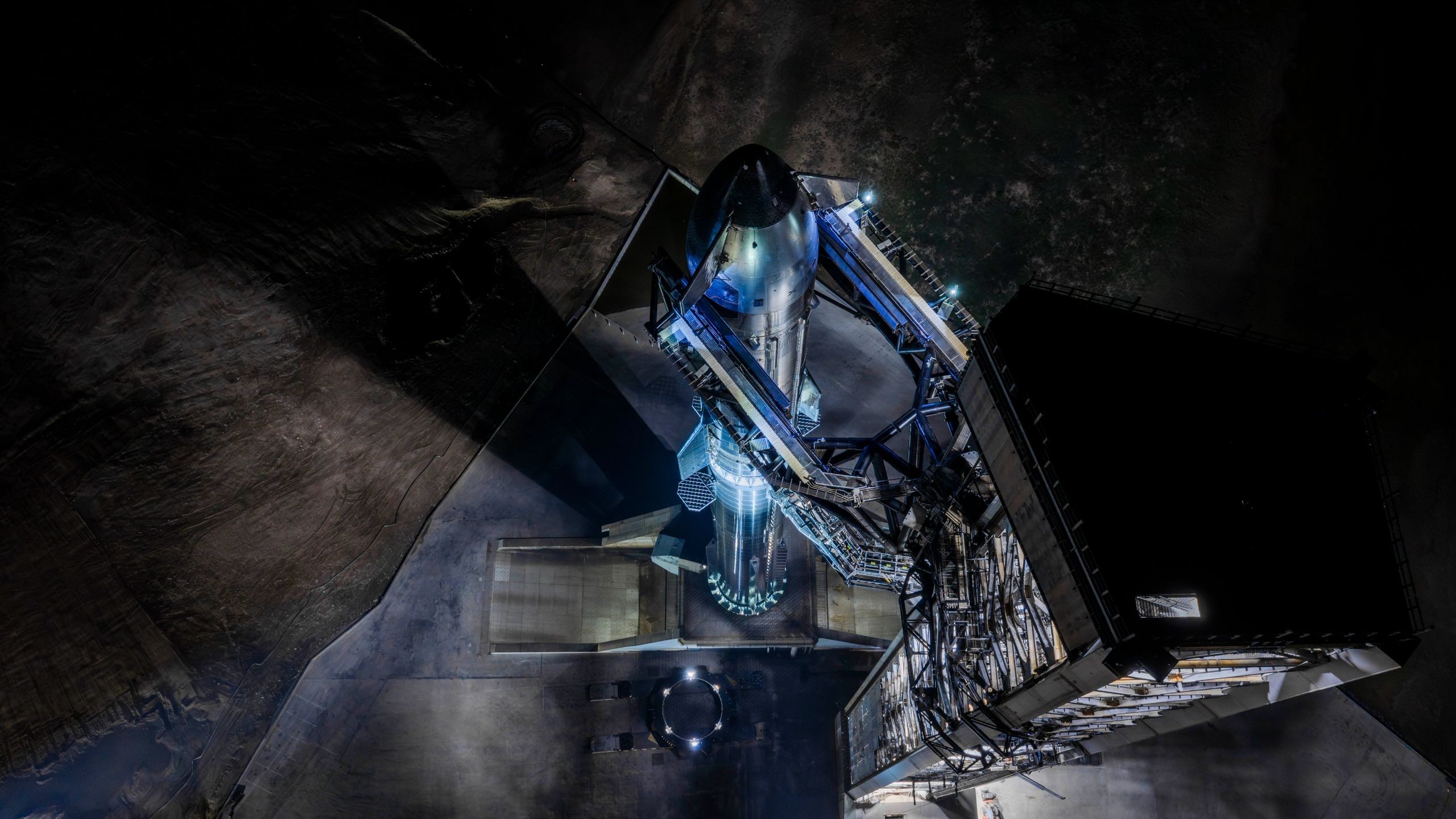
SpaceX just finished stacking Starship for Flight 13. The world’s most powerful vehicle sits on Pad 2 at Starbase in Texas. Waiting. Liftoff is today, July 16. The window opens at 6:45 p.m. EDT.
The preparation took days. Both stages—Super Heavy and Ship—went through final checks after engine tests worked. Booster 40 returned to the pad yesterday evening. Ship 40 followed. By morning they were stacked. According to SpaceX.
This is the second Version 3 or V3 Starship. It is bigger than before. Taller. Heavier fuel. Lighter engine section. The avionics are new, lighter systems replace old weight. There are thirty-three upgraded Raptor 3 engines pushing Super Heavy. Six more push the Ship.
Why build a bigger rocket? Because NASA is watching.
Reusability is the point. But you can’t just land. You need fuel. V3 adds propellant transfer ports on the top side. The belly has tiles. The top has pipes.
You can’t fill a car with a hole in the gas tank.
SpaceX needs to prove Ship can handle cryogenic fluids. Not just store them. Move them. Maintain them. NASA cares about this. They signed a contract. A lunar lander version will bring humans back to the Moon under Artemis. If you can’t manage your gas. You can’t fly people.
The goal is Artemis III in 2027. Maybe late 2027. A crew of four flies up on Orion. They meet Ship in orbit. Then the moon landing. Blue Origin has a backup plan, a Blue Moon lander, but SpaceX is the lead act.
Flight 12 showed V3 was real. Also showed it wasn’t ready.
Hiccups. Super Heavy didn’t steer itself for splashdown. Ship didn’t relight an engine in space. Flight 13 fixes those things. Or tries to.
Today. Super Heavy shoots up. Burns for boostback. Splashes down softly in the Gulf of Mexico.
Ship keeps going. Suborbital arc. It drops twenty Starlink V3 satellites. The first of the new ones. Six have cameras. They look at the tiles during flight. Then they burn up. All of them. Back to dust.
Ship stays alone for a while longer. Then it tries its own landing burn. An hour after launch. A splashdown in the Indian Ocean.
If the computers agree with reality. If the valves open when told.
The water doesn’t care if the mission succeeds or fails.